See Space Now
How to stargaze tonight, which telescope to buy, and the gear actually worth the money: independently researched 2026 guides to seeing space now.
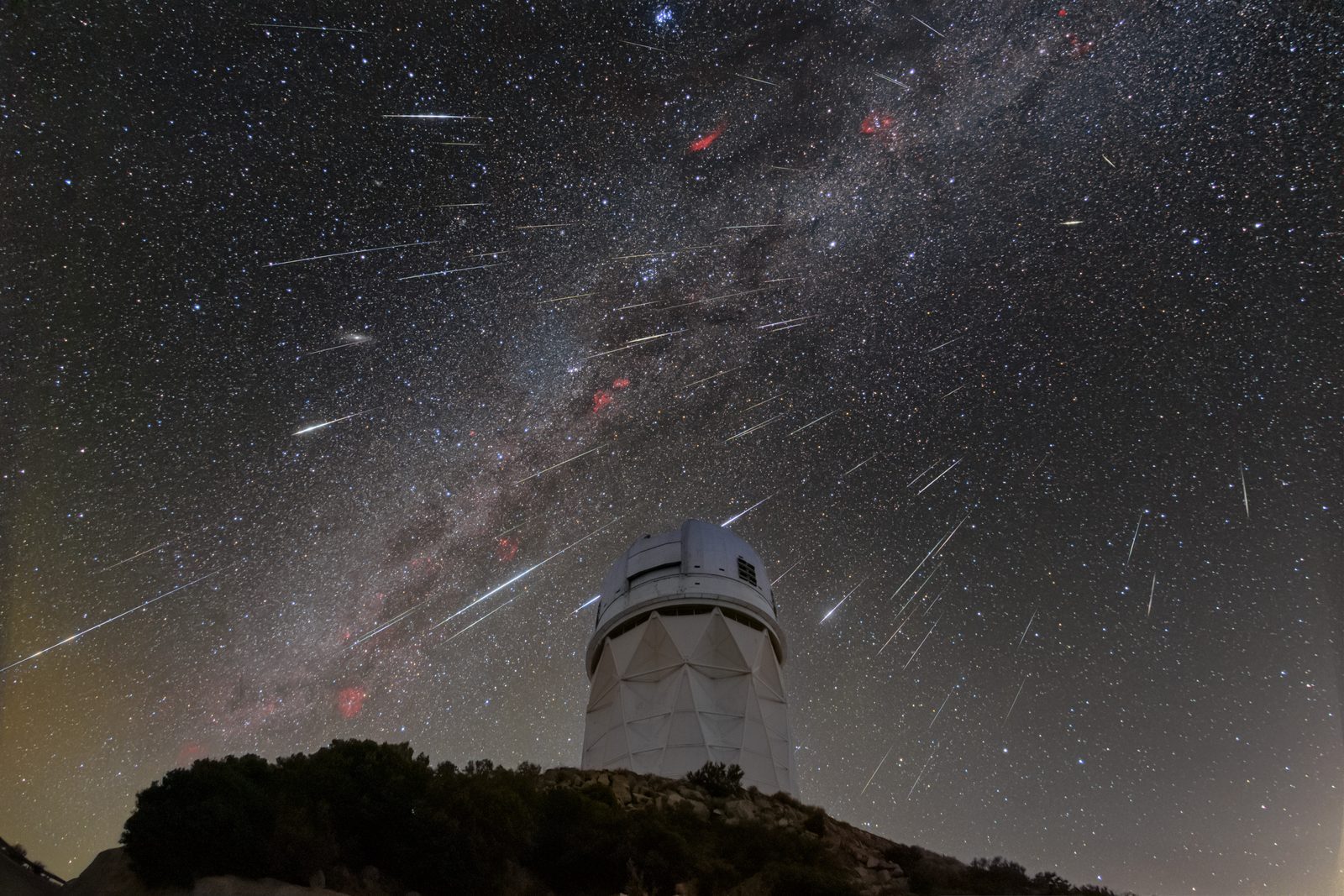
Space isn’t only for people holding a six-figure ticket — you can see it tonight. Everything here is tested and ranked in the open, at real prices — here’s how.
Not sure what to buy? Answer four quick questions and we’ll match you to the right first telescope, with a runner-up and a budget pick.
Find your telescope ▸Start here
New to the night sky? These get you out under the stars tonight, for free.
Stargazing for Beginners: How to Start Exploring the Night Sky
You don't need a rocket, or even a telescope, to start exploring space tonight. What to see with your eyes, when to add binoculars, and where it's dark.
Read ▸What's in the Sky Tonight
Tonight's Moon phase, what it means for observing, and a live countdown to the next meteor shower, eclipse and sky event. Check it before you head outside.
Read ▸What Can You See With a Telescope?
Saturn's rings hang in the eyepiece like they're suspended in glass. What a beginner telescope shows you, from the Moon to Andromeda, as aperture grows.
Read ▸Binoculars vs. Telescope: Which Should You Buy First?
Binoculars or a telescope? The first question every new stargazer asks. What you'll see through each, and why I hand most beginners binoculars first.
Read ▸The sky, object by object
What to point at first, and what it actually looks like when you find it.
See the Planets
One guide per world: what each planet actually looks like from a backyard, when to look in 2026, and the telescope it takes. Mercury to Pluto.
Read ▸How to See Saturn’s Rings
Saturn is at opposition October 4, 2026 — its brightest, best-placed night of the year. When to look, what you'll see, and the telescope for the rings.
Read ▸How to Observe the Moon
The full Moon is the worst night to look at it. On a half Moon, shadows along the day-night line throw craters into relief. What to see and when to look.
Read ▸What About Pluto, Dad?
Pennies for Pluto — the case for the ninth planet.
Read ▸How to See the Milky Way
The Milky Way is overhead every clear night; most people just can't see it from where they live. When to go, where to find dark skies, what to expect.
Read ▸How to Photograph the Milky Way
The settings, the lens, and the planning that separate a blurry disappointment from a Milky Way photo that stops people mid-scroll. Any modern camera.
Read ▸Sky events & eclipses
The nights worth planning around: meteor peaks, planet line-ups, and every eclipse through 2030.
Upcoming Meteor Showers: Dates, Peak Nights & Moon Conditions
When the next meteor shower is, and every 2026 and 2027 peak with the hourly rate and the Moon on each night. Plus how to watch, and what to bring.
Read ▸The Geminid Meteor Shower 2026: When, Where and How to Watch
The Geminids peak the night of December 13-14, 2026, under a thin Moon that sets by about 9pm. What time to look, where the skies are clearest, and how to stay warm.
Read ▸When Is the Next Planet Parade, and How Do You See It?
Next planet parade: November 12-28, 2026, before dawn: Venus, Jupiter, Mars and Mercury by eye. What time to look, where to stand, and the March 2027 lineup.
Read ▸Every Eclipse Through 2030
A live countdown to the next solar and lunar eclipse, plus every eclipse through 2030: the dates, where each is visible, and how to watch it safely.
Read ▸The Great Eclipse of August 2, 2027
Up to 6 minutes 23 seconds of totality, the longest over land until 2114. Where to watch the August 2, 2027 eclipse, from Spain to Luxor.
Read ▸Dark-sky travel & aurora
Where to go for a truly dark sky, from a Sedona overlook to the aurora capitals.
Guided Stargazing & Dark-Sky Tours
Real, bookable guided stargazing tours in Sedona, Zion, Joshua Tree, Death Valley and Tenerife: what they cost, and whether one beats buying your own gear.
Read ▸Stargazing in Sedona
Sedona is a certified Dark Sky Community with 275 clear nights a year. The best free red-rock viewpoints, the Milky Way season, and the tours worth it.
Read ▸Stargazing on Mauna Kea
Hawaii's 13,800-ft summit is the best observatory site on Earth. The free visitor-station stargazing program, the summit tours worth booking, when to go.
Read ▸Stargazing in the Northeast
Real dark skies survive within a drive of NYC and Boston: the Catskills' astronomer-led overnights, Cherry Springs' Bortle-2 field, and Maine's sanctuary.
Read ▸The Best Dark-Sky Destinations for Stargazing
Where to travel for a truly dark sky: the Atacama Desert, Aoraki Mackenzie, La Palma, NamibRand and more, with the best season for each.
Read ▸See the Northern Lights
You don't need Norway. Fairbanks and Anchorage run bookable aurora tours most of the year: when to go, what a tour gets you, and the camera settings.
Read ▸Best Places to See the Northern Lights
The four aurora capitals worth crossing an ocean for: Tromso, Reykjavik, Abisko, and Rovaniemi, compared on clear-sky odds and how easy each is to reach.
Read ▸The Largest Telescopes in the World
The largest optical telescope in the world today, the 39-meter giant that takes the title in 2029, and the ranked table of Earth's biggest mirrors.
Read ▸Telescopes
Find the right first scope, then read the full reviews behind the picks.
Find Your First Telescope
Answer four quick questions and get matched to the right first telescope, with a runner-up and a budget pick. Our 2026 telescope finder for beginners.
Read ▸The Best Beginner Telescopes for 2026
The best beginner telescope is the one you'll actually use. My 2026 picks, from a $200 starter to an 8-inch Schmidt-Cassegrain, chosen for night one.
Read ▸The Four Types of Telescopes, Explained
Refractor, reflector, Dobsonian, or catadioptric? What each telescope type actually shows you, what it costs, and which is the right first scope for you.
Read ▸How Much Does a Telescope Cost?
What a good telescope costs in 2026, tier by tier: the $60 toys to skip, the $300 scope that shows Saturn on night one, and the $1,000-plus imaging rigs.
Read ▸The Biggest Telescope You Can Actually Buy
The biggest telescopes you can actually buy in 2026: our 10-inch and 12-inch Dobsonian picks, the 16-inch Flextube, and the 20-inch StarGate.
Read ▸The Best Telescopes for Kids in 2026
The best telescope for a kid shows the Moon on night one and survives a knock. Our 2026 picks by age, from a $50 tabletop to a $499 phone-guided scope.
Read ▸StarSense DX 130AZ vs. Heritage 130: Which 130mm Do You Buy?
Celestron StarSense Explorer DX 130AZ vs. Sky-Watcher Heritage 130: same optics, same view. Pay for the app that finds targets, or keep the $100?
Read ▸Smart telescopes
App-controlled scopes that photograph the sky for you, and the head-to-heads most buyers end up on.
Best Smart Telescopes for 2026
Smart telescopes auto-align, track, and create photos with a tap — no experience needed. Our 2026 picks from $399 to $5,000.
Read ▸How a Smart Telescope Actually Works
No eyepiece, no star charts, no experience: how a smart telescope like the ZWO Seestar S30 finds a nebula, tracks it, and builds a photo on your phone.
Read ▸Seestar S30 vs. Dwarf 3: Which Smart Telescope Wins?
ZWO Seestar S30 vs. DwarfLab Dwarf 3, the two smart telescopes most beginners choose between: $399 with the tripod in the box, or $549 plus a stand.
Read ▸Seestar S30 Pro vs. Dwarf 3: Which Smart Telescope Wins?
ZWO Seestar S30 Pro vs. DwarfLab Dwarf 3: it looks like $699 against $549, but once the Dwarf 3 has a tripod the gap is about $60. Which wins.
Read ▸Seestar S30 vs. Dwarf Mini: Which Smart Telescope Wins?
ZWO Seestar S30 vs. DwarfLab Dwarf Mini: two $399 smart telescopes with nearly identical optics, so it comes down to the tripod and the weight.
Read ▸Eyepieces
The stock eyepiece is a starting point. These are the upgrades that actually show you more.
The Best Telescope Eyepieces for Beginners
Which individual telescope eyepieces to upgrade to first - a $50 wide-field, the pair that beats most six-piece kits, and when a boxed set makes more sense instead.
Read ▸The Best Telescope Eyepiece Sets for Beginners
Best telescope eyepiece sets for beginners: only two boxed kits are worth buying, Celestron's classic kit or SVBONY's half-price all-in-one, or build your own.
Read ▸The Best Telescope Eyepieces for Planets
Saturn's rings and Jupiter's belts come down to magnification and a steady sky. The eyepieces that pull planetary detail out of a beginner telescope.
Read ▸The Best Budget Telescope Eyepieces
You don't need premium glass to see more. Five eyepieces under about $100 that give a beginner telescope the biggest upgrade per dollar.
Read ▸The Best Telescope Eyepieces for Glasses Wearers
If you keep your glasses on at the eyepiece, eye relief is the one spec that matters. The long-eye-relief picks that show the whole field, glasses on.
Read ▸Telescope Eyepiece Brands, Compared
Celestron, Explore Scientific, SVBONY, Tele Vue and Baader all make good glass at very different prices. What each brand is good at, and which to buy.
Read ▸Binoculars & solar viewing
The most underrated tool in astronomy, and the only safe ways to look at the Sun.
The Best Binoculars for Stargazing in 2026
Binoculars are the most underrated astronomy tool — cheap, portable, zero setup. Our 2026 picks for every budget, from a $45 starter to image-stabilized glass.
Read ▸Solar Binoculars & Filters: How to Safely View the Sun
The Sun is the one target that can blind you in a second. The only safe way to look: ISO 12312-2 solar binoculars, and how to filter binoculars you own.
Read ▸How to Watch a Solar Eclipse Safely
A solar eclipse is the one sight in nature that can blind you if you get the gear wrong. The ISO 12312-2 glasses, filters, and gear that make it safe.
Read ▸How to Photograph a Solar Eclipse
The next total eclipse is August 2, 2027, from Spain to Egypt, and the photo is easier than ever. Smart-telescope, camera and phone routes, done safely.
Read ▸Filters, mounts & accessories
The small stuff that decides whether the big stuff works.
The Best Telescope Filters for 2026
A $20 filter tames the Moon's glare; a $45 one pulls the Orion Nebula out of city glow. The moon, nebula, and planetary filters worth buying in 2026.
Read ▸The Best Finderscopes & Red-Dot Finders for 2026
The stock finder is the real reason you can't point your telescope. The fix is cheap, led by the US-built Telrad and Rigel QuikFinder.
Read ▸The Best Telescope Mounts & Tripods for 2026
For astrophotography the mount matters more than the telescope. From grab-and-go GoTo to imaging equatorials, the mounts worth buying in 2026.
Read ▸The Best Red Flashlights for Astronomy in 2026
One glance at a white phone screen erases 30 minutes of dark adaptation. The red flashlights that don't, led by a US-assembled Rigel, from $15 to $48.
Read ▸The Best Binocular Mounts and Accessories for Steady Sky Viewing in 2026
Anything past 10x shakes in your hands. The tripod adapters, parallelogram mounts, and harnesses that hold astronomy binoculars steady, and what to skip.
Read ▸Astrophotography
From a $500 starter rig to a backyard observatory.
The Best Astrophotography Setup at Every Budget
Three complete astrophotography rigs by budget: a $500 starter, a $3,000 deep-sky kit, and a $10,000 dream setup. Why the mount matters most.
Read ▸The Best Astrophotography Cameras for 2026
Your DSLR works to start; a cooled astro camera changes everything. The best astrophotography cameras in 2026, from a $400 entry sensor to a premium APS-C.
Read ▸How Much Does a Backyard Observatory Cost?
A real cost breakdown for a backyard observatory, from a $2,500 DIY roll-off build to a $50,000 automated dome: structure, pier, mount, camera.
Read ▸How to Build a Backyard Observatory
How to build a backyard observatory, step by step: roll-off vs. dome, picking the site, pouring the isolated pier, power, and installing the mount.
Read ▸Books, apps & stories
An app tells you what’s up tonight. A good book teaches you why it matters.
The Best Beginner Astronomy Books for 2026
Seven books that teach you to read the sky, from a $12 first read to the one you keep at the eyepiece.
Read ▸The Best Space Books for Kids in 2026
Nine space books kids ask for again at bedtime. Picks for toddlers, first readers, grade-schoolers, and tweens.
Read ▸The Best Stargazing and Astronomy Apps for 2026
The stargazing apps I actually use: five free night-sky apps that turn your phone into a star atlas, satellite tracker, and clear-sky planner.
Read ▸The Man Who Invented the Astronomer’s Flashlight
The red flashlight stargazers use was invented in 1984 by an astronomer whose light kept dying at the telescope. Leon Palmer tells the story.
Read ▸Gifts
Space gifts that are still in use come February.
The Best Space Gifts for Kids in 2026
Half of all space gifts are in a closet by February. These are the seven kids keep using, by age, from an $8 picture book to the telescope a teenager won't outgrow.
Read ▸The Best Gifts for Space Enthusiasts in 2026
For the adult who tears up at a launch. The space gifts worth giving in 2026, from a $15 Carl Sagan classic to a smart telescope that photographs galaxies.
Read ▸The Best LEGO Space Sets in 2026
Six current LEGO space sets worth the shelf space, from a $60 crank-launch Artemis rocket to a 747 carrying the Shuttle Enterprise, plus one trap.
Read ▸The Best Star Projectors for 2026: Real Stars vs. Ambient Glow
A real star projector maps 60,000 actual stars on your ceiling; an ambient one just looks pretty. Homestar Flux, Govee 2 Pro, Pococo and the $17 astronaut.
Read ▸More in See Space Now
The Best Stargazing Hotels and Dark-Sky Resorts
Hotels where the telescope is already set up: a Bortle 2 villa in Colorado, a silo observatory in Virginia, glass domes near Bryce. What each gives you.
Read ▸Pococo Galaxy vs. Govee Galaxy Light 2 Pro: Which Should You Buy?
Pococo Galaxy vs. Govee Galaxy Light 2 Pro, the two galaxy projectors most parents choose between. What each puts on the ceiling, laser vs. LED.
Read ▸Schmidt-Cassegrain vs. Dobsonian: Which Telescope Should You Buy?
An 8-inch SCT or an 8-inch Dobsonian? Same aperture, two very different scopes. What each shows you, what each really costs, and which one I'd buy first.
Read ▸Stargazing in Jackson Hole
Free public telescope nights, a mountaintop observatory, Grand Teton's dark pullouts, and astronomer-led tours from $175: Jackson Hole's night sky.
Read ▸The Best National Parks for Stargazing
Where America keeps its night sky: the certified dark-sky parks, what the NPS says about each, the free ranger astronomy nights, and the tours worth it.
Read ▸Telescope Calculator
Work out your telescope's magnification, true field of view, exit pupil, focal ratio and faintest visible star from your aperture, focal length and eyepiece.
Read ▸How to See Mercury
Mercury never leaves the twilight. It is visible a few weeks a year, low over the horizon, and most people have never knowingly seen it.
Read ▸How to See Uranus
Uranus sits at the edge of naked-eye visibility. Opposition falls November 25, 2026, and finding it yourself is the whole point.
Read ▸How to See Neptune
Neptune is the farthest planet a backyard telescope can reach: a faint blue point, and the only planet found by mathematics first.
Read ▸How to See Earth from Space
The one world you cannot point a telescope at. But you can watch the space station pass overhead, and see the planet's own shadow at sunset.
Read ▸How to See Mars
Mars reaches opposition on February 19, 2027. It is an aphelic opposition, so the disc stays small. Here is what actually shows surface markings.
Read ▸How to See Venus
Venus is the brightest thing in the sky after the Sun and Moon, and a small telescope shows what Galileo saw: it has phases.
Read ▸How to See Jupiter and Its Moons
Binoculars show the four moons Galileo found. A small telescope shows the cloud belts. Here is what to look for, and when.
Read ▸How to Watch a Lunar Eclipse
During a lunar eclipse the full Moon slides into Earth's shadow and turns copper red, and your naked eye is all you need. When the next one is.
Read ▸Smart Telescope Price Tracker
Every smart telescope worth buying, in one price table — from the $399 Seestar S30 to the $4,500 Unistellar. Re-checked weekly against live listings.
Read ▸Vaonis Vespera II vs. ZWO Seestar S30 Pro: What the Extra $900 Buys
Vaonis Vespera II vs. ZWO Seestar S30 Pro: the same 8.3-megapixel Sony sensor, but the Vespera's 50 mm lens gathers 2.8x the light of the Seestar's 30 mm.
Read ▸Seestar vs. Dwarf: Which Brand Should You Buy?
ZWO's Seestar line vs. DwarfLab's Dwarf line — every current model at today's prices, where each brand wins, and which pairing your budget puts you in.
Read ▸NexStar 6SE vs. 8SE: Which Should You Buy?
Celestron NexStar 6SE vs. 8SE: same mount, same hand control, same box. The whole decision is two inches of aperture and the $500 between them.
Read ▸NexStar Evolution 8 vs. 8SE: Which Should You Buy?
Celestron NexStar Evolution 8 vs. 8SE: the exact same 8-inch optics on two different mounts. The whole decision is the mount - battery, WiFi, and about $750.
Read ▸Sega Homestar Flux vs. Pococo Galaxy: Which Should You Buy?
Sega Homestar Flux vs. Pococo Galaxy: both all-LED, so safety doesn't decide it. 60,000 mapped stars in their true positions, or swappable photos of space.
Read ▸Sega Homestar Flux vs. Govee Galaxy Light 2 Pro: Which Should You Buy?
Sega Homestar Flux vs. Govee Galaxy Light 2 Pro: the real night sky mapped from a star atlas, or the brightest smart light show. Which to buy.
Read ▸Stellarium vs. Star Walk 2: Which Sky App Should You Install?
Stellarium vs. Star Walk 2, checked against both app-store listings: what each free version includes, what the upgrades cost, and which to install first.
Read ▸Stellarium vs. Sky Tonight: Which Free Sky App Should You Install?
Stellarium vs. Sky Tonight, read from both app-store listings: what each free version does, what the upgrades cost, and which to install for learning the sky versus planning tonight.
Read ▸Sega Homestar Flux vs. Original: Which Homestar Should You Buy?
Sega Homestar Flux vs. Original: three home planetariums, the same 60,000-star disc, about $150 between them. What the Flux's extra watts actually buy.
Read ▸SkyMaster 15×70 vs. Pro 15×70: What the Extra ~$180 Buys
Celestron SkyMaster 15x70 vs. SkyMaster Pro 15x70: same magnification, same 70mm aperture. The Pro's ~3x price buys BaK-4 prisms and contrast, not sky.
Read ▸The Best Telescopes Under $500 in 2026
Seven telescopes that earn the money under $500: the one I’d hand most first-time buyers, the most mirror per dollar, the GoTo that finds targets itself, a refractor that never needs adjusting, and the smart scope that hands you photos instead of an eyepiece. Every price read on the day this page was updated.
Read ▸How to Buy a Used Telescope
The telescope in someone else’s garage is the best deal in astronomy, if you know what to look at before you pay. What to check by scope type, where the good listings are, what a fair price is against the new one, and the models worth buying second-hand now that two of the biggest brands have closed.
Read ▸Space Gear Deals: Our Picks on Sale Right Now
Which of our telescope, binocular and star-projector picks are actually marked down, re-checked by hand, and the few weeks a year this gear goes on sale.
Read ▸Free Observatory Nights in New Jersey
A 20-inch telescope ten miles from Manhattan, open free every Wednesday, plus a 26-inch in Hunterdon County and four more. Which night each opens, for $0.
Read ▸Free Observatory Nights in California
Griffith Observatory's Zeiss 12-inch is open free every clear night, plus a 36-inch in Oakland and four more. Which night each California scope opens.
Read ▸Free Observatory Nights in Massachusetts
Harvard's 1847 Great Refractor, a Museum of Science rooftop dome open free every clear Friday, and four more. Which night each Massachusetts dome opens.
Read ▸Free Observatory Nights in New York
A free telescope night on a Manhattan rooftop, a 1922 refractor open every Friday at Cornell, and four more. Which night each New York observatory opens.
Read ▸Free Observatory Nights in Texas
A 9-inch refractor open free every Friday and Saturday in Austin, a 32-inch near Stephenville, and four more. Which night each Texas observatory opens.
Read ▸Free Observatory Nights in Arizona
A 36-inch reflector from 1922 you can look through free after a Monday talk in Tucson, and five more. Which night each Arizona observatory opens.
Read ▸Free Observatory Nights in Florida
A 16-inch in a dome near Punta Gorda, free the first Friday of the month, a roll-off roof in Miami, and four more. Which night each Florida dome opens.
Read ▸Free Observatory Nights in Pennsylvania
A 13-inch refractor in Pittsburgh open free two nights a week, a rooftop of telescopes at Penn State, and four more. Which night each one opens, for $0.
Read ▸Free Observatory Nights in Illinois
The 18.5-inch Alvan Clark refractor that split the companion of Sirius, open free every Friday at Northwestern, and five more. Which night each opens.
Read ▸Free Observatory Nights in Ohio
A 28-inch under Ohio's darkest skies at the John Glenn Astronomy Park, two 36-inch giants, and three more. Which night each Ohio observatory opens free.
Read ▸Free Observatory Nights in Colorado
Two 20-inch refractors in Denver and Boulder, an 18-inch in Berthoud, and free star parties from the Springs to the Western Slope. Which night each is open.
Read ▸Free Observatory Nights in Georgia
A 36-inch reflector open free two nights a week in Atlanta -- the largest telescope in the Southeast dedicated to the public -- a 30-inch from 1930 in Decatur, and free public nights from Dahlonega to Rutledge. Which night each opens.
Read ▸Free Observatory Nights in North Carolina
A 32-inch reflector at a dark-sky site -- one of the largest in the Southeast open to the public -- a 24-inch open free every Friday in Greensboro, a historic 24-inch at UNC Chapel Hill, and free public nights from Raleigh to the coast. Which night each opens.
Read ▸Free Observatory Nights in Washington
A hand-built brass refractor from 1895 open free in Seattle, free monthly public nights near Tacoma, an active club opening its lawns on Bainbridge Island, and public star parties from Ellensburg to the Tri-Cities to Spokane: which night each of six Washington observatories and clubs opens free to the public, what you'll actually see, and the two famous big telescopes that are closed or being upgraded right now.
Read ▸Free Observatory Nights in Michigan
A brass refractor completed in 1857 open free in Ann Arbor, free Friday nights near Detroit, a club dome that opens the fourth Saturday of every month, free open houses in Mount Pleasant and Kalamazoo, and public telescope nights at an International Dark Sky Park on the Straits of Mackinac: which night each of six Michigan observatories and clubs opens free to the public, what you'll actually see, and the good one near Grand Rapids that costs a few dollars.
Read ▸Free Observatory Nights in Virginia
Look through a 26-inch refractor from the 1880s in Charlottesville, free, on the first and third Friday of every month; a free rooftop observatory in Fairfax several nights a week; free Friday nights at a roll-top dome in Great Falls; free public viewing in Richmond and Newport News; and free observation nights at Virginia's first International Dark Sky Park. Which night each of six Virginia observatories and clubs opens free to the public, what you'll actually see, and how not to waste the drive.
Read ▸The Most Recommended Beginner Telescopes of 2026
We read 25 beginner-telescope guides and counted every pick. Two Celestrons tie for most-recommended; an 8-inch Dobsonian appears in 9 of 15 guides.
Read ▸Seestar S50 Pro vs. S30 Pro: Is the 50mm Lens Worth $300 More?
ZWO Seestar S50 Pro vs. Seestar S30 Pro: same app, same two cameras, same tripod. The $999 S50 Pro's 50mm lens gathers 3x the light of the $699 S30 Pro.
Read ▸Seestar S50 Pro vs. Dwarf 3: Twice the Light for $360 More?
ZWO Seestar S50 Pro vs. DwarfLab Dwarf 3: a $999 scope with a 50mm lens against a $549 one with 35mm. About $360 more buys roughly twice the light.
Read ▸Dwarf 3 vs. Dwarf Mini: Which DwarfLab Smart Telescope Should You Buy?
DwarfLab Dwarf 3 vs. Dwarf Mini: $549 with an 8.3-megapixel sensor against $419 at 840 grams. The extra $130 buys four times the resolution.
Read ▸Vespera II vs. Seestar S50 Pro: Two 50 mm Smart Telescopes, $590 Apart
Vaonis Vespera II vs. ZWO Seestar S50 Pro: same 50mm aperture, same class of sensor. The $1,590 Vespera is weatherproof; the $999 Seestar adds a camera.
Read ▸The Best Space Halloween Costumes in 2026
Astronaut costumes that look like the real suits, helmets that fit and let a kid see, a make-your-own spacesuit for about $35, plus the alien worth buying.
Read ▸Stargazing on Mount Teide, Tenerife
Teide National Park sits above Tenerife's cloud layer with 83 of 88 constellations in view. The free viewpoints, when to go, and the night tours worth booking.
Read ▸Stargazing in Zion
Zion is an International Dark Sky Park and Springdale a Dark Sky Community. The darkest free spots, the ranger night programs, the monsoon, and the tours worth booking.
Read ▸Stargazing in Joshua Tree
Joshua Tree is an International Dark Sky Park that never closes. The darkest free spots, when to go, the Night Sky Festival, and the tours worth booking.
Read ▸Stargazing at the Grand Canyon
The Grand Canyon is a certified International Dark Sky Park open 24 hours a day. The best free South Rim viewpoints, the June Star Party, and the tours worth booking.
Read ▸Stargazing in Flagstaff
The world's first International Dark Sky City: Lowell Observatory's open deck, the free dark spots north of town, when to go, and the two tours.
Read ▸Stargazing in the Atacama Desert, Chile
San Pedro de Atacama sits at about 2,400 m in one of the driest places on Earth. The tours worth booking, which to skip, the dry season, and the observatories you can visit.
Read ▸Stargazing at Lake Tekapo, New Zealand
Two galaxies that never set, the Southern Cross, and the galactic core nearly overhead in winter. Where to look free at Tekapo, the church rule most visitors miss, and the tours worth booking.
Read ▸Desert Stargazing from Egypt’s Red Sea Resorts
Most "stargazing" trips from Hurghada and Sharm are safaris with a look up at the end. Which ones bring a real telescope, how dark it gets, and when to go.
Read ▸Why we built this
Space tourism is the dream — but a $300 telescope that shows you Saturn’s rings tonight is real, affordable, and the way most people actually fall in love with space. We treat the practical side with the same rigor as the price index on the tourism side: tested picks, clear trade-offs, and no recommendation we wouldn’t give a friend. New to all of it? Start with stargazing for beginners, then find your telescope.
Frequently Asked Questions
How do I start stargazing as a complete beginner?
Start with your eyes and a free star-map app, from the darkest spot you can reach on a clear, moonless night. You can see the Moon's craters, four of Jupiter's moons, and even the Andromeda Galaxy without any equipment. Add a pair of binoculars before a telescope, and when you're ready to buy a scope, use our telescope finder to match one to how you want to observe. Our stargazing for beginners guide walks through a first session step by step.
What should I buy first for astronomy?
For most people the best first purchase is a good pair of 10x50 binoculars (around $50), not a telescope: they show Jupiter's moons and the Milky Way's star clouds with zero setup, and they stay useful forever. When you're ready for a telescope, our finder matches you to the right one for your budget and whether you want to look or photograph. Avoid the cheap big-box telescopes under $100 with flimsy tripods, which cause more beginners to quit than anything else.
Rob founded Outer Space Trip and writes its operator cost guides, the Space Tourism Price Index, and the See Space Now gear guides. He has observed since a high-school observatory in the 1990s and still runs the 10-inch Meade LX200 he bought after college. How we pick and source ▸
Telescope Finder
Answer four quick questions and get matched to the right first telescope — with a runner-up and a budget pick.
Read →The Best Beginner Telescopes
2026 picks — from a $200 starter to an 8-inch Schmidt-Cassegrain — to get you viewing on night one.
Read →Stargazing for Beginners
Explore space tonight — what to see with your eyes, binoculars, or a first telescope.
Read →Space Gear Deals: Our Picks on Sale Right Now
Which of our telescope, binocular and star-projector picks are actually marked down, re-checked by hand — plus the year’s real buying windows.
Read →The Best Star Projectors for 2026
From the $17 astronaut night light to a 60,000-star home planetarium — what the difference costs and which models are worth buying.
Read →