How to Watch a Solar Eclipse Safely
A solar eclipse is the one sight in nature that can blind you if you get the gear wrong. The ISO 12312-2 glasses, filters, and gear that make it safe.
In this guide
- Our picks at a glance
- The only safety standard that matters: ISO 12312-2
- For your eyes: certified eclipse glasses
- A closer look, no gear to set up: 2× power viewers
- If you own binoculars
- If you own a telescope
- What never to use
- The one moment the filter comes off: totality
- The next solar eclipse: August 12, 2026
- The bottom line
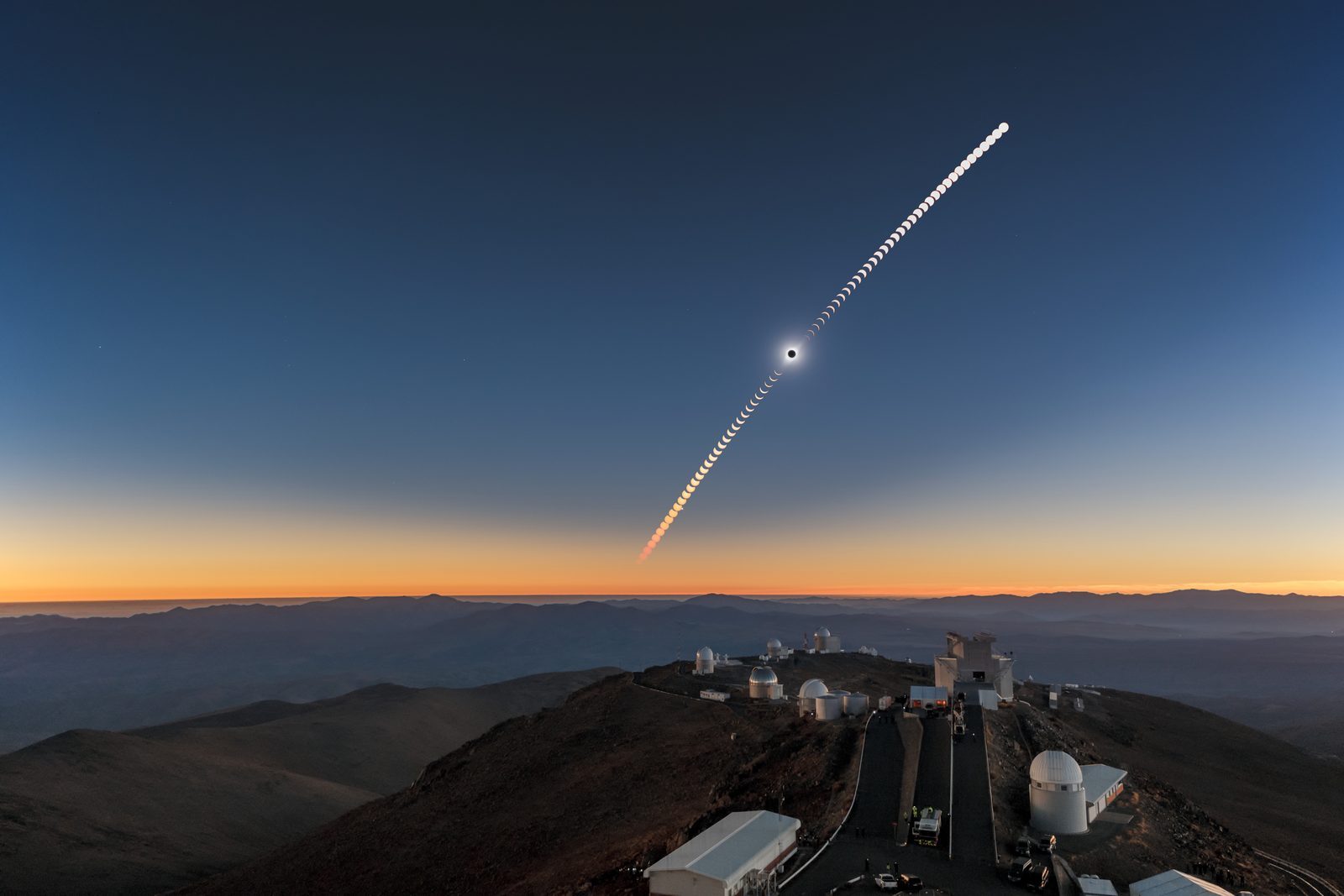
There is nothing else in the sky quite like it. For a few minutes the Moon slides fully across the Sun, day drops to a deep blue dusk, the temperature falls, and the Sun’s ghostly corona blazes out around a black disk. People plan trips years ahead and cry when it happens. It is worth every mile.
It is also the one target in all of astronomy that can permanently blind you, silently, in the time it takes to say so. The Sun is safe to look at with the naked eye for exactly one window (the brief totality of a total eclipse) and dangerous every other second, including every moment of a partial or “ring of fire” eclipse. Get the gear right and you’re free to just watch. This guide is how you get it right.
Outer Space Trip may earn a commission from links on this page; your price is the same. How we choose. Prices move around. The links show current pricing.
The one rule: whatever you look through, the solar filter goes over the front and must meet ISO 12312-2. Certified eclipse glasses for your eyes; a front-mounted filter for any binoculars or telescope. Sunglasses, phone cameras, smoked glass and old screw-in “sun” eyepiece filters are not safe and never will be.
Our picks at a glance
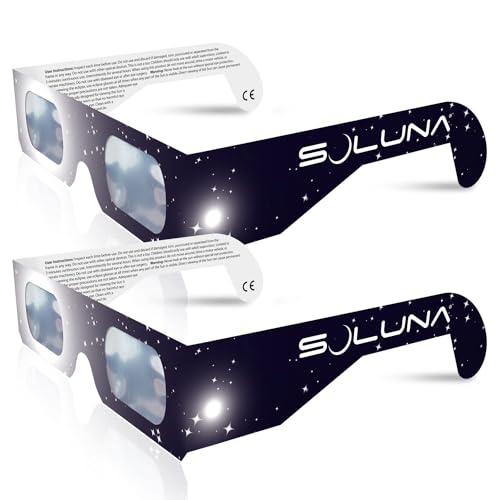
Soluna Eclipse Glasses — 2-Pack
The place to start: Soluna’s glasses are made in the USA by American Paper Optics — the NASA-approved manufacturer on the AAS supplier list — and independently lab-tested to ISO 12312-2. Sized for teens and adults, with a crease-fit that stays put. A 2-pack covers a couple or a solo viewer; a bigger group is what the multi-packs below are for.
- You want a US-made pair from the NASA-approved maker
- You only need one or two
- You want Amazon-Transparency counterfeit protection
- Two pairs only — a group needs the family or bulk packs instead
- US-made costs more per pair than the family 5-pack

Seestar Solar Eclipse Glasses
If you’re handing glasses to a classroom, a street party or an extended family, buying by the two-pack gets expensive fast. These come from ZWO — the company that makes the Seestar smart telescopes — in 6, 12 and 24-packs, and they carry the full certification chain: ISO 12312-2, EN ISO 12312-2:2015, and EU PPE Regulation 2016/425, which for eye protection means an independent notified body examined the actual product. Sold only on ZWO’s own store, so order with enough lead time for shipping.
- You need more than a handful of pairs and don’t want to buy five 2-packs
- You want documented third-party certification, not just a printed claim
- You’re ordering early enough that direct-store shipping isn’t a risk
- Sold only on ZWO’s own store — shipping lead time is the planning item
- Six pairs minimum: too many for a solo viewer or a couple

Celestron EclipSmart 10×42 Solar Binoculars
The safest way to get a magnified look. The ISO 12312-2 filters are built into the objectives and permanently sealed, so there is nothing to attach or knock loose in the moment you raise them — the most common way people get hurt. Sunspots and the partial phases show sharp and close.
- Sun-only glass: the sealed filters never come off, so they’re useless for night astronomy
- The usual 10× hand shake applies — brace them or mount them

Celestron EclipSmart Solar Filter
A front-mounted, ISO 12312-2 white-light filter caps the big end of the tube so no concentrated sunlight ever reaches the eyepiece. Solar filters are sized to the telescope’s aperture — match the model to your scope before you buy, and never use an old screw-in eyepiece sun filter.
- Sized to the telescope — buy the wrong model and it simply doesn’t fit
- A solar accessory: it caps the tube for the Sun and adds nothing at night
The only safety standard that matters: ISO 12312-2
Any filter you point at the Sun (glasses, a binocular filter, a telescope filter) should state that it meets ISO 12312-2, the international standard for direct solar viewing. It guarantees the filter blocks essentially all of the visible light plus the invisible ultraviolet and infrared that also cook your retina. A proper white-light solar filter transmits about 1 part in 100,000, so the Sun shows up as a comfortable, sharp disk. If a product doesn’t actually name the standard, don’t trust your eyes to it, no matter how dark it looks.
For your eyes: certified eclipse glasses
For most people, watching an eclipse means standing in a field with a paper pair of eclipse glasses and looking up. That’s the whole kit, and it’s enough. The partial phases, when the Moon slowly covers the Sun, are the part everyone remembers, and glasses show them perfectly. Buy a pair for everyone in your group, and buy them early: certified glasses are made in seasonal batches around eclipses and reliably sell out in the weeks beforehand. Check each pair before use for scratches or pinholes, and toss any that are damaged. Soluna’s 2-pack is made in the USA by American Paper Optics, the NASA-approved manufacturer on the AAS supplier list; for a family or group, the certified 6/12/24-packs below beat buying two-packs. Only buy from makers you can verify on the AAS supplier list — counterfeits are common, and a printed ISO number on its own proves nothing. Made-in-USA 2-pack ▸
A closer look, no gear to set up: 2× power viewers

If flat eclipse glasses feel like too little but binoculars are more than you want to fuss with, 2× power viewers are the easy middle. They’re folding handheld viewers — the same certified ISO 12312-2 solar film as good glasses, but with a small 2× lens behind it, so the growing bite out of the Sun and the bigger sunspot groups show sharper and larger. Nothing to mount, nothing to align, and safe to hand a kid. The catch this season: Celestron’s EclipSmart 2× pair — the one we’d point you to — has been out of stock since mid-July, and certified viewers are made in seasonal batches that rarely restock in eclipse week, so there’s no listing here we can stand behind right now. If you find a pair in a shop, check the film for pinholes and scratches like any pair of glasses. For a magnified look you can actually buy today, the sealed-filter EclipSmart solar binoculars below are the pick. Same rule as ever: a power viewer is for your naked eye only — never hold one in front of binoculars or a telescope.
If you own binoculars
A magnified view turns dark sunspots and the crisp edge of the Moon’s bite into something you can really study. The safest way to get it is a dedicated solar binocular like the Celestron EclipSmart, which has ISO 12312-2 filters built into the objectives and permanently sealed — nothing to attach, align, or knock loose at the worst possible moment. You can also fit certified front filters over binoculars you already own, but that puts the whole safety burden on you. Our solar binoculars guide covers both routes in depth, including how to filter a pair you own safely.
Never hold eclipse glasses in front of or behind binoculars or a telescope. The glasses are rated for your naked eye, not for the concentrated light coming out of a 42mm lens. That combination can let intense light through and injure you. Filter the front of the optics, or use the glasses alone with no magnification.
If you own a telescope
A telescope shows the Sun’s disk larger and sharper than anything else, with sunspot groups resolved in detail, but it also gathers the most light, so the filter has to be right. Use a front-mounted, ISO 12312-2 white-light solar filter sized to your telescope’s aperture; it caps the big end of the tube so the sunlight is blocked before the optics ever concentrate it. Two rules that are not optional: the filter goes on the front, never at the eyepiece, and it must be sized to your scope, so match the model to your aperture before you buy. Old screw-in eyepiece “sun” filters sit where the light is focused and hottest, can crack without warning, and belong in the bin. Check price on a front solar filter ▸
What never to use
None of these block the infrared that silently burns your retina, and none belong anywhere near your eyes or your optics: sunglasses (even several stacked), smoked or tinted glass, exposed camera film or X-ray film, CDs or DVDs, Mylar balloon material, a phone or camera pointed at the Sun without a proper filter, or welding glass below shade 14. When in doubt, if the product doesn’t print “ISO 12312-2” on it, it isn’t solar-viewing gear.
The one moment the filter comes off: totality
During a total solar eclipse, and only in the brief minutes when the Moon completely covers the Sun, it is safe to lower the glasses and look with the naked eye — and the corona hanging in a dusk-dark sky is the sight people travel the world for. The instant the first blinding sliver of the Sun’s surface reappears, the glasses go straight back on. If any part of the bright disk is showing, you need the filter. A partial eclipse and an annular (“ring of fire”) eclipse never have a safe unfiltered moment: the Sun’s surface is exposed the entire time, so the filter stays on from first contact to last.
The next solar eclipse: August 12, 2026
The next total solar eclipse is August 12, 2026. The path of totality crosses Greenland, western Iceland, and a sliver of northern Spain — the first total solar eclipse over mainland Europe since 2006, which makes it a travel eclipse for most of us rather than a backyard one. A partial eclipse is visible across much of Europe, and a modest partial reaches the northeastern U.S. and eastern Canada around midday to mid-afternoon — up to about a fifth of the Sun covered from New England, glasses on the whole time. If you’re chasing totality, Iceland and northern Spain are the destinations, and stargazing- or eclipse-viewing tours in those regions book up early.
Here’s the reason to circle the date even if you can’t chase totality: August 12 is a rare triple-header. The very new moon that blacks out the Sun also leaves the sky as dark as it gets for the Perseid meteor shower, which peaks that same night — the best Perseid conditions in years, and visible from any dark backyard with no filter and no plane ticket. Step outside before dawn and you can catch the other half: a six-planet parade strung low across the morning sky. For most of us the eclipse itself is a partial or a flight abroad — but the meteors and the planets are a free show over the same 24 hours.
After that, mark August 2, 2027: a total eclipse over southern Spain, North Africa (including Egypt) and the Arabian Peninsula, with up to 6 minutes 23 seconds of totality: the longest over land until 2114. For viewers in the contiguous United States, the next total solar eclipse after April 2024 doesn’t come until 2044, which is exactly why a set of certified glasses and a filter for your optics is worth owning now: there are partial eclipses, sunspots, and planetary transits to watch in the meantime. Our eclipse guide has the full calendar of solar and lunar eclipses through 2030, with a live countdown and where each one is visible.
The bottom line
Watching a solar eclipse safely comes down to three pieces of gear and one rule. Certified ISO 12312-2 eclipse glasses for your eyes cover almost everyone — buy a few pairs and buy them early. Add solar binoculars or a front-mounted solar filter for your telescope if you want a magnified, detailed view. And whatever you do, keep the filter over the front and on the Sun at all times, except during the brief totality of a total eclipse. Do that, and you’re free to stop worrying and just watch one of the great sights of your life. New to observing the Sun in general? Start with our guide to viewing the Sun safely.
Frequently Asked Questions
What kind of glasses do you need to look at a solar eclipse?
You need eclipse glasses certified to the ISO 12312-2 international standard for direct solar viewing — not sunglasses, no matter how dark. Certified glasses block essentially all visible light plus the ultraviolet and infrared that damage your retina, so the Sun appears as a comfortable, sharp disk. Check each pair for scratches or pinholes before use, and buy early: certified stock is seasonal and sells out before an eclipse.
Can you look at a solar eclipse with the naked eye?
Only during the brief totality of a total solar eclipse, the few minutes when the Moon completely covers the Sun, is it safe to look without a filter. The instant any part of the bright solar disk reappears, you must put certified eclipse glasses back on. Partial eclipses and annular ('ring of fire') eclipses never have a safe unfiltered moment; the filter stays on the entire time.
Can you watch a solar eclipse through binoculars or a telescope?
Yes, but only with a proper ISO 12312-2 solar filter mounted over the front (the large lenses), never between your eye and the eyepiece, and never by holding eclipse glasses up to the optics. Dedicated solar binoculars have the filter built in and sealed. Telescope solar filters must be sized to your telescope's aperture, so match the model to your scope before you buy.
When is the next solar eclipse?
The next total solar eclipse is August 12, 2026, with totality crossing Greenland, Iceland, and northern Spain and a partial phase visible across Europe and parts of northeastern North America. The next one after that is August 2, 2027, over southern Spain, North Africa, and the Arabian Peninsula. The next total solar eclipse over the contiguous U.S. isn't until 2044.
Rob founded Outer Space Trip and writes its operator cost guides, the Space Tourism Price Index, and the See Space Now gear guides. He has observed since a high-school observatory in the 1990s and still runs the 10-inch Meade LX200 he bought after college. How we pick and source ▸
How to Photograph a Solar Eclipse
Smart-telescope, camera, and phone routes to the shot — with the filter rules that keep your sensor and your eyes safe, and settings for the partial phases and totality.
Read →The Great Eclipse of August 2, 2027
Up to 6 minutes 23 seconds of totality — the longest over land until 2114. Where to watch it, from southern Spain to Luxor, and why the trip gets booked years out.
Read →Eclipse Guide: Every Eclipse Through 2030
A live countdown to the next solar and lunar eclipse, plus a filterable calendar of every one through 2030 — dates, where each is visible, and how to watch safely.
Read →Solar Binoculars: See the Sun Safely
The one way to look at the Sun that won’t blind you — ISO 12312-2 solar binoculars for sunspots, eclipses, and transits, and how to safely filter binoculars you own.
Read →