The Best Space Christmas Gifts in 2026
Nine space gifts worth wrapping this Christmas, from a $10 book to a telescope that photographs galaxies, plus when telescopes go on sale, when to order by, and why the full Moon on Christmas Eve is good news.

In this guide
There is a particular silence on Christmas night when a new telescope comes out of its box. The wrapping paper is still on the floor, the house is too warm, and somebody is standing at the back door in socks, pointing a tube at the Moon. In 2026 that Moon is full on December 23 and still 99 percent lit on Christmas Eve, which is bad news for faint galaxies and the best possible news for a first look: the craters along the terminator are the easiest, most jaw-dropping target a telescope has, and nobody needs an app to find it.
So this page is built around that night. Nine gifts, in a ladder from a $10 stocking stuffer to a $399 telescope that photographs galaxies, every one of them drawn from the picks on our longer guides and re-checked weekly for price and stock. Then the practical part: the one week telescopes go on sale, how to order so the box is under the tree, and the meteor shower that lets you test the gift before you wrap it.
Which gift should you buy?
For a kid under eight, There’s No Place Like Space! in the stocking and the Celestron FirstScope under the tree. For a kid eight and up, or any adult who has never owned a telescope, the Sky-Watcher Heritage 130 is the one I would unwrap myself. For the grown-up who tears up at a launch, Pale Blue Dot is the sure thing under $20 and the Sega Homestar Flux is the gift that gets the quiet “oh, wow.” If the budget stretches to $399, the ZWO Seestar S30 hands them a photograph of a galaxy on the first clear night.
Outer Space Trip may earn a commission from links on this page; your price is the same. How we choose. Prices move — the links show current pricing.

There's No Place Like Space!
The Cat in the Hat tours the solar system in rhyme, and a four-year-old has the planets in order by New Year’s. Our favorite kids’ space book, and the cheapest thing on this page that gets read every night.
- You want a stocking gift that outlasts the candy
- The kid is 4–7 and already asks why the Moon follows the car
- Rhyme first, rigor second — it’s the hook, not the reference
- For the facts they’ll want next, the Nat Geo book below is the follow-up

Pale Blue Dot (Carl Sagan)
Sagan’s sequel to Cosmos, opening on the photograph of Earth from four billion miles out. Everyone who loves space owns Cosmos; far fewer have read this one, which makes it the safest great gift under $20.
- They stop scrolling for every launch
- You need a sure thing that fits in a stocking
- If they love space, they may own Cosmos already — this is the sequel most people have not read
- A 1994 book: the argument holds up, the mission details have moved on
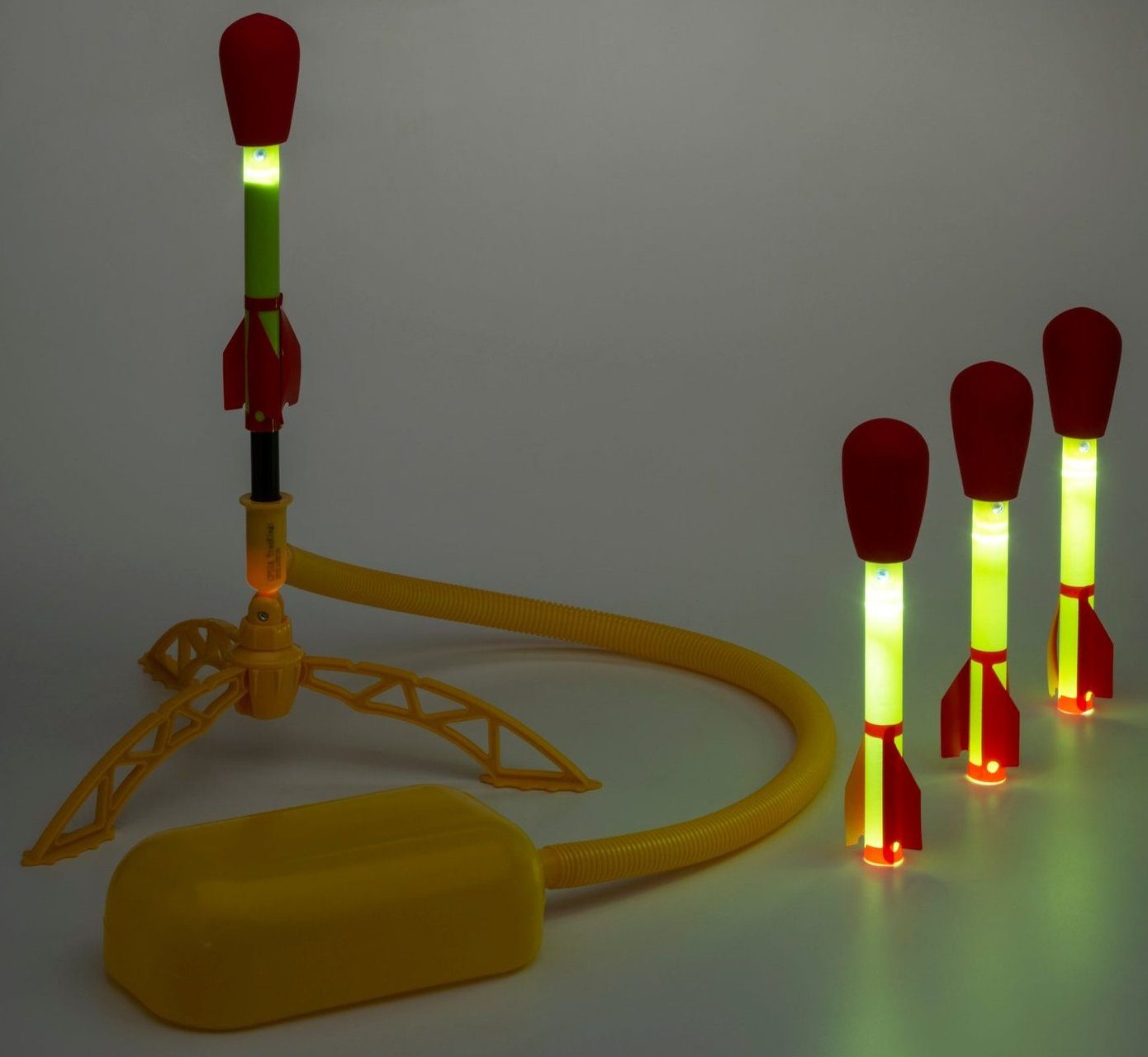
Stomp Rocket
No screen and no app on Christmas morning; the light-up rockets ship with their batteries. Stomp the pad, the rocket flies up to a hundred feet, the kid sprints after it and does it again. The most-used space gift I know of for this age.
- There is a yard, a park, or a cul-de-sac within reach
- You want the gift still in use in March
- Strictly an outdoor toy — a hundred feet of flight needs open space
- Pure play: it burns energy, it doesn’t teach the sky

Celestron Cometron 7×50
A 7×50 shows the Moon’s craters, the Pleiades and Jupiter’s moons the night it is unwrapped, with nothing to assemble. For a teenager or an adult who has never owned optics, it is the most sky per dollar on this page.
- You want real optics for under $50
- The recipient has never looked up through anything
- Entry-level coatings: bright stars show some color fringing
- 7× is the lowest power here — deep-sky targets stay small
- A 7mm exit pupil only pays off if your eyes still dilate that wide
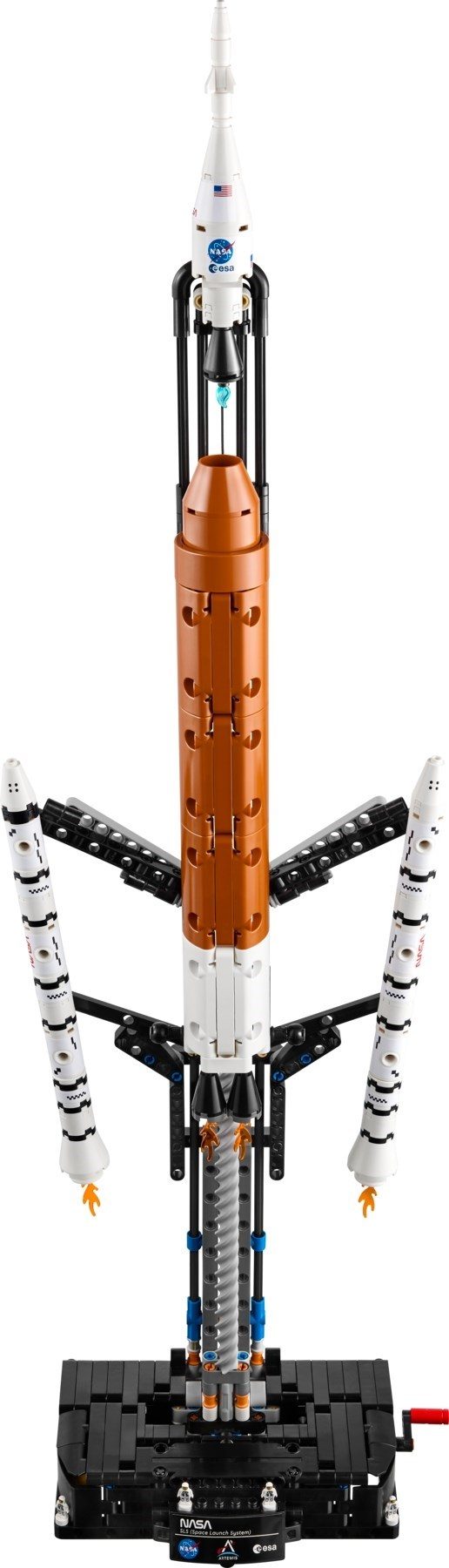
LEGO Technic NASA Artemis SLS Rocket
632 pieces, built in an afternoon, with a crank that launches the rocket off its pad. The Artemis program is the Moon mission these kids will grow up watching, and this is the set that makes it theirs.
- The kid watches launch videos on repeat
- You want a build that finishes on Christmas Day, not in February
- A working demo, not a display piece — the Icons SLS below is the monument
- Technic is its own building style: pins and panels rather than classic bricks

Celestron FirstScope 76
A 76mm tabletop reflector with almost nothing to set up: sit it on a table, point it at the Moon, and a young child sees craters within a minute. The right first telescope for a kid too young for the Heritage 130 below.
- The child is 5–9 and this is a first look through any scope
- You want the lowest-risk way to find out whether the interest sticks
- A real instrument with real limits: the Moon and bright planets, not faint galaxies
- Its payoff needs a clear night and a grown-up — it can’t deliver at the party
- Read the kids-telescope guide first; the wrong scope is how interest dies

Sega Homestar Flux
A home planetarium, not a mood light: 60,000 real stars from a glass disc, with the constellations where they sit outside. For the family whose backyard is streetlights, it is the gift that gets the quiet “oh, wow” on Christmas night.
- The sky at home is orange with light pollution
- You want a gift the whole room can share
- Costs several times what the ambient projectors below do
- A single starfield disc at a time — extra discs are sold separately
- Accuracy is the point, so it looks plainer than the nebula projectors

Sky-Watcher Heritage 130
The telescope I would hand most beginners, kid or adult: a 130mm tabletop Dobsonian with nothing to knock over and a mirror big enough for Saturn’s rings and the Orion Nebula. The Moon is nearly full on Christmas night, which makes it the perfect first target.
- You want the one telescope that will not be outgrown by Easter
- The recipient is 8 or older, or an adult
- You would rather buy one good scope than replace a cheap one
- Tabletop design — you supply the table, stool or crate
- Manual, so targets drift as Earth turns and the child nudges them back
- A Newtonian’s mirrors need occasional collimating — a parent job, not a kid job

ZWO Seestar S30
Sets itself up, finds its target, and stacks a live photograph of a galaxy on a phone screen, with no charts and no learning curve. For a space lover who has never owned a telescope, it skips the frustrating part and goes straight to the payoff.
- The recipient wants photographs more than an eyepiece view
- You can confirm stock before you count on it
- Prone to selling out at ZWO’s store — check availability before you count on it
- 30mm of aperture: deep-sky targets are photographed, not seen bright
- Equatorial mode needs ZWO’s separate TH10 head at about $99
The picks at a glance
Every gift here by price, who it fits, and what happens the night it is opened. Detail on each is in the cards above; the longer reviews are on the linked guides.
| Gift | Best for | Christmas night | Price |
|---|---|---|---|
| There’s No Place Like Space! | Kids 4–7 | Read at bedtime, planets in order by New Year’s | $10–13 |
| Pale Blue Dot (Carl Sagan) | Any adult who loves space | Started by the fire, finished by January | $12–18 |
| Stomp Rocket | Kids 5–9 | Launched off the driveway before lunch | $25–30 |
| Celestron Cometron 7×50 | Teens and adults, first optics | Moon craters and the Pleiades from the porch | $38–48 |
| LEGO Technic Artemis SLS | Kids 9+ | Built and launching by the afternoon | ~$60 |
| Celestron FirstScope 76 | Kids 5–9 | Craters in a minute, on the patio table | $60–80 |
| Sega Homestar Flux | Light-polluted homes | 60,000 stars on the living-room ceiling | $200–260 |
| Sky-Watcher Heritage 130 | Ages 8+ and adults | The full Moon, then Saturn before bed | $280–310 |
| ZWO Seestar S30 | The splurge | A photograph of the Orion Nebula on a phone | $399 |
When to buy: the one week telescopes go on sale
Telescopes are not headphones. Celestron, Sky-Watcher and ZWO post a few real discounts a year, and the only one left before Christmas is the Black Friday week, November 27 through Cyber Monday, November 30. The two scopes on this page that move most in that window are the Heritage 130 and, on the longer guides, the Celestron StarSense DX 130AZ; the Seestar has been cut in past Black Friday weeks too. If one of those is the gift, it is worth waiting the two weeks. The books, the Stomp Rocket and the binoculars barely move in price, so buy them when you like.
Our deals board lists which of our picks are marked down right now, re-read by hand, so you can check it the morning of Black Friday instead of trusting a “was $499” sticker.
Order by the delivery date, not the ship date
The telescope that arrives December 27 is a worse gift than the binoculars that arrive December 23. Amazon shows an estimated delivery date on every listing before you pay; read that date, not the “ships in” line, and treat anything later than December 22 as a gamble. Two of the gifts here come from the maker’s own store rather than Amazon: the Seestar S30 ships from ZWO, which has sold out in past Decembers, and if that happens the Heritage 130 is the fallback I would make without regret. For everything else, Amazon’s own listings with the fastest shipping are the safe route in the last ten days; third-party sellers run on their own clocks.
If the box will not make it, print the product page and wrap that. A telescope is a gift of clear nights, and January has plenty.
Christmas night: the Moon is full, and that is the point
The Moon reaches full on December 23, 2026 and is still 99 percent lit on Christmas Eve and 97 percent on Christmas night. Astronomers groan at a full Moon because it washes out everything faint, but for a telescope’s first night it is the ideal target: bright enough to find in a second with no app, no finder, no charts, and detailed enough to hold a nine-year-old at the eyepiece. Look along the edge of the lit side where the shadows are longest and the craters stand up in relief. Our guide to observing the Moon names what you are seeing.
Then swing to Saturn, an evening object through the end of the year after its October opposition, and the single view most likely to produce an “oh” out loud. The rings are a clean oval even in the FirstScope; in the Heritage 130 they separate from the disc. Save the faint stuff, the Orion Nebula and the Andromeda Galaxy, for the dark-Moon week around January 8, when the same scope shows them properly.
Test the gift before you wrap it: the Geminids, December 13–14
The best meteor shower of the year peaks the night of December 13–14, and 2026 is its year: a thin waxing crescent Moon, about 20 to 30 percent lit, sets early and leaves the peak hours dark. Meteors need no equipment, which makes it the perfect dress rehearsal. Take the binoculars out of the box and sweep the Pleiades while you wait. Put the Heritage 130 together on the kitchen table, check the mirror arrived aligned, and look at Saturn, then pack it back up. A telescope that has already been assembled once is a telescope that works on Christmas night. Our Geminids guide has the hour-by-hour plan.
What to skip
The cheap tripod refractors that fill the gift listings every December, the 70mm bundles promising “525×” for $80. They show a blurry smear where the Moon should be and quietly kill the interest they were meant to start; the FirstScope and the Heritage 130 exist so you never have to buy one. Freeze-dried astronaut ice cream, a fun gag and a sad main gift. Novelty “name a star” certificates, which name nothing official. And the $15 “galaxy projectors” that throw random colored blobs; if you want the projector idea, the Homestar Flux is the real thing.
If you buy one thing
For a kid, the Sky-Watcher Heritage 130 if they are eight or older, the Celestron FirstScope if they are younger. For an adult, Pale Blue Dot in the stocking and the Sega Homestar Flux under the tree.
Want more choice? The full lists are on space gifts for kids, gifts for space enthusiasts and the best LEGO space sets, and every first-telescope question is answered on best telescopes for kids.
Frequently Asked Questions
What is the best space gift for Christmas 2026?
For a kid eight or older, or an adult who has never owned a telescope, the Sky-Watcher Heritage 130 (~$280-310): a 130mm tabletop Dobsonian with nothing to knock over and a mirror big enough for Saturn's rings. For a younger child the Celestron FirstScope 76 (~$60-80). For a grown-up space lover under $20, Carl Sagan's Pale Blue Dot; for a bigger gift, the Sega Homestar Flux home planetarium (~$200-260) or the ZWO Seestar S30 smart telescope (~$399).
When do telescopes go on sale before Christmas?
The Black Friday week, November 27 through Cyber Monday, November 30, 2026, is the one real discount window left before Christmas. Celestron and Sky-Watcher have cut the Heritage 130 and the StarSense DX 130AZ in that week before, and ZWO has discounted the Seestar. Books, binoculars and toys barely move, so buy those whenever you like. Our deals page lists which picks are marked down right now.
Is a full Moon on Christmas a problem for a new telescope?
No, it is the best first target. The Moon is full on December 23, 2026 and still 99 percent lit on Christmas Eve. It washes out faint galaxies, but it is bright enough to find in seconds with no app and detailed enough to hold a child at the eyepiece: look along the edge of the lit side, where the shadows make the craters stand up. Saturn is also an evening object through the holidays. Save the Orion Nebula for the dark-Moon week around January 8.
What is a good space stocking stuffer?
For a kid 4-7, There's No Place Like Space! (~$10-13), the Cat in the Hat's rhyming tour of the solar system. For an adult, Carl Sagan's Pale Blue Dot (~$12-18). Both fit a stocking and both get finished. A red astronomy headlamp or flashlight (~$15-25) is the practical stocking gift for anyone who already owns a telescope.
What cheap telescope should I avoid as a Christmas gift?
The 70mm tripod refractors sold in gift bundles for $60-100 and advertised at '525x' or similar. The optics and the wobbly mount show a blurry smear where the Moon should be, and the gift ends up in a closet by February. A Celestron FirstScope 76 (~$60-80) costs the same and works; the Sky-Watcher Heritage 130 (~$280-310) is the one most experts hand a beginner.
How late can I order a telescope and still have it by Christmas?
Go by the estimated delivery date Amazon shows on the listing before you pay, not the 'ships in' line, and treat anything later than December 22 as a gamble. Amazon's own listings with the fastest shipping are the safe route in the last ten days; third-party sellers and maker stores like ZWO's run on their own clocks and have sold out in past Decembers. If the box will not make it, wrap a printout: a telescope is a gift of clear nights, and January has plenty.
The Best Space Gifts for Kids
Half of all space gifts are in a closet by February. These are the seven kids keep using, by age, from an $8 picture book to the telescope a teenager won't outgrow.
Read →The Best Gifts for Space Enthusiasts
For the adult who tears up at a launch — picks from a $15 Carl Sagan classic to a smart telescope that photographs galaxies.
Read →The Best LEGO Space Sets
Eight sets, most of them NASA: the Artemis SLS, Hubble, Perseverance and a $35 telescope, plus the Amazon trap.
Read →Space Gear Deals: Our Picks on Sale Right Now
Which of our telescope, binocular and star-projector picks are marked down, re-checked by hand — plus the year’s real buying windows.
Read →The Best Star Projectors for 2026
From the $17 astronaut night light to a 60,000-star home planetarium — what the difference costs and which models are worth buying.
Read →