Guided Stargazing & Dark-Sky Tours
You don't need to own a telescope or learn the night sky yourself. Real, bookable guided stargazing tours in Sedona, Zion, Joshua Tree, the Grand Canyon, Death Valley, Boulder, Jackson Hole, and Tenerife — what they cost, what you get, and whether one beats buying your own gear.
In this guide
- Greater Zion, Utah: the widest range of options
- Sedona, Arizona: the one people actually search for
- Las Vegas & Death Valley: the day-trip option
- Grand Canyon: the bucket-list combo
- Joshua Tree, California: the L.A. escape
- Boulder, Colorado: the astronomer-led option
- Jackson Hole, Wyoming: the one with a real observatory
- Tenerife: the best value in the world, if you’re in Europe
- What you’re actually paying for
- What to bring, whichever tour you book
The single biggest barrier to seeing a real night sky isn’t owning a telescope. It’s knowing where to point it, and knowing where to stand. Most people who’d love to see the Milky Way properly never do, because they don’t know a genuinely dark site nearby, don’t own binoculars, and don’t know Scorpius from the Big Dipper once they get there. A guided stargazing tour solves all three problems for the price of a couple of movie tickets: someone else has already scouted the dark spot, hauled out the telescope, and knows exactly what’s overhead tonight.
Outer Space Trip may earn a commission from booking links on this page; your price is the same.
Greater Zion, Utah: the widest range of options
The area around Zion National Park has become one of the best-organized dark-sky tourism markets in the country, with three genuinely different tours depending on how much time and money you want to spend.
- East Zion Stargazing Trip with Hot Chocolate: about an hour, from roughly $20. A short walk to a stargazing point, a rundown of the visible constellations, and time at a telescope. The cheapest real introduction to a dark sky you’ll find anywhere on this list.
- Greater Zion Dark Sky UTV Tour: about two hours, from roughly $159. You drive a UTV out into the desert as the sun sets, then stop under a genuinely dark sky as twilight fades. Good pick if you want the adventure built into the tour, not just the sitting-and-looking part.
- Zion National Park Stargazing Tour with Hot Drinks: about two hours, from roughly $213. The most polished of the three, with warm drinks and more one-on-one time with the guide.
All three are bookable through GetYourGuide’s Zion stargazing listings (current prices, availability, and free-cancellation windows are shown at booking).
Sedona, Arizona: the one people actually search for
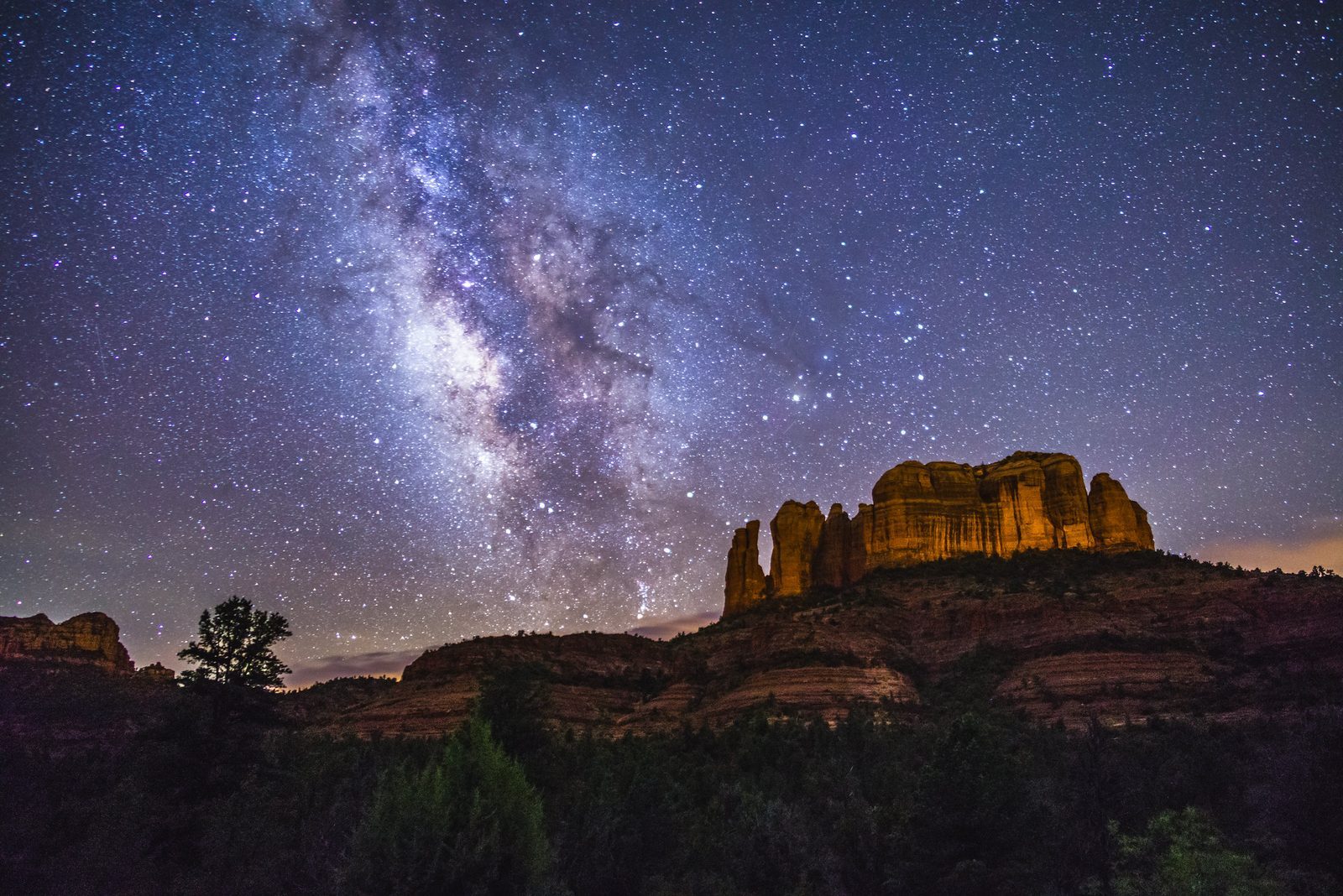
Sedona is a certified Dark Sky Community (the town itself regulates its lighting), which means you get a genuinely dark sky twenty minutes from a hotel bed and a good dinner. No other tour market on this list makes it that easy. The signature offering is a roughly 90-minute telescope and video-astronomy tour, from about $125: large telescopes for the planets and star clusters, plus live-camera screens that pull in faint nebulae and galaxies your eye can’t catch at the eyepiece. Astronomer-led, held at a scouted dark site outside town, and timed around moonlight.
If you’d rather not share the guide, private stargazing tours with a local astronomer start around $200 for two hours. And yes, this being Sedona, there’s a nighttime UFO tour with military-grade night-vision goggles. I’d book the telescope tour for the sky and treat the UFO one as the campfire-story option, but the goggles genuinely show you satellites and meteors you’d never see unaided. All of it is on GetYourGuide’s Sedona stargazing listings.
Las Vegas & Death Valley: the day-trip option
Death Valley is one of only a handful of International Dark Sky Parks within driving distance of a major U.S. airport, and several Las Vegas-based operators run it as a full day trip rather than a quick evening add-on: a 12-hour loop through Zabriskie Point, Badwater Basin, and Dante’s View, timed to end with sunset and then roughly 90 minutes of full dark once the sky commits. It’s the pick if you want the daytime scenery (the salt flats, the overlooks) as part of the same trip, not a stargazing-only outing. Options and current pricing are on GetYourGuide’s Las Vegas stargazing listings.
Grand Canyon: the bucket-list combo
The Grand Canyon is an International Dark Sky Park, and the South Rim after the day crowds leave is one of the strangest stargazing settings anywhere: a mile-deep void in front of you, the Milky Way overhead, and nothing else. The bookable inventory splits two ways. In and around Grand Canyon Village, evening stargazing programs put you at the rim with a guide and telescopes. From Las Vegas, full-day combos (from roughly $399) stack the canyon, Antelope Canyon, and Horseshoe Bend into one long loop that ends with a dark-sky stop — a lot of driving, but it turns a Vegas trip into a canyon-plus-stars day without renting a car. Both flavors are on GetYourGuide’s Grand Canyon stargazing listings. One honest note: if the stars are the point and the canyon is a bonus, the Village-based evening tours beat the day-trip format: you’re fresher at full dark, and the sky gets the hours it deserves.
Joshua Tree, California: the L.A. escape
Joshua Tree is the dark sky Los Angeles drives to, about two and a half hours from the city, and the difference in the sky is the whole show. The standout booking is a two-hour professional stargazing experience (around $189) that’s closer to an outdoor planetarium night than a campfire chat: deep-space telescopes on galaxies and nebulae, an astronomer guide with a laser pointer, oversized loungers so you’re actually comfortable looking straight up, hot chocolate, and astrophotography from the session to take home. A cheaper counterpoint: the soundbath under the stars (around $85) trades the telescopes for meditation under the open sky — less astronomy, more atmosphere, and a very Joshua Tree way to spend two hours. Both are on GetYourGuide’s Joshua Tree stargazing listings.
Boulder, Colorado: the astronomer-led option
Just outside Boulder, a guided astronomy tour meets at the Boulder Valley Ranch Trailhead (flat ground, easy parking, no hiking required) and runs about two hours around sunset. What sets it apart is who’s leading it: a professional astronomer walks you through the sky with high-powered telescopes and a laser pointer, then takes questions. You’re handed a red flashlight and camp seating; bring your own blanket and warm layers, since temperatures drop fast once the sun’s down. Like most outdoor astronomy tours, it’s weather-dependent and cancels if it’s too cloudy to see anything. Current pricing and dates are on GetYourGuide’s Colorado stargazing listings.
Jackson Hole, Wyoming: the one with a real observatory
Every other tour on this page hauls telescopes out to a dark spot. Jackson Hole built the dark spot a building. The Snow King Observatory & Planetarium sits on the summit of Snow King Mountain, just under 8,000 feet, straight above the town of Jackson — and you get there the way skiers do, riding the gondola up while the light fades off the Tetons. Under the dome is a 1-meter PlaneWave telescope, which Snow King calls one of the largest public telescopes in the Rocky Mountain region; a meter of mirror is more aperture than any telescope a tour van can carry. It opened in June 2024 after a decade of work by the local nonprofit Wyoming Stargazing, and bills itself as the only mountaintop observatory-and-planetarium in the country.
The Night Experience (9:00–10:30pm; $100 adults, $75 students, kids 5 and under free) is the one to book: the gondola ride, guided stargazing from the summit, the telescope tour, and shows under the 8-meter planetarium dome. In high summer a late-night session runs to midnight. The $25 evening planetarium show is the budget seat, and a $70 daytime ticket trades stars for a solar telescope and the full Teton panorama. Prices are from Snow King’s own box office as of August 2026; reserve ahead — night slots and summer weekends book out first. On value, $100 lands mid-pack for this page, below Joshua Tree and Zion’s premium tour, and it’s the only ticket here that ends at a permanent dome instead of a field setup. The trade is that you’re directly above a lit resort town rather than a hundred empty miles of desert — take this night for the instrument, and a Death Valley or Teide night for the sky itself. Grand Teton National Park’s astronomer-led night trips (from about $175 on GetYourGuide’s Jackson Hole listings), the free weekly telescope nights in town, and the park’s darkest pullouts are all in our full Jackson Hole stargazing guide.
Tenerife: the best value in the world, if you’re in Europe
One international entry earns its place on a mostly-U.S. list: Mount Teide on Tenerife, in Spain’s Canary Islands, is the single busiest guided-stargazing market anywhere — individual sunset-and-stars tours there carry three and four thousand reviews, more than every U.S. tour on this page combined. The reason is the setup: a volcano rising 12,000 feet above the Atlantic cloud layer, protected air that’s among the steadiest on Earth (the Canaries host major professional observatories for it), and a resort island’s worth of hotel pickups at the bottom.
The prices are the shock if you’re used to U.S. tours: standard sunset-and-stargazing trips into Teide National Park start around $46 with hotel pickup, and even the long-format versions (dinner, sunset toast, astrophotography, nine hours) top out near $120. That’s Zion’s premium-tour price for triple the evening. If a Canary Islands trip is anywhere on your horizon, this is the easiest yes in this guide: GetYourGuide’s Tenerife stargazing listings. (For the Canaries’ even darker sister island, see La Palma in our dark-sky destinations guide.)
What you’re actually paying for
A telescope on its own doesn’t get you a great night under the stars — a dark site and someone who knows the sky do. That’s the whole value of a guided tour: it bundles the two things a beginner doesn’t have yet (a scouted dark location, and the knowledge of what’s up and where) with the one thing that’s expensive to buy but cheap to borrow for an evening (the telescope itself). For a single night, especially while traveling, that trade is an easy yes.
It stops being the right trade the moment you want to do this regularly. If your first guided tour leaves you wanting more, and it usually does, the honest next step is your own gear, so you’re not paying per-visit for something you can own outright. Our astronomy binoculars guide covers the cheapest real upgrade (a $45–100 pair changes the Milky Way from a smudge to a river of stars), and the telescope finder matches you to a first scope in four quick questions. Either pays for itself after two or three tour bookings.
What to bring, whichever tour you book
- Layers. Desert and high-elevation sites drop 20–30°F after sunset even in summer. Every tour above mentions this for a reason.
- A charged phone, screen dimmed. White light kills night vision for everyone nearby, not just you. Most guides will ask.
- Low expectations for photos. What you see with your eyes is real but subtle — a soft arc, not a saturated long-exposure image. See our Milky Way viewing guide for what to actually expect.
- A backup night if you can. These are outdoor, weather-dependent tours. Cloud cover cancels or reschedules more often than a typical daytime activity.
None of this requires you to already know the sky, or own anything more than a jacket. That’s the entire appeal — and it’s the cheapest, lowest-commitment way to find out whether stargazing is something you want to keep doing.
Frequently Asked Questions
Do I need my own telescope for a guided stargazing tour?
No. Every tour listed here supplies telescopes or binoculars as part of the price. That's the main reason to book one instead of going out on your own. The gear and the dark-sky location are both handled for you.
How much does a guided stargazing tour cost?
Confirmed 2026 pricing runs from about $20 for a one-hour East Zion tour up to roughly $213 for a more involved two-hour Zion tour with hot drinks, and most flagship tours (Sedona at ~$125, Joshua Tree at ~$189, Jackson Hole's Snow King observatory night at $100) land in between. Day-trip formats, like the Las Vegas–based Death Valley and Grand Canyon combos, run $399 and up since they include a full day of sightseeing before the stargazing portion. The outlier is Tenerife's Mount Teide, where sunset-and-stars tours start around $46.
How much does a Sedona stargazing tour cost?
The signature Sedona telescope and video-astronomy tour runs about $125 per person for roughly 90 minutes, led by an astronomer at a dark site outside town. Private tours with a local guide start around $200 for two hours, and specialty options like the night-vision UFO tour price similarly. Sedona is a certified Dark Sky Community, so the dark site is minutes from town rather than an hour's drive.
Where is the best place to book a guided stargazing tour?
For the widest range of prices, Greater Zion (tours from $20 to $213). For the easiest dark sky next to a real town, Sedona. For a bucket-list backdrop, the Grand Canyon's rim programs. For sheer hardware, Jackson Hole, where Snow King's mountaintop observatory puts a 1-meter telescope at the top of a gondola ride. For value, nothing touches Tenerife's Mount Teide, where tours start around $46 above the Atlantic cloud layer. The honest answer is whichever one is already on your travel calendar. Every destination here has a genuinely dark sky and astronomer-grade guiding.
What is the Snow King Observatory & Planetarium in Jackson Hole?
It's a mountaintop observatory and planetarium on the summit of Snow King Mountain in Jackson, Wyoming — reached by the resort gondola, opened in June 2024, and built around a 1-meter PlaneWave telescope that Snow King calls one of the largest public telescopes in the Rocky Mountain region, alongside an 8-meter planetarium dome and a dedicated solar telescope for daytime viewing. As of August 2026 the Night Experience (9:00–10:30pm) runs $100 for adults and $75 for students, evening planetarium shows are $25, a daytime visit is $70, and kids 5 and under are free. Reserve ahead in summer; night sessions fill first.
What happens if it's cloudy on the night of my tour?
Outdoor astronomy tours are weather-dependent, and operators typically build that into their cancellation policy. Most offer free cancellation up to 24 hours ahead, and some reschedule automatically if the sky won't cooperate. Check the specific tour's policy before booking.
Is a guided tour better than buying my own telescope?
For a single night, especially while traveling, a guided tour is the better value — you get an expert and pre-scouted dark sky without buying anything. If you find you want to stargaze regularly, buying your own binoculars or a beginner telescope pays for itself after a few tour bookings, since you stop paying per visit.
Rob founded Outer Space Trip and writes its operator cost guides, the Space Tourism Price Index, and the See Space Now gear reviews. He tracks pricing and flight-status announcements from every major operator and tests the stargazing gear we recommend. How we pick and source ▸
The Best Stargazing Hotels & Dark-Sky Resorts
Hotels where the telescope is already outside — a Bortle 2 villa in Colorado, a silo observatory in Virginia, and a 12″ Meade in the Namib.
Read →Stargazing on Mauna Kea
Hawaii’s 13,800-ft summit is the best observatory site on Earth — the free visitor-station program, the guided summit tours, altitude and access rules, and when to go.
Read →Stargazing in Sedona
A certified Dark Sky Community with 275 clear nights a year — the best free red-rock viewpoints, when to go, the Milky Way season, and the astronomer-led tours worth booking.
Read →Stargazing in Jackson Hole
Free weekly telescope nights, a mountaintop observatory up a gondola, Grand Teton’s dark pullouts, and the astronomer-led park tours worth booking — with what each costs.
Read →Stargazing in the Northeast
Real dark skies within a drive of NYC and Boston — the Catskills, Cherry Springs, the Adirondacks and northern Maine, plus the astronomer-led overnights worth booking.
Read →The Best Dark-Sky Destinations
Where to travel for a truly dark sky — Atacama, Aoraki Mackenzie, La Palma and more, with when to go and how to book a stargazing tour.
Read →