How to Observe the Moon
The full Moon is the worst night to look at it. On a half Moon, shadows along the day-night line throw craters into relief. What to see and when to look.
In this guide
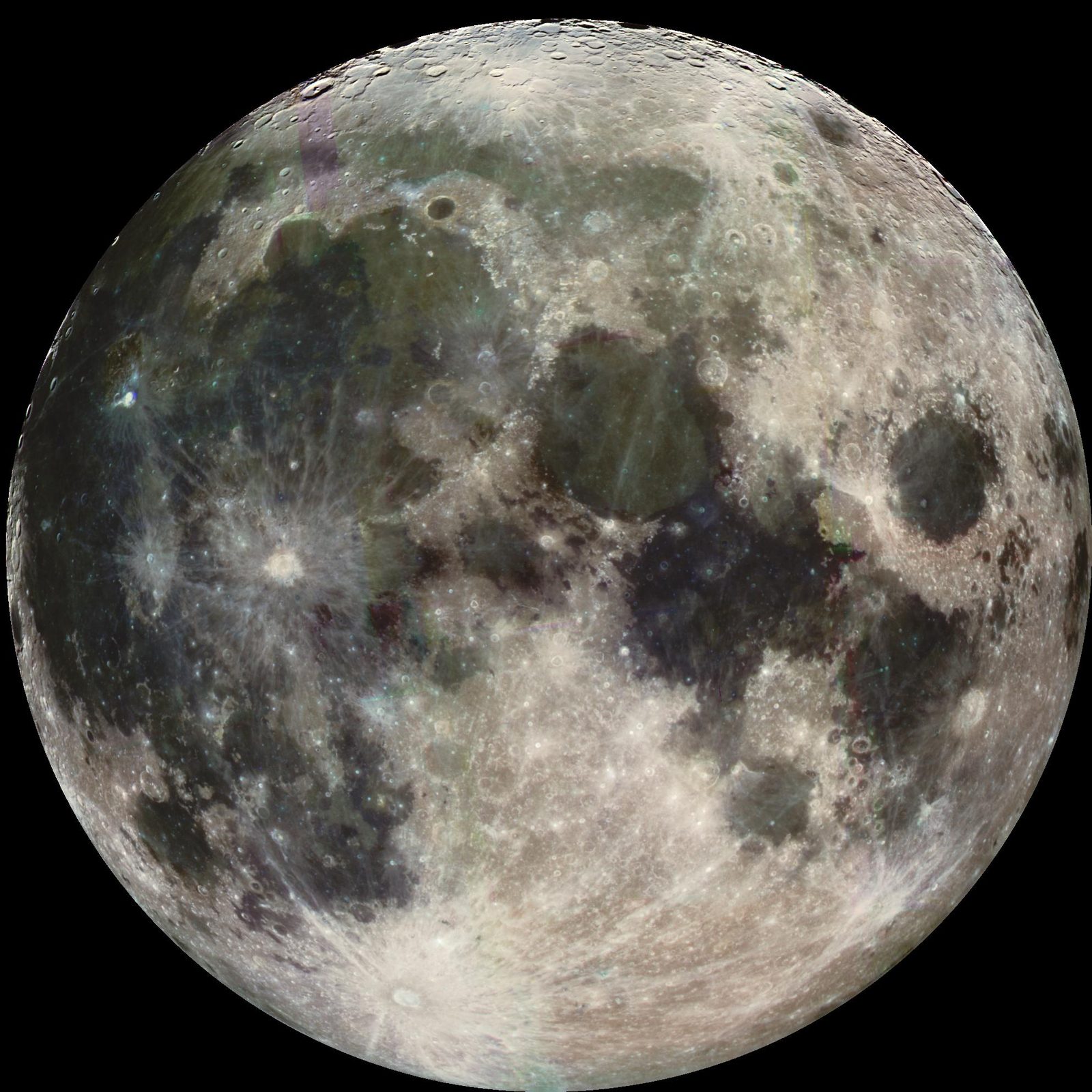
Point a telescope at a full Moon and it’s a letdown: a flat, blazing disc, no depth, bright enough to leave an afterimage. Point the same telescope at a half Moon a week earlier and it’s a different world — mountains throwing shadows across crater floors, rims catching the light while the floors stay black, the whole surface standing up in relief. The Moon is the best thing a beginner telescope shows you. Almost everyone looks on the wrong night.
The trick is the terminator — the line between lunar day and night. Along it the Sun sits low on the Moon’s horizon, so every crater rim and mountain casts a long shadow and the ground reads in three dimensions. At full Moon the Sun is straight overhead out there: no shadows, no relief, just glare. So the best nights to observe are the ones people ignore.
Outer Space Trip may earn a commission from links on this page; your price is the same. How we choose.
When to look: skip the full Moon
The two best windows each month are the quarter phases. At first quarter — a half Moon, high in the evening sky about a week after new Moon — the terminator runs straight down the middle of the disc and the shadows are at their longest. At last quarter, the other half is lit and the terminator relights the same ground from the opposite side, though you have to be up before dawn for it.
You don’t need to wait for an exact half Moon. Any night from a thin crescent through the gibbous phase puts the terminator across some stretch of interesting ground, and the crescent-to-first-quarter run happens in the early evening, which is the civilized time to be outside. What changes night to night is where the drama is: the terminator sweeps westward across the face over about two weeks, lighting a fresh band of craters and seas each evening. The feature that was a flat gray smudge last night can be a canyon of shadow tonight.
Finding the Moon is the one target you can’t miss. The skill is knowing what you’re looking at — which brings us to what’s worth hunting for, and roughly when it lights up.
What to see, and when it lights up
A rough tour, in the order the terminator reveals them after new Moon:
| Phase | What’s on the terminator |
|---|---|
| Thin crescent (days 3–5) |
Mare Crisium — an isolated dark oval near the eastern limb, the first “sea” to catch the dawn light, ringed and standing alone. Nearby, the crater Langrenus shows terraced walls. |
| Toward first quarter (days 6–7) |
Mare Tranquillitatis — the Sea of Tranquility, where Apollo 11 landed. The crater trio Theophilus, Cyrillus and Catharina steps down its southern edge with sharp shadow detail. |
| First quarter (day 7–8) |
The showpiece: the Apennine Mountains, a curved range along the edge of Mare Imbrium, peaks casting shadows tens of miles long. To the north, Plato — a flat, dark, lava-floored crater that looks painted on. |
| Waxing gibbous (days 9–10) |
Copernicus — the finest crater on the Moon for a small scope: terraced walls, a cluster of central peaks, and a bright splash of rays. The one crater to see if you see only one. |
| Full Moon (day 14) |
The one thing worth the glare: Tycho, in the south, its bright ray system flung a third of the way across the disc. Rays show best at full Moon precisely because there are no shadows to compete with them. |
None of these needs a big telescope. A 60–80mm refractor or a pair of binoculars shows the maria, the terminator and the largest craters; a 130mm scope resolves crater floors, central peaks and mountain shadows. The Moon rewards aperture, but it gives a real show to the smallest instrument you own.
How to actually look
- The Moon takes magnification. Unlike faint deep-sky objects, it’s bright, so it holds up at high power. Frame the whole disc at 40–50×, then swap to a shorter eyepiece and push to 100–200× to sit on a single crater. On a steady night you can go higher.
- Ride the terminator. Don’t scan the bright, washed-out middle of a lit region — work the shadow line, where the contrast lives. Come back to the same crater on a later night and the light angle will have changed it completely.
- Cut the glare near full. A near-full Moon is dazzling in the eyepiece and can leave you night-blind for minutes. A Moon filter or variable polarizer dims it to a comfortable brightness — and counterintuitively, cutting the glare lets you see more detail, not less.
- Let the scope cool, pick a steady night. Same as planets: a warm tube and turbulent air both blur high-power detail. Give the scope half an hour outside, and the Moon looks sharpest when it’s high overhead rather than sitting low in the murk.
The gear that helps
You don’t need much. Any beginner scope works — see our telescope picks if you’re starting from scratch — and if you don’t own one yet, a pair of 10×50 binoculars is the cheapest way onto the Moon tonight. Two small things earn their place beyond the scope itself:
THE ONE ACCESSORY THAT CHANGES MOON NIGHTS
Celestron Observer’s Map of the Moon — ~$19
A gray crater becomes Copernicus the moment you can name it, and naming is what turns a pretty view into an observing session. This double-sided map — drawn with cartographer Ralph Aeschliman — labels the maria, the major craters and the mountain ranges, with a directory and coordinates for finding them. It’s printed on waterproof, tear-resistant stock and folds to pocket size, so it survives dew on the patio table. At around $19 it’s the cheapest upgrade to a Moon night there is.
Waterproof & tear-resistant · Folds to 8×4″ · Directory + coordinates + observing tips
Check price on Amazon →FOR THE NIGHTS NEAR FULL MOON
Celestron Variable Polarizing Moon Filter — ~$40–50
A 1.25″ filter that threads into the bottom of your eyepiece and dims the Moon to a comfortable brightness. The variable design lets you dial the amount — more near full Moon, less at a thin crescent — so you’re not swapping filters as the phase changes. Optional at a crescent; close to essential the week either side of full Moon.
1.25″ fit · Adjustable brightness · Reduces glare and after-images
Check price on Amazon →Can you see the flag, or the landing sites?
No — and it’s the first thing everyone asks. The best amateur telescopes resolve features around a kilometer across on the Moon on an excellent night. The Apollo descent stages left behind are a few meters wide, and the flags are smaller still. Even the Hubble Space Telescope, above the atmosphere, resolves only about 90 meters at the Moon’s distance — still far too coarse. The only cameras that have imaged the hardware are aboard lunar orbiters like NASA’s Lunar Reconnaissance Orbiter, a few dozen miles up.
What you can do is find the neighborhoods. Aim at the smooth western edge of Mare Tranquillitatis and you’re looking at the ground Apollo 11 touched down on — not the lander, but the sea, which is a quieter kind of thrill.
Why the Moon looks different every night
The Moon keeps one face turned toward us — it rotates once for each orbit, so we always see the same hemisphere. What changes is the lighting. As the Moon travels around Earth over roughly 29.5 days, the angle of the Sun on its surface marches steadily across, carrying the terminator with it: new Moon, first quarter, full, last quarter, and back to new. That’s why the same telescope shows a fresh Moon each evening, and why “the best feature tonight” depends entirely on the date.
There’s a bonus hidden in the motion. The Moon doesn’t orbit at a perfectly steady speed or in a flat plane, so it appears to nod and roll slightly — an effect called libration. Over months it tips enough edge-toward-us that, in total, we glimpse about 59% of the surface rather than a flat half. Catch a favorable libration and features right on the limb, like Mare Crisium or the crater Bailly, swing into better view.
Get proof you saw it
The Moon is the easiest astrophoto in the sky because it’s bright. A basic smartphone adapter clamps your phone over the eyepiece, and a steady hand on the shutter gets a crater-sharp shot on the first try — no tracking mount, no stacking software. Sketching works too: a pencil, a circle, and ten minutes at the terminator is the classic way observers have learned the Moon for two centuries.
For the Moon beyond the eyepiece — the mapmakers, the missions, the four centuries of people drawing it, The Moon, from Reaktion’s Kosmos series, is the one to read.
Frequently Asked Questions
What is the best time to observe the Moon?
Not the full Moon, which looks flat and glaring. The best nights are around first quarter (a half Moon, high in the evening about a week after new Moon) and last quarter, when the terminator — the day–night line — runs across the disc and low sunlight throws every crater and mountain into shadowed relief. Any crescent-to-gibbous night works; the terminator just lights a different region each evening.
What can you see on the Moon with a small telescope?
A 60–80mm scope or 10×50 binoculars show the dark maria (“seas”), the largest craters and the terminator. A 130mm scope resolves crater floors, central peaks, mountain-range shadows and ray systems. Standout targets include Copernicus (terraced walls and central peaks), Tycho (a bright ray system best at full Moon), the Apennine Mountains at first quarter, and Plato’s dark flat floor.
Do I need a Moon filter?
Not to start, but it helps the week either side of full Moon, when the Moon is bright enough in the eyepiece to leave an after-image and dull your night vision. A variable polarizing filter threads into the eyepiece and lets you dial the brightness down to a comfortable level; cutting the glare actually lets you see more surface detail, not less.
Can you see the Apollo landing sites or the flags?
No. The best amateur telescopes resolve features about a kilometer across on the Moon, and even Hubble resolves only around 90 meters at that distance — far larger than the few-meter Apollo descent stages or the flags. Only cameras aboard lunar orbiters, like NASA’s Lunar Reconnaissance Orbiter, have photographed the hardware. You can, however, aim at the regions where they landed, such as Mare Tranquillitatis for Apollo 11.
Can you observe the Moon with binoculars?
Yes — the Moon is the best binocular target in the sky. A steady 10×50 shows the maria, the biggest craters and the terminator clearly. Bracing your elbows or mounting the binoculars on a tripod steadies the view enough to start picking out named features with a Moon map.
What magnification is best for the Moon?
The Moon is bright and holds up at high power. Frame the whole disc at 40–50×, then push to 100–200× to study a single crater or mountain range. Steady air (good “seeing”) lets you go higher; a turbulent night blurs the fine detail regardless of aperture.
Rob founded Outer Space Trip and writes its operator cost guides, the Space Tourism Price Index, and the See Space Now gear guides. He has observed since a high-school observatory in the 1990s and still runs the 10-inch Meade LX200 he bought after college. How we pick and source ▸
How to Watch a Lunar Eclipse
August 27–28, 2026: nearly the whole Moon slides into Earth’s shadow and turns copper red. Exact times by time zone, what you’ll see hour by hour — and your naked eye is all the gear it takes.
Read →See the Planets
Every world you can find from a backyard, one guide at a time — what each actually looks like in the eyepiece, when to look in 2026, and the gear that earns its spot.
Read →How to See Saturn’s Rings
Saturn’s rings went edge-on in 2025 and are tilting back — the October 4, 2026 opposition is the best viewing night in years. Here’s what you’ll see and which telescope shows the rings on night one.
Read →The Best Beginner Telescopes
2026 picks — from a $200 starter to an 8-inch Schmidt-Cassegrain — to get you viewing on night one.
Read →Best Binoculars for Stargazing in 2026
The most underrated astronomy tool — cheap, portable, zero setup. Our picks from a $45 starter to image-stabilized glass.
Read →The Best Telescope Filters for 2026
A $30–100 filter pulls the Orion Nebula out of city glow and tames the Moon’s glare. Moon, nebula, and planetary picks — two of them made in Germany.
Read →