The Best Telescope for Deep Space in 2026
Eight telescopes for galaxies, nebulae and star clusters, from a $340 tabletop to a 12-inch truss Dobsonian, plus the smart scope that stacks them out of city glow and the f/4 tube for photographing them.
In this guide
- Which telescope should you buy?
- The picks at a glance
- What a galaxy needs from a telescope
- Dark sky matters more than the next two inches
- The 8-inch ladder, and the Apertura question
- Astrophotography is a different telescope
- What to skip for deep sky
- What you will see at the eyepiece
- If you buy one thing
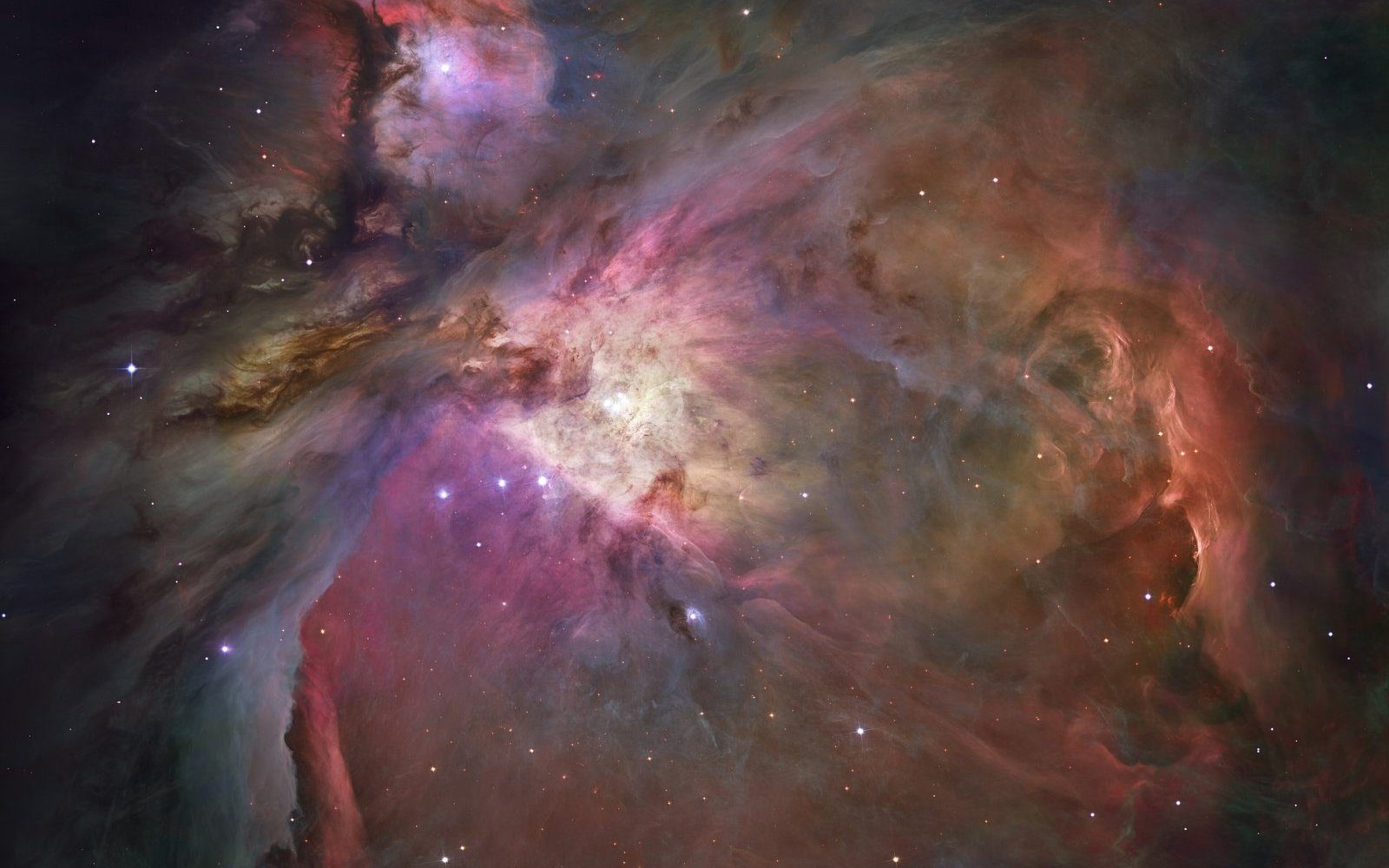
The first galaxy you find yourself is a letdown and a thrill at the same time. A grey smudge, barely there, that slides out of view if you look straight at it. Then the number lands: that smudge is a hundred billion suns, and the light hitting your eye left it before there were people. Deep-sky observing, the galaxies, nebulae and star clusters beyond the solar system, is the part of the hobby that makes the universe feel large. It is also the part where the usual telescope advice flips. Planets want resolution and a steady mount; the faint stuff wants light, a wide field, and a dark sky.
These are the eight telescopes I would hand someone who wants to see galaxies, from a $340 tabletop that shows the Orion Nebula filling the eyepiece to the 12-inch that reveals spiral arms from a dark site, with one smart telescope for the half of us who live under orange skies and one fast tube for the people who want to photograph it all.
Which telescope should you buy?
If you can get the scope to a dark sky, the Sky-Watcher Classic 250P: ten inches of mirror for under $1,000 is where globular clusters resolve into stars and galaxies start to show shape. For less money and only a little less sky, the Sky-Watcher Classic 8-inch, the telescope deep-sky observers have told beginners to buy for forty years, or the Celestron StarSense Explorer 8-inch if you want your phone to find the galaxies for you. From a bright suburb, the ZWO Seestar S50 Pro will show you more nebulae in an hour than any eyepiece telescope on this page. And if photographs are the goal, buy a mount first and put the Sky-Watcher Quattro 150P on it.
Outer Space Trip may earn a commission from links on this page; your price is the same. How we choose. Prices move — the links show current pricing.

Sky-Watcher Classic 250P 10″ Dobsonian
Ten inches is where deep-sky observing changes character. Globular clusters stop being fuzzy balls and resolve into stars, the Ring Nebula shows its hole, and from a dark site the brighter galaxies start to show shape instead of smudge. One person still carries it out in two trips, and the solid tube holds its collimation. If the faint stuff is the goal, this is the one I would buy.
- Galaxies, nebulae and clusters are what you want to see, and you can get the scope to a dark sky
- You would rather put the money into mirror than into motors
- Solid tube: it doesn’t collapse, so transport means a long tube and a real car
- Two trips to carry out — tube and base go separately
- Manual: no tracking, so high-magnification views drift

Sky-Watcher Classic 8″ Dobsonian
The eight-inch Dobsonian is the telescope deep-sky observers have told beginners to buy for forty years, and the advice holds: 816 times the light of your eye for the price of a mid-range phone, nothing to power, nothing to break. Every Messier object is in reach of it. This is the Amazon-buyable version; the Flextube and StarSense 8-inch are the same mirror on a different base.
- You want the most galaxy per dollar and can give a four-foot tube a corner
- You are happy to find targets yourself with a chart or an app
- Big and heavy — it needs a corner to live in, not a shelf
- A bare package: the Apertura AD8 bundles a better finder, extra eyepieces and a fan
- Manual, so targets drift and you nudge them back
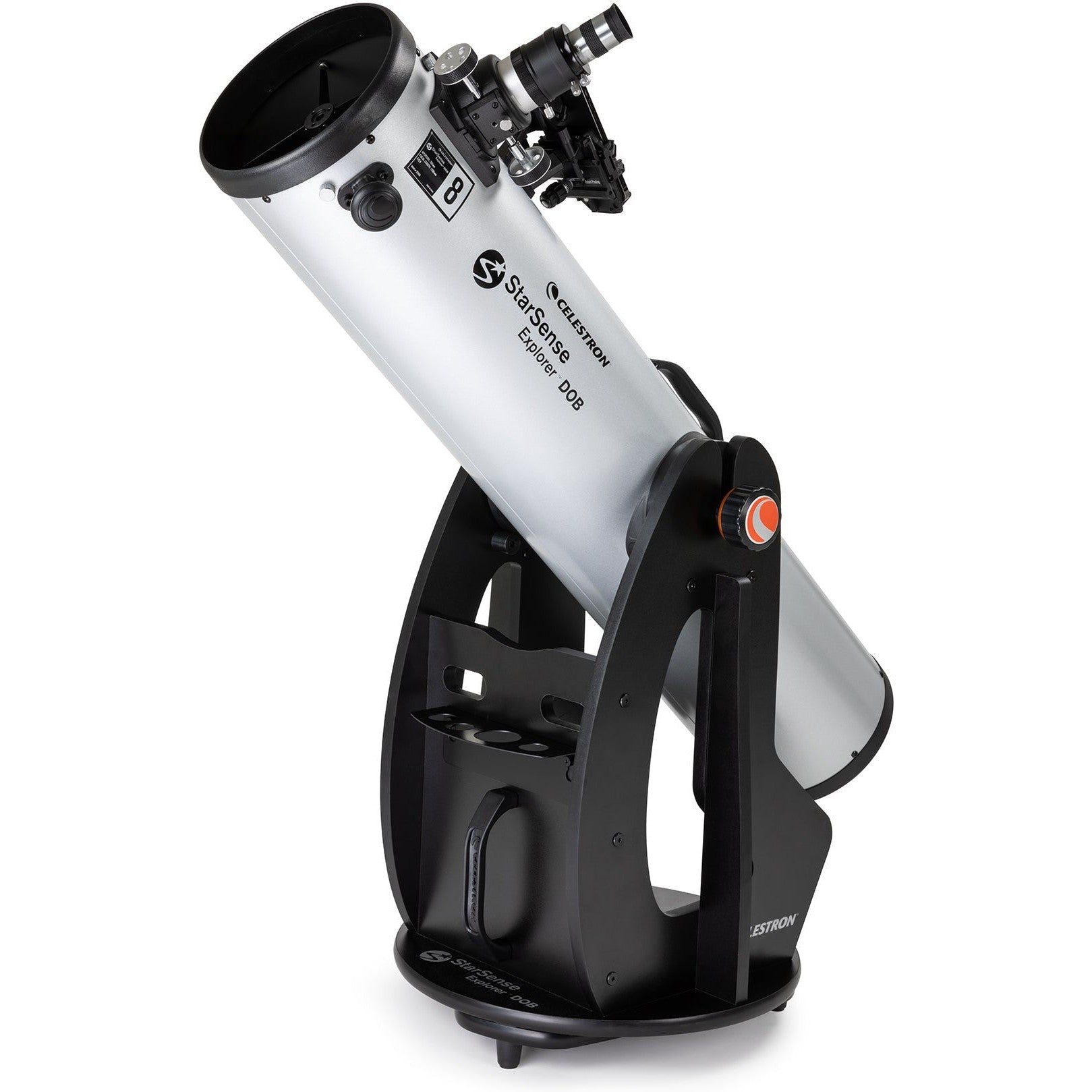
Celestron StarSense Explorer 8″ Dobsonian
The same eight-inch f/5.9 mirror as the classic Dobsonians, on a base with a dock for your phone. The StarSense app photographs the sky through the phone’s camera, works out where the tube is pointing, and walks you to the galaxy with on-screen arrows until the bullseye turns green. Finding faint objects is the thing that defeats most new deep-sky observers, and this removes it for about $130 over the plain tube.
- You want eight inches of aperture and never want to be lost under the sky
- Star-hopping with a chart sounds like homework, not a hobby
- Push-to, not GoTo: the app points you, your hands move the tube, and nothing tracks
- Your phone is part of the telescope — cold nights drain it fast
- Sold by specialist dealers and Celestron direct, not Amazon

Celestron NexStar 8SE
Eight inches of light on a mount that finds and follows 40,000 objects from a hand controller. For deep sky the trade is real: the f/10 focal length gives a narrower field than a Dobsonian, so the biggest showpieces spill out of the eyepiece, but every faint galaxy in the catalog is a button press away and stays centered while a line of guests takes a look. The scope for someone whose observing time is short and whose sky is average.
- You want the telescope to do the finding and the tracking
- Observing sessions are short and you want to see ten objects, not hunt for one
- Two to three times the price of a Dobsonian with the same 8-inch aperture
- The mount needs power — batteries die fast, so budget for a supply
- You’re paying for the electronics, not for more light

Sky-Watcher Flextube 300P 12″
A 12-inch gathers 2.25× the light of an 8-inch, and that is the step where spiral arms appear and the Veil Nebula turns from rumor into filaments. The truss tube collapses by a third so it crosses a back seat, which is what makes a 12-inch a dark-sky telescope instead of a garage ornament. The biggest telescope most people will keep using.
- You make dark-sky trips and want the sky to look different when you get there
- Transport space is the constraint, not budget
- Needs collimating after each setup, since the truss collapses and reopens
- An open truss lets in stray light and dew — a shroud is close to essential
- Heavy enough that moving it is a planned activity

Sky-Watcher Heritage 150
Six inches of mirror for less than a good eyepiece set. The Orion Nebula fills the field, Andromeda shows its core and companions, the brighter globulars start to grain, and it folds down to a shelf. For deep sky at this price nothing else is close; the one thing it wants is a sturdy table and a dark site.
- Under $400 is the budget and you want to see as much of the faint sky as that buys
- Storage space is tight and a full-size tube is a non-starter
- Tabletop design — you supply a sturdy table, and a 6-inch wants a solid one
- No motors: you find every target yourself, and it drifts out of view as Earth turns
- An open collapsible tube lets dust and dew reach the optics
- Newtonian optics need collimating now and then
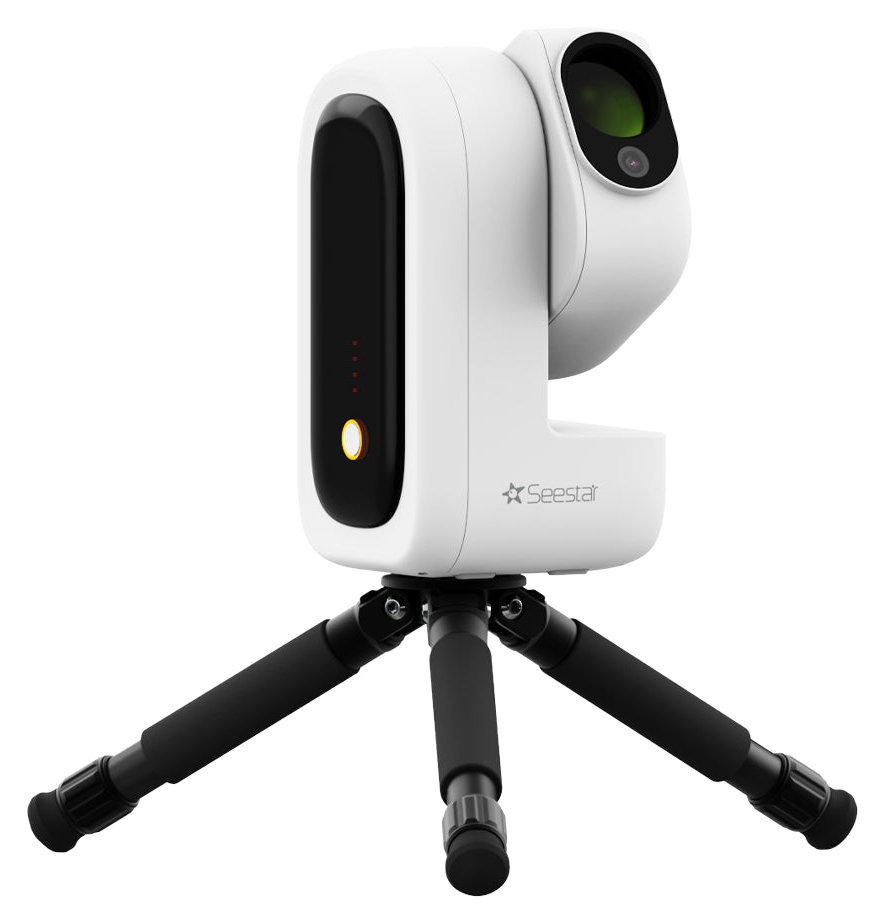
ZWO Seestar S50 Pro
From a bright suburb no eyepiece telescope on this page shows a galaxy as more than a faint smear. A smart scope solves it differently: it takes hundreds of short exposures and stacks them on your phone, and in twenty minutes the Whirlpool Galaxy and the Dumbbell Nebula are on the screen in color. The 50 mm lens gathers a fraction of an 8-inch mirror’s light, but the sensor never gets tired and never needs a dark sky.
- Your sky is orange and you still want to see galaxies and nebulae this year
- You would rather see color on a screen than grey through an eyepiece
- Brand new — no independent long-term reviews yet, so this is ZWO’s spec sheet, not a year of owners
- 2.8 kg, the heaviest of the small smart scopes, and $300 over the S30 Pro; the tighter field means the big showpieces need mosaic mode
- Equatorial mode again leans on ZWO’s separate $99 TH10 head, which ZWO lists as recommended for it
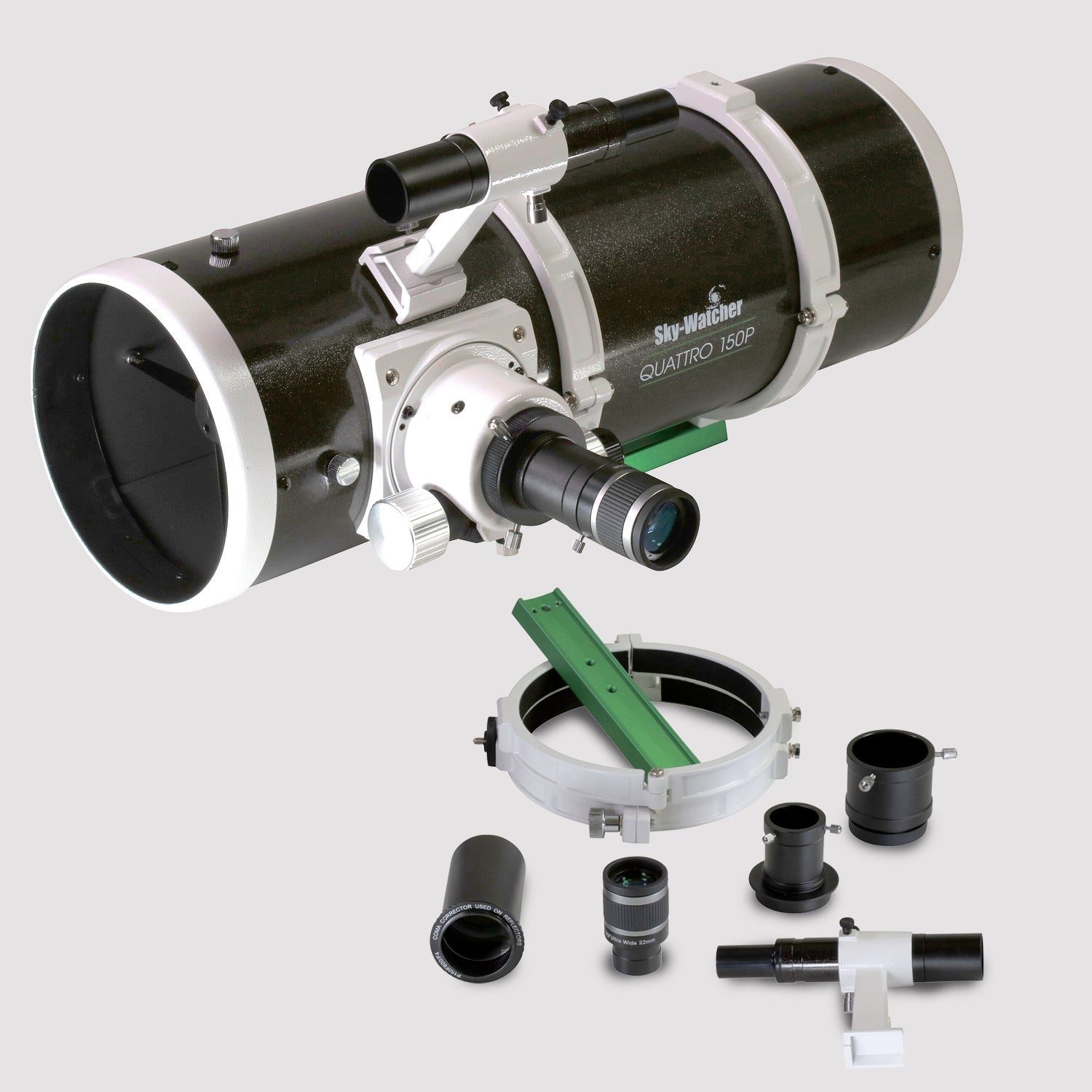
Sky-Watcher Quattro 150P
A six-inch f/4 Newtonian built for a camera rather than an eye: a fast mirror that gathers an exposure six times quicker than an f/10 SCT, a two-inch dual-speed focuser, an oversized secondary for big sensors, and the coma corrector in the box. On a tracking mount it is the cheapest route to real deep-sky photographs that is not a smart telescope. It is a tube only; the mount costs as much again and matters more.
- Photographing nebulae and galaxies is the goal and you already have, or are budgeting for, an equatorial mount
- You want a fast, affordable imaging tube with the coma corrector included
- Tube only: add a mount, a camera and a guide scope before the first photo
- f/4 is unforgiving of collimation and needs the corrector for sharp corners
- A fine visual scope, but the solid-tube Dobsonians are easier to live with for eyepiece work
The picks at a glance
For deep sky the column that matters is light grasp, which goes with the square of the aperture. An 8-inch is the reference point because it is where the whole Messier catalog comes into comfortable reach.
| Telescope | Aperture | Light vs. an 8-inch | Finds targets? | Price |
|---|---|---|---|---|
| Sky-Watcher Classic 250P | 254 mm, f/4.7 | 1.6× | No | ~$995 |
| Sky-Watcher Classic 8″ | 203 mm, f/5.9 | 1× | No | $700–750 |
| Celestron StarSense Explorer 8″ | 203 mm, f/5.9 | 1× | Phone push-to | ~$880 |
| Celestron NexStar 8SE | 203 mm, f/10 | 1× | GoTo, tracks | $1,650–1,750 |
| Sky-Watcher Flextube 300P | 305 mm, f/4.9 | 2.25× | No | $1,850–1,950 |
| Sky-Watcher Heritage 150 | 150 mm, f/5 | 0.55× | No | $340–360 |
| ZWO Seestar S50 Pro | 50 mm, f/5.2 | 0.06× (stacks) | App, tracks | ~$999 |
| Sky-Watcher Quattro 150P | 150 mm, f/4 | 0.55× | Mount-dependent | ~$665 (tube) |
What a galaxy needs from a telescope
Aperture is light, and light is everything. A planet is bright and small; a galaxy is faint and spread out. Doubling the aperture quadruples the light, and for deep sky that is the whole game: a 6-inch shows the Andromeda Galaxy as a bright core with hints of a disc, an 8-inch shows the dust lane on a good night, a 12-inch shows the companion galaxies and the lane clearly. Nothing else on the spec sheet comes close to mattering as much, which is why every eyepiece telescope on this page is a Newtonian reflector on a Dobsonian base. A mirror is the cheapest way ever found to collect light.
Low power and a wide field. The showpiece nebulae and clusters are big: the Pleiades span three Moon-widths, the Andromeda Galaxy six. You want the lowest power that still keeps the sky background dark, which on an 8-inch f/6 Dobsonian means a 25 to 32 mm eyepiece at 40 to 50×. That is also why the fast f/5 and f/6 Dobsonians beat the 8SE’s f/10 for this job: same mirror, three times the field. Our telescope calculator gives the true field for any pairing.
Your eyes are half the instrument. Full dark adaptation takes twenty to thirty minutes and one glance at a white phone screen undoes it. Faint objects are seen with averted vision, looking a little to the side of the target so the light falls on the more sensitive edge of the retina. Both are free, both take practice, and both make a bigger difference than the next inch of aperture.
Dark sky matters more than the next two inches
The sky you stand under decides more than the telescope you hold, and nobody selling telescopes says so. An 8-inch under a rural sky shows more than a 12-inch in a suburb, because a galaxy is only a little brighter than the background and city glow raises the background until the galaxy disappears into it. Before spending another dollar on aperture, read our guide to the best telescope for light pollution to find your spot on the Bortle scale, and plan at least a few trips a year to a dark site; our Milky Way guide explains how to find one.
Filters help, with one catch. A UHC filter passes the wavelengths emission nebulae glow in and blocks much of the glow between, so the Orion, Lagoon and Swan nebulae gain contrast even from a bright backyard, and an OIII filter is what turns the Veil Nebula from invisible to traced. Neither does anything for galaxies or star clusters, which shine in every color and cannot be separated from the glow. For those there is no filter, only a darker sky or a camera. The filters guide has the full picture.
The 8-inch ladder, and the Apertura question
Eight inches has been the deep-sky default for decades because it is the largest mirror one person carries out without planning, and it reaches every Messier object. The question is which base. The Sky-Watcher Classic 8 above is the Amazon-buyable one. The Flextube 200P (~$740) is the same mirror on a truss that collapses by a third for a small car. The StarSense Explorer 8 adds the phone dock, and its 10-inch sibling (~$1,200) does the same at the next aperture.
Then there is Apertura, High Point Scientific’s house brand. The AD8 (~$700) and AD10 (~$950) are the same aperture classes as the two Sky-Watchers with the accessories the Sky-Watchers make you buy later already in the box: a two-inch dual-speed focuser, a right-angle finder, a cooling fan and a laser collimator. If you are ordering from a specialist dealer anyway, they are the better-equipped buy at each size; our big telescopes guide goes through them, and the 16-inch past them.
Astrophotography is a different telescope
The eyepiece telescopes above are poor cameras, and the Quattro is a poor eyepiece telescope by comparison, because the two jobs pull in opposite directions. A camera wants a fast focal ratio, a flat field, a focuser that holds a kilogram of gear without flexing, and above all a mount that tracks the sky to within a few arcseconds for minutes at a time. The Quattro 150P is the cheapest serious version of that tube. The classic small alternative is a short apochromatic refractor like the RedCat 51 (~$830), lighter and more forgiving of a modest mount at the cost of aperture.
At the top of the range the NexStar Evolution 8 EdgeHD (~$2,700) puts Celestron’s flat-field 8-inch on a WiFi GoTo mount with a built-in battery, a telescope that does both jobs well without being the best at either. Whatever the tube, buy the mount first: our astrophotography setup guide builds the whole rig at three budgets and the mounts guide picks the mount, which for the Quattro means a Star Adventurer GTi at the light end or an EQ6-R Pro if you intend to keep it.
What to skip for deep sky
Long focal ratio small scopes. A 4-inch Maksutov or a 70 mm f/13 refractor is a fine planet telescope and a frustrating galaxy telescope: tiny field, dim image, and the aperture to show a handful of the brightest objects as faint ghosts. If deep sky is the goal, aperture first, and our planets guide is for the other half of the sky. Anything on a wobbly equatorial tripod sold as a “deep-sky” telescope, usually a 5-inch reflector on a mount two sizes too small; the Heritage 150 is the same mirror on a base that works. Big aperture under a bright sky: a 12-inch in a Bortle 8 suburb is a heavy way to see what a Seestar shows better.
What you will see at the eyepiece
Not the photographs. Through an eyepiece, galaxies and most nebulae are shades of grey, because the eye’s color receptors need more light than they deliver; only the brightest, the Orion Nebula in a big scope, show a hint of green. What you get instead is the real thing in real time, and it is still astonishing. In an 8-inch under a decent sky: the Orion Nebula as a glowing wing of gas with four stars at its heart, the Hercules Cluster as a ball of thousands of pinpoints, the Ring Nebula as a tiny smoke ring, the Andromeda Galaxy with its two companions, the Whirlpool as two smudges touching. In a 10 or 12-inch from a dark site the Whirlpool shows its arms. The Milky Way guide covers the season and the sky; the eyepieces guide covers the wide-field eyepiece every scope here deserves as its first upgrade.
If you buy one thing
The Sky-Watcher Classic 250P if a dark sky is in reach and the budget stretches to it, the Classic 8-inch if it does not, and the Heritage 150 under $400. From a city, the Seestar S50 Pro and no apology for it. Still weighing the designs? Schmidt-Cassegrain vs. Dobsonian settles the 8SE question, and best beginner telescopes is the all-sky list.
Frequently Asked Questions
What is the best telescope for viewing deep space objects?
A Dobsonian reflector with as much aperture as you can carry and afford. The Sky-Watcher Classic 250P (~$995) is my pick: ten inches of mirror resolves globular clusters into stars and shows structure in the brighter galaxies from a dark site. The Sky-Watcher Classic 8-inch ($700-750) reaches every Messier object for less, and the Celestron StarSense Explorer 8-inch (~$880) adds a phone dock that guides you to each target.
What size telescope do you need to see galaxies?
A 6-inch shows the brightest galaxies (Andromeda, Bode's, the Whirlpool) as grey smudges with a bright core; an 8-inch adds shape and the Andromeda dust lane on a good night; a 10 or 12-inch under a dark sky begins to show spiral arms. The sky matters as much as the mirror: an 8-inch under a rural sky shows more than a 12-inch in a bright suburb.
Can you see nebulae in color through a telescope?
Mostly no. Galaxies and nebulae are too faint for the eye's color receptors, so they appear in shades of grey; only the brightest, like the Orion Nebula in a large telescope, show a hint of green. Color comes from a camera: a smart telescope like the Seestar S50 Pro stacks exposures and shows nebulae in color on your phone within minutes, which is why it is the pick for city skies.
Is a Dobsonian or a Schmidt-Cassegrain better for deep sky?
For visual deep-sky work, the Dobsonian: the same 8-inch aperture costs less than half as much, and its faster focal ratio gives a field about three times wider at low power, which is what large nebulae and clusters need. The NexStar 8SE earns its place when you want the mount to find and track objects for you, or when observing time is short.
What is the best telescope for deep space under $500?
The Sky-Watcher Heritage 150 ($340-360): six inches of mirror on a collapsible tabletop base, enough to fill the eyepiece with the Orion Nebula and show the Andromeda Galaxy with its companions. Nothing else under $500 gathers as much light. Spend the savings on a wide-field eyepiece and on getting to a darker sky.
What telescope is best for deep space astrophotography?
Buy the mount first, then a fast tube. The Sky-Watcher Quattro 150P (~$665) is a 6-inch f/4 imaging Newtonian with the coma corrector included, the cheapest serious deep-sky astrograph; small apochromatic refractors like the William Optics RedCat 51 (~$830) are lighter and more forgiving of a modest mount. For a no-fuss alternative, the Seestar S50 Pro (~$999) photographs galaxies and nebulae on its own with nothing else to buy.
The Best Beginner Telescopes
2026 picks, from a $200 starter to an 8-inch Schmidt-Cassegrain, to get you viewing on night one.
Read →The Biggest Telescope You Can Actually Buy
Big Dobsonians from 10″ to the 20″ StarGate and the boutique 36″ giants — the picks worth it, and what all that aperture really costs you.
Read →The Best Telescope for Light Pollution
What works from a city backyard — the smart scope that stacks nebulae out of the glow, the scope for Moon and planets that skyglow can’t touch, and where your sky sits on the Bortle scale.
Read →Best Smart Telescopes for 2026
Auto-aligning telescopes that photograph galaxies and nebulas with a tap — $400 to $3,000 picks for every budget.
Read →The Best Astrophotography Setup at Every Budget
Three complete deep-sky rigs, itemized — a $500 starter, a $3,000 serious kit, and a $10,000 dream setup. What each part does and why.
Read →The Best Telescope for Planets
Seven telescopes that show Saturn’s rings and Jupiter’s belts sharply, from a $340 tabletop to the 8-inch SCT I’d buy for planets — plus the magnification rule that stops you wasting money.
Read →The Best Refractor Telescope
Nine lens telescopes worth buying, from a $90 travel scope to an apochromatic triplet — what achromat and ED mean for what you see, and when a mirror is the better buy.
Read →Schmidt-Cassegrain vs. Dobsonian
Same 8-inch aperture, two very different scopes — a ~$700 Dobsonian against a ~$1,700 go-to SCT. What the premium buys, and which one I’d hand most first-time buyers.
Read →The Best Telescope Eyepieces for Beginners
The kit eyepiece is just the start. Picks from a $50 upgrade that sharpens Saturn to the one eyepiece I’d keep if I had to choose one.
Read →How to Collimate a Telescope
The maintenance nobody warns you about — aligning a reflector’s mirrors so stars come to a point. The three tools, the step-by-step for a Newtonian or Dob, and the star test that proves it.
Read →The Telescope Calculator
Magnification, true field of view, exit pupil and the faintest star your scope can show — type in your telescope and eyepiece and read the numbers before you buy glass.
Read →How to See the Milky Way
Peak season is June–August. What you need, where to find dark skies, and what to expect.
Read →The Best Telescope Mounts & Tripods
The mount matters more than the telescope for astrophotography. Grab-and-go GoTo to serious imaging EQ picks, from grab-and-go trackers to the workhorse EQ6-R.
Read →