The Best Stargazing Hotels and Dark-Sky Resorts
Hotels where the telescope is already set up: a Bortle 2 villa in Colorado, a silo observatory in Virginia, glass domes near Bryce, and a 12-inch in the Namib Desert. What each one actually gives you, and what to ask before you book.
In this guide
- Three questions that separate a real one from a marketing line
- Where to sleep under a dark sky
- Kosmos Stargazing Resort & Spa, Colorado: a telescope in your own villa
- Primland, Virginia: the East Coast’s serious observatory
- Compass Rose Lodge, Utah: the small one with its own dome
- Cataloochee Ranch and The Swag, North Carolina: the first certified pair in the East
- Sun Valley, Idaho: the first certified resort in the U.S.
- Clear Sky Resorts, Bryce Canyon: watching from bed
- Sossusvlei Desert Lodge, Namibia: the best sky on this list
- Elqui Domos, Chile: the Southern sky without the luxury tax
- What to ask before you pay
- Bring these anyway
- If a stargazing hotel isn’t the trip
- The bottom line
The usual way to see a truly dark sky is to drive two hours after dinner, stand in a gravel pullout in the cold with a thermos, and drive home at 2 a.m. fighting sleep. I’ve done it plenty. The sky is worth it and the drive home never is.
A stargazing hotel deletes the drive. You walk forty feet from your bed, the telescope is already outside and already cooled down, and if the clouds come in at eleven you go to sleep and try again tomorrow. That last part is the real product. Most dark-sky trips are a single night against the weather, which is a coin flip; two or three nights in the same bed is a plan.
Outer Space Trip may earn a commission from booking links on this page; your price is the same — here’s how we choose. No property paid to be here, and none of them know we exist.
Three questions that separate a real one from a marketing line
Any hotel with a lawn can put “stargazing” on its website. Three things tell you whether the night will actually be good.
How dark is the sky it sits under? Ask for a Bortle number or a dark-sky designation, not an adjective. Bortle 1–2 is the real thing, where the Milky Way throws a faint shadow. Bortle 4 with a nice patio is a nice patio.
Does the property control its own lighting? This is the one people skip, and it’s the one that ruins nights. A floodlit parking lot in a Bortle 2 valley gives you a Bortle 5 experience. DarkSky Approved Lodging is the shortcut here: DarkSky International started certifying lodging in 2023 and added a separate resort tier in 2026, and a property only gets it by fixing its own outdoor lighting and documenting it. It’s a lighting audit, not a sky rating — but it’s the difference between a hotel that likes stars and a hotel that turned off its lights for them.
What is the gear, and who is running it? “Telescopes available” can mean a 14-inch under a rotating dome with an astronomer beside it, or a department-store refractor in a closet behind the front desk. Ask for the make and aperture, and ask whether sessions run nightly or on request. If nobody can answer, that answers it.
Where to sleep under a dark sky
| Property | Where | The sky | What you get |
|---|---|---|---|
| Kosmos Stargazing Resort & Spa | Mosca, Colorado | Bortle 2 | A telescope in your own villa |
| Primland | Meadows of Dan, Virginia | Blue Ridge ridgetop | Silo observatory, 14″ Celestron |
| Compass Rose Lodge | Huntsville, Utah | Ogden Valley | Its own small observatory |
| Cataloochee Ranch & The Swag | Western North Carolina | DarkSky Approved | Club-led nights on a mountaintop |
| Sun Valley Resort | Sun Valley, Idaho | DarkSky Certified Resort | Ski-mountain sky, event nights |
| Clear Sky Resorts | Cannonville, Utah | Near Bryce Canyon | Glass domes you watch from bed |
| Sossusvlei Desert Lodge | NamibRand, Namibia | Bortle 1 reserve | Observatory, 12″ Meade, astronomer |
| Elqui Domos | Pisco Elqui, Chile | Southern sky | Seven domes, astronomer-led nights |
Kosmos Stargazing Resort & Spa, Colorado: a telescope in your own villa
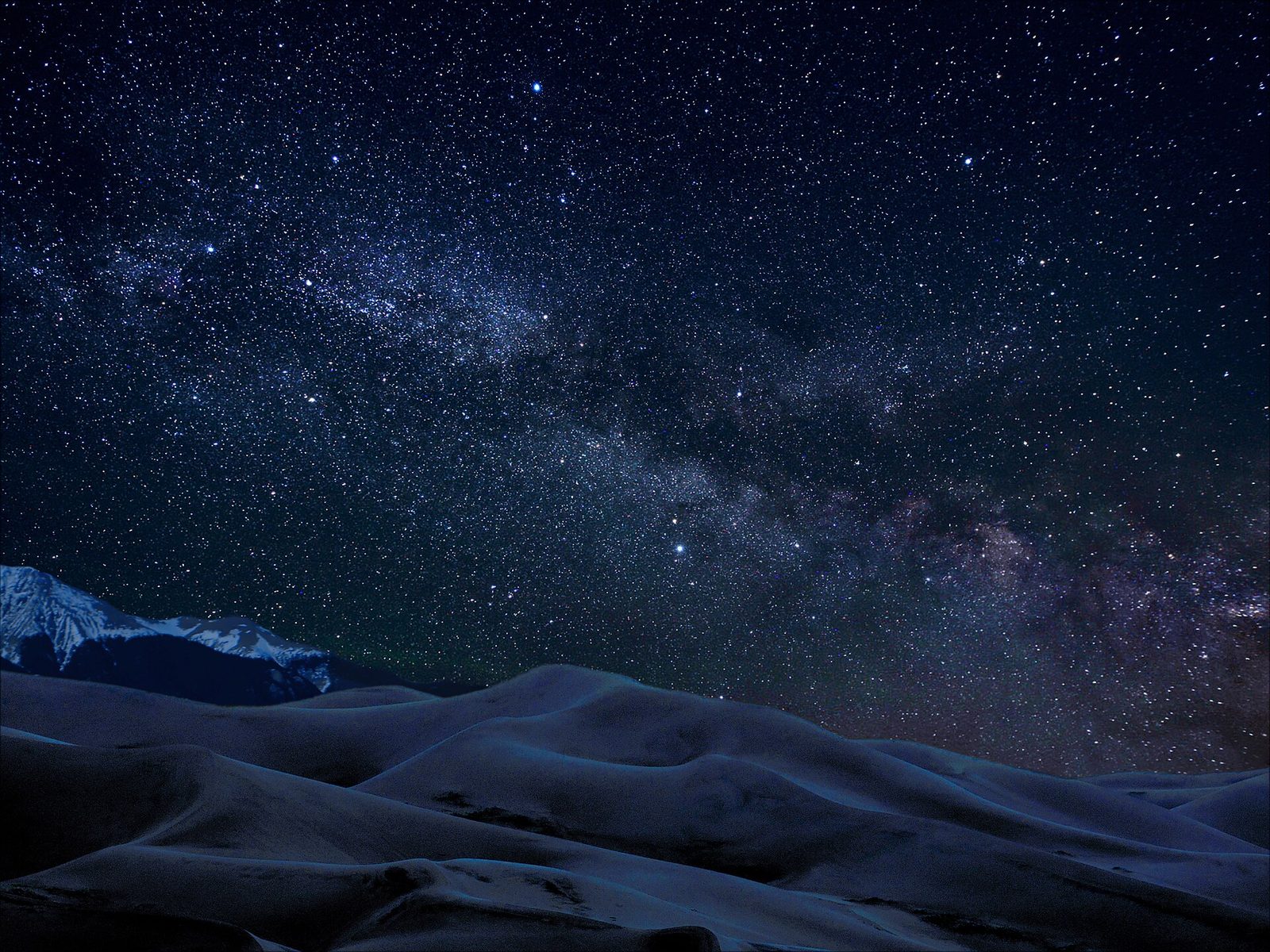
The newest and the most literal answer to this whole category. Kosmos sits off-grid in Colorado’s San Luis Valley near Mosca, about fifteen minutes from Great Sand Dunes National Park, under what the resort documents as a Bortle 2 sky. DarkSky International certified it as Colorado’s first DarkSky Approved Lodging. Every villa comes with its own telescope, which is the detail that matters: you are not queuing for a shared scope at 10 p.m., you are outside your own door whenever you wake up.
The Stargazing Villa is 1,200 square feet, sleeps two to four comfortably, and runs $700 a night; a two-story Galaxy Villa at $1,400 was still under construction when we checked, listed for Q4 2026. Astronomer-guided sky tours, in-villa massages and food service are bookable on top. The bigger promises are still ahead of it. A 1-meter observatory, a planetarium and the full spa are phased in through 2027, so book it today for the villa telescope and the sky, not for the observatory brochure. Rates and build phases are as the resort listed them in August 2026.
If the villa price is out of range, the valley itself isn’t: the national park runs free ranger night programs in season, and there are ordinary rooms in Alamosa half an hour away. Compare rooms near Great Sand Dunes ▸
Primland, Virginia: the East Coast’s serious observatory
Twelve thousand acres on a Blue Ridge ridgetop in Meadows of Dan, with an observatory built into a silo whose lid rotates and slides back. Inside are a Celestron CGE Pro 1400 — a 14-inch — and a CPC 800, run by a resident astronomer on clear nights. For anyone east of the Mississippi this is the shortest trip to a real instrument under a decent sky: you are not flying to Chile, you are driving to Virginia. The sky is good rather than pristine (this is the East Coast), so the aperture is doing real work here.
Compass Rose Lodge, Utah: the small one with its own dome
A small lodge in Huntsville, in Utah’s Ogden Valley, paired with its own observatory — the Huntsville Astronomic and Lunar Observatory, next door to the rooms. It is the least expensive way I know to stay somewhere with a genuine dome and nightly guided observing, and it’s an hour from Salt Lake City airport. The valley is not Bortle 2, so treat it as an easy first taste of what an observatory night feels like rather than a bucket-list sky.
Cataloochee Ranch and The Swag, North Carolina: the first certified pair in the East
Two sister properties on neighboring mountaintops on the edge of Great Smoky Mountains National Park, and the first DarkSky Approved Lodgings on the East Coast, a little over a thousand acres between them. Nights are run with the Astronomy Club of Asheville, which is a better arrangement than it sounds: club members bring their own scopes and want to show you things. Go for the certification and the ridgetop; don’t expect desert darkness in the southern Appalachians.
Sun Valley, Idaho: the first certified resort in the U.S.
Sun Valley became the first U.S. resort certified under DarkSky’s program on July 13, 2026, which is a real signal for a property this size — a full ski resort re-doing its outdoor lighting is a much heavier lift than a six-room lodge doing it. Stargazing here is spread across the mountain rather than concentrated in an observatory: designated viewing spots including the Bald Mountain summit, plus ticketed event nights (its Perseid-peak gondola evening in August 2026 ran $125 a head). Guided programs are still being built out, so ask what’s actually running the week you want.
Clear Sky Resorts, Bryce Canyon: watching from bed
Geodesic domes in Cannonville, Utah, fifteen miles from Bryce Canyon National Park, open year round since 2024 — the Bryce property is the company’s glass-dome collection: climate controlled, private bath, the sky over the bed. This is the family and glamping end of the category: no observatory, no resident astronomer, just a dark corner of southern Utah and a dome you don’t have to leave to look up. Southern Utah is also the single densest cluster of dark-sky parks in the country, so the days write themselves. Find a guided night near Bryce ▸
Sossusvlei Desert Lodge, Namibia: the best sky on this list
The NamibRand Nature Reserve is Africa’s first International Dark Sky Reserve and one of the darkest measured places on the planet: Bortle 1, with hundreds of kilometers of desert and effectively no artificial light in any direction. The lodge keeps an on-site observatory with a 12-inch Meade LX200, and there’s usually a staff astronomer running it. I have the 10-inch version of that telescope in my own driveway, which is a strange thing to think about: the same optics I fight light pollution with at home, two inches wider, under the sky it was designed for. The astronomer program depends on who is in residence, so confirm it when you book rather than assuming.
Elqui Domos, Chile: the Southern sky without the luxury tax
Seven domes in the Elqui Valley near Pisco Elqui, one valley over from the professional observatories that made northern Chile famous, with guided observing sessions run by professional astronomers. The draw is what’s overhead: the galactic core straight up in southern winter, the Magellanic Clouds, the Southern Cross — a sky no amount of money buys you in North America. Chile’s dark, dry season runs roughly March through October. Pair it with our dark-sky destinations guide if you’re building the trip around the Atacama.
What to ask before you pay
“What happens if it’s cloudy?” Some properties re-run the session the next night, some refund the astronomy add-on, some do neither. Weather is the one thing your money can’t buy, so find out how the house handles it before you’re standing under a deck of cloud.
“What phase is the Moon that week?” A full Moon erases the Milky Way as thoroughly as a city does. Aim for the three or four nights either side of new Moon and this becomes a different trip. It is the cheapest upgrade available and most people book straight past it.
“Is the telescope session included?” Often it isn’t, and at the luxury end the add-on can run a few hundred dollars on top of the room.
“How cold does it get?” Deserts and mountains at 2 a.m. are colder than the daytime brochure photo suggests. Pack like you’re going to stand still outdoors for three hours, because you are.
Bring these anyway
Even where the hotel supplies the optics, three cheap things change the night. A pair of astronomy binoculars, which under a Bortle 1–2 sky show more than a good telescope does from home and let you sweep the Milky Way instead of peering through a straw. A red flashlight, so twenty minutes of dark adaptation survives a walk to the bathroom. And a stargazing app to name things — with the screen dimmed all the way down and set to night mode.
If a stargazing hotel isn’t the trip
Most of what these properties sell is available à la carte. A guided stargazing tour gets you an astronomer and real telescopes for $20 to $150 and you sleep at a normal hotel. A campsite in a certified dark-sky park costs the price of a permit and delivers the identical sky. And the entire premise — a scope that’s already outside when you want it — is what a telescope of your own buys for about the price of one night in a villa.
The bottom line
Pay for the sky and the second night, not the amenity list. Kosmos is the purest version of the idea in the U.S. right now — Bortle 2, a telescope on your own patio, and a price that reflects both. Primland and Compass Rose put a real instrument and a real astronomer within a drive for most of the country. Sossusvlei is the one that ruins you for other skies. Book near the new Moon, stay two nights, and bring the binoculars anyway.
Frequently Asked Questions
What is a dark sky hotel?
A hotel or lodge sited under a dark, low-light-pollution sky that builds stargazing into the stay — typically shielded outdoor lighting, an observatory or guest telescopes, and guided night sessions. The strongest signal is DarkSky Approved Lodging certification from DarkSky International, which a property earns by fixing and documenting its own outdoor lighting. The program began in 2023 and added a separate resort tier in 2026.
Which stargazing hotel has a telescope in the room?
Kosmos Stargazing Resort & Spa in Mosca, Colorado gives every villa its own telescope. It sits under a Bortle 2 sky about fifteen minutes from Great Sand Dunes National Park, and its Stargazing Villa was $700 a night when we checked in August 2026. Most other properties in this category share a single observatory or run guided sessions with staff telescopes rather than putting one at your door.
How much does a stargazing hotel cost?
The range is wide. Geodesic dome resorts near the Utah parks and dome stays in Chile's Elqui Valley sit in the low hundreds per night. Small observatory lodges run mid-range hotel rates. Purpose-built stargazing resorts and safari lodges are the top end — Kosmos lists $700 a night for its Stargazing Villa and $1,400 for the larger Galaxy Villa. Telescope sessions are frequently an add-on rather than included, so ask before you compare prices.
Do I need my own telescope at a stargazing hotel?
No, and at the good ones the house instrument will be far better than anything you'd travel with. Bring binoculars anyway: under a Bortle 1–2 sky a $100 pair sweeping the Milky Way beats taking turns at an eyepiece, and they weigh nothing. Add a red flashlight so you don't lose your dark adaptation walking back to the room.
When should I book a stargazing trip?
Around the new Moon — the three or four nights on either side. Moonlight washes out the Milky Way as effectively as a city, and no telescope or location fixes it. Then match the destination's dry season: roughly March–October for Chile and Namibia, summer through fall for the American West. Book at least two nights, because a single clear night is a coin flip anywhere on Earth.
Are dark sky hotels worth the money?
If the sky is truly dark and you stay more than one night, yes — a Bortle 1–2 sky is the single biggest upgrade in amateur astronomy, bigger than any telescope purchase, and sleeping under it removes the 2 a.m. drive that ends most dark-sky nights early. If the property is under a mediocre sky and selling the idea rather than the darkness, you are paying a premium for a patio. Ask for the Bortle number and the certification before booking.
Rob founded Outer Space Trip and writes its operator cost guides, the Space Tourism Price Index, and the See Space Now gear reviews. He tracks pricing and flight-status announcements from every major operator and tests the stargazing gear we recommend. How we pick and source ▸
The Best Dark-Sky Destinations
Where to travel for a truly dark sky — Atacama, Aoraki Mackenzie, La Palma and more, with when to go and how to book a stargazing tour.
Read →Guided Stargazing & Dark-Sky Tours
No telescope, no dark-sky research, no planning — a local guide sets up the gear and points out the sky. Real, bookable tours from $20.
Read →Stargazing in Sedona
A certified Dark Sky Community with 275 clear nights a year — the best free red-rock viewpoints, when to go, the Milky Way season, and the astronomer-led tours worth booking.
Read →