The Best Space Gifts for Kids in 2026
Half of all space gifts are in a closet by February. These are the seven kids keep using, by age, from an $8 picture book to the telescope a teenager won't outgrow.

In this guide
- Our picks at a glance
- Match the gift to the age
- The picks at a glance
- Ages 4–7: start with wonder
- Ages 5–9: a stomp rocket
- Ages 6–12: a ten-dollar LEGO set
- Ages 8 and up: a solar system they paint themselves
- Ages 8–12: the first real telescope
- Ages 12 and up: a bigger telescope
- Any age: a star projector
- What to skip
- The bottom line
The rocket that needed batteries nobody had. The “telescope” that showed a blurry smear where the Moon should be and quietly killed the interest it was meant to spark. That is the half of all space gifts that are in a closet by February. The good ones are different — they get pulled out again and again, and every so often one of them turns a curious seven-year-old into a kid who knows where Orion is.
Here are seven that get used, one for each age from four to the teens.
Outer Space Trip may earn a commission from links on this page; your price is the same. How we choose. Prices move — the links show current pricing.
Our picks at a glance

First Big Book of Space
National Geographic’s first space book, with real photos rather than cartoons — the one kids ask you to read again. Pairs with the glow model for a complete under-$40 gift.
- Ages out around 8, when the same kid wants a deeper book
- A book to read together, not a toy that plays on its own — pair it with the glow kit
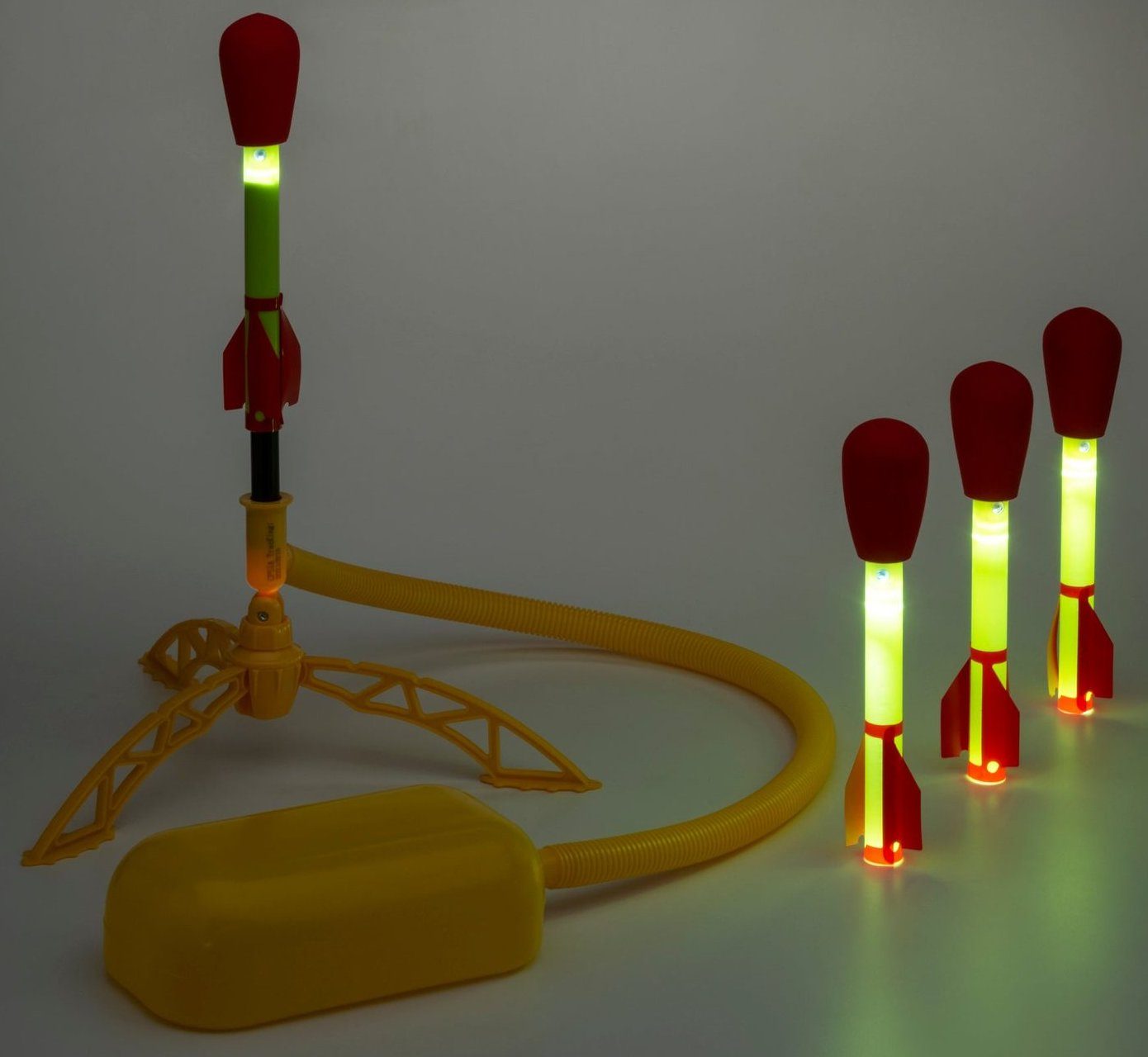
Stomp Rocket
No batteries, no screen. Stomp the bladder, the rocket flies a hundred feet, the kid sprints to get it and does it again — the single most-used space gift I know of for this age.
- Strictly an outdoor toy — a hundred feet of flight needs open space
- Pure play: it burns energy, it doesn’t teach the sky
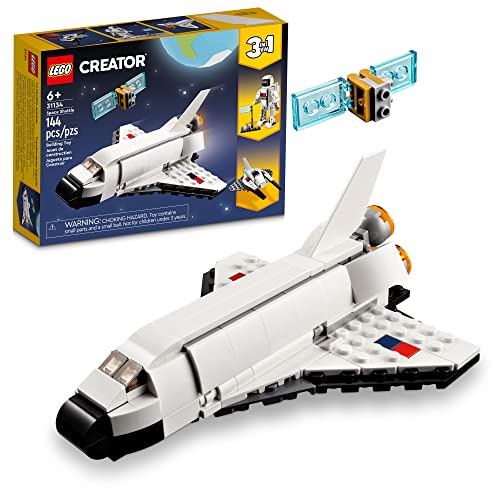
LEGO Creator 3-in-1 Space Shuttle
The best ten dollars in space toys: a 144-piece pocket set that rebuilds into a shuttle, a spaceship, or an astronaut figure. Small enough for a party gift or a stocking, real enough to stay off the floor. Made in Denmark/Hungary, not China.
- One model at a time: the shuttle, the spaceship or the astronaut — never all three at once
- A quick build — an afternoon project, not a weekend one; the replay value is in the rebuilds
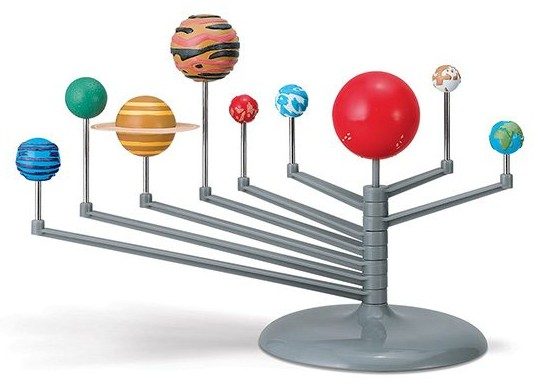
4M Solar System Planetarium
Snap the planets together, paint them, and the finished model glows on a desk after lights-out. Cheap, hands-on, and an afternoon’s project that leaves the solar system somewhere a kid sees it every day.
- A desk model, not an instrument — the planets aren’t to scale
- Painting and building take real patience — younger kids need a grown-up alongside

Celestron FirstScope 76
A real tabletop reflector, not a toy — it shows genuine Moon craters and Jupiter’s four big moons on the first clear night. The payoff that turns interest into obsession. Read the kids-telescope guide first.
- A real instrument with real limits: the Moon and bright planets, not faint galaxies
- Its payoff needs a clear night and a grown-up — it can’t deliver at the party
- Read the kids-telescope guide first; the wrong scope is how interest dies

Sky-Watcher Heritage 130
The telescope for the kid who wore out the FirstScope. A 130mm tabletop Dobsonian shows Saturn’s rings and the Orion Nebula for real, a teenager can point it alone, and it’s the scope most experts hand a beginner of any age — they won’t outgrow it in high school.
- Tabletop design — you supply the table, stool or crate
- Manual, so targets drift as Earth turns and the kid nudges them back
- A Newtonian’s mirrors need occasional collimating — a parent job at first

Pococo Galaxy
Switch off the lights and the ceiling becomes a real nebula. All-LED (no laser to worry about in a kid’s room), and swapping the little discs — tonight Orion, tomorrow the aurora — becomes part of the bedtime routine.
- Discs are the fun and the ongoing cost — more skies mean more discs
- Decorative real-photo skies, not the mapped constellations
Match the gift to the age
Give a six-year-old a motorized telescope with a hundred features and it’s in the closet by February. Give the same kid a stomp rocket and it’s launched fifty times before dinner. Give a ten-year-old a picture book and you get the look. That’s why the picks are grouped by age. Three things I checked on every one:
- It gets pulled out again. A second time and a tenth time, not once on the day.
- It fits the age on the box.
- It shows something real. Craters in the eyepiece, a sky on the ceiling, real photos in the book. A stomp rocket is a toy and says so, which is fine. The “600x” toy-aisle telescope claims to be a telescope, and that’s the difference.
The picks at a glance
Every gift here by price, the age it fits, and where it ends up living, since a kid without a backyard needs an indoor one.
| Gift | Best age | Where it gets used | Price |
|---|---|---|---|
| First Big Book of Space | 4–8 | Bedtime, indoors | $8–12 |
| LEGO Creator 3-in-1 Space Shuttle | 6–12 | The floor, then a shelf | $8–12 |
| 4M Solar System Planetarium | 8+ | A desk, after lights-out | $15–25 |
| Stomp rocket | 5–9 | The backyard (needs open space) | $25–30 |
| Celestron FirstScope 76 | 8–12 | Outside after dark, with a grown-up | $60–80 |
| Sky-Watcher Heritage 130 | 12+ | Outside after dark, on their own | $280–310 |
| Pococo Galaxy | Any | The bedroom ceiling | $90–110 |
By budget: under $20, the book or the 4M kit; under $50, the stomp rocket, the LEGO shuttle, or the book and the kit together; under $100, the FirstScope, or the Pococo with the reader code on its card. The one big-ticket pick, the Heritage 130 at about $300, is the gift for the twelve-year-old who has already worn out a FirstScope.
Ages 4–7: start with wonder
The First Big Book of Space (around $8–12). National Geographic’s picture book, real photos rather than cartoons. It’s my default for the youngest age because a four-year-old lives with it: it’s the one they hand you at bedtime and ask for again. When they age out of it, around eight, our space books for kids guide has the next one. Check price ▸
Ages 5–9: a stomp rocket
Stomp rocket (around $25–30). No batteries, no screen, no setup, and the most-used space gift I know of for this age. It comes out every clear afternoon for a whole summer. Two practical notes: it needs open space, because a good stomp sends the rocket a hundred feet up, and you want the version with spare rockets, because they land on roofs. Check price ▸
Ages 6–12: a ten-dollar LEGO set
LEGO Creator 3-in-1 Space Shuttle (around $8–12). A 144-piece pocket set that builds into a shuttle, then rebuilds into a spaceship or an astronaut. It’s a party gift or a stocking stuffer, not a weekend project, and that’s the point at this price: it gets built three times over. (LEGO is made in Denmark, Hungary, and Mexico, not China, if that matters to you.) For a kid who’s ready for a real build, the best LEGO space sets run from here up to the display-grade Saturn V. Check price ▸
Ages 8 and up: a solar system they paint themselves
4M Solar System Planetarium (around $15–25). Snap the planets onto the stand, paint them, and after lights-out the finished model glows on a desk. The painting is the project, a real rainy afternoon rather than ten minutes, and 4M’s 8-and-up rating is honest about it; a younger kid needs a grown-up alongside. Pair it with the picture book and you have the whole solar system covered for under $40. Check price ▸
Ages 8–12: the first real telescope
Celestron FirstScope 76 (around $60–80). This is the gift that can change a kid’s life, and the one people get most wrong. The whole trick is a real, if small, telescope instead of a toy that magnifies nothing: a tabletop reflector like this one shows Moon craters and Jupiter’s four big moons on the first clear night. It does need that clear night and a grown-up beside it, so it can’t deliver at the party. Read our telescopes for kids guide before you buy — the wrong scope kills the interest faster than no scope at all. Check price ▸
Ages 12 and up: a bigger telescope
Sky-Watcher Heritage 130 (around $280–310). The teenager who wore out the FirstScope, or who skipped it, is ready for the scope most experts hand a beginner of any age: a 130mm tabletop Dobsonian. It shows Saturn’s rings and the Orion Nebula for real, it sits on a picnic table or a crate, and a twelve-year-old points it by hand without help, which is the difference at this age: the FirstScope needs a grown-up beside it and this one doesn’t. It is the one pick on this page that costs real money, and the one a kid can still be using at the end of high school. Its mirrors need lining up now and then, a ten-minute job with a parent the first time. Our telescopes for kids guide compares it with the phone-guided Celestron scopes a tween might prefer. Check price ▸
Any age: a star projector
Pococo Galaxy (around $90–110). Lights off and the ceiling is a nebula. For a kid’s room buy an all-LED model like this one rather than a cheap laser projector: the same wide-eyed reaction, no beam to worry about. In practice it becomes the night light, and choosing tonight’s disc becomes part of bedtime. (If you already own the old Orzorz Galaxy Lite, now off the market, Pococo’s discs fit it.) It projects real photographs of the sky, not mapped constellations; our star projector guide covers that difference in full. Check price ▸
What to skip
Four things that look like space gifts and aren’t:
- The $30 “600x” telescope in the toy aisle. The magnification number is the tell — it’s meaningless on an optic that small, and the shaky mount means the kid never actually sees anything. More interest has been killed by a bad first telescope than by never owning one.
- The big motorized scope for a small kid. A hundred features and a setup routine overwhelm a six-year-old, and it goes back in the box after one night. Buy the FirstScope now and the Heritage 130 at twelve.
- The $15 supermarket “galaxy” light. Random blobs, not a sky. The Pococo costs more because there’s a photograph behind the lens.
- Astronaut ice cream. A fun stocking-stuffer joke and a disappointing snack.
The bottom line
If you buy one thing: under eight, the First Big Book of Space; eight and up, a real first telescope (the Heritage 130 from twelve), bought right, because real craters in a real eyepiece is the gift that sometimes makes an astronomer. Every pick here was chosen to get used, not to look good in the box.
Shopping for a grown-up too? See our best gifts for space enthusiasts. Ready to go bigger on the telescope? Start with the telescopes for kids guide.
Frequently Asked Questions
What is the best space gift for a young child?
For ages 4-7, start with National Geographic's Little Kids First Big Book of Space (around $8-12), and from five add a stomp rocket (around $25-30). Both are screen-free and get used again and again. Skip motorized telescopes at this age — they overwhelm more than they delight.
What age should a kid get their first telescope?
Around 8 is the sweet spot for a first real telescope, though a curious 6-7 year old can enjoy one with an adult helping. The key is buying a genuine small telescope like a tabletop reflector, not a toy-store scope with a huge magnification number on the box. A real first scope shows Moon craters and Jupiter's moons on night one; a toy shows a blurry smear and kills the interest. See our telescopes for kids guide for specific picks by age.
Are cheap toy telescopes worth buying for kids?
No. The $30 telescopes advertising '600x magnification' are the most common way to kill a kid's interest in astronomy. That magnification is meaningless on such a small optic, and the wobbly mount means the child never actually sees anything clearly. A slightly more expensive but genuine first scope, like the Celestron FirstScope (~$60-80), is worth far more than three toy telescopes.
What is the best space gift under $30?
A stomp rocket (around $25-30) is the best-used space gift under $30 for ages 5-9 — no batteries, endless backyard launches. For quieter play, the First Big Book of Space (~$8-12) for younger kids, or from age eight the 4M Solar System Planetarium (~$15-25) they build and paint themselves, are excellent low-cost picks that get real use.
Is a star projector a good gift for a kid's room?
Yes, with one caveat: choose an all-LED model like the Pococo Galaxy rather than a cheap laser projector. LED models give the same wide-eyed ceiling-of-stars reaction with no laser beam to worry about a young child staring into. It doubles as a night light and a first taste of the real sky. Our star projector guide covers the accurate-versus-ambient difference in detail.
What space gift is most likely to make a kid love astronomy?
A genuine first telescope, bought correctly, is the single gift most likely to turn interest into a lasting hobby — because seeing Saturn's rings or real Moon craters with your own eyes is a different thing from seeing them in a book. But it only works if the scope is real. A bad first telescope does the opposite. Read the telescopes for kids guide before buying so you get one that actually shows the kid something on the first clear night.
What is the best STEM space gift for a kid?
The 4M Solar System Planetarium (~$15-25) for eight and up: the kid builds and paints the model, then it glows on a desk after lights-out. For a hands-on gift with a bigger payoff, a real first telescope like the Celestron FirstScope (~$60-80) teaches more than any kit, because the craters are real.
What is a good space gift for a 12-year-old or a teenager?
A real telescope they can run alone: the Sky-Watcher Heritage 130 (~$280-310), a 130mm tabletop Dobsonian that shows Saturn's rings and the Orion Nebula and that a teenager points by hand without help. For a builder, the LEGO Technic NASA Perseverance Mars Rover (~$90-100) in our LEGO space sets guide, and for a reader, Cosmos from the gifts for space enthusiasts guide. Skip the toy-aisle scopes at this age too; a teenager sees through them faster than a six-year-old does.
Which space gift gets used the longest?
In sheer hours, the stomp rocket: it comes out every clear afternoon for a summer. Over years, a real first telescope, if it is a genuine one: a kid who sees Moon craters at eight can still be using the same scope at twelve, and the interest it starts outlasts the gift.
Rob founded Outer Space Trip and writes its operator cost guides, the Space Tourism Price Index, and the See Space Now gear guides. He has observed since a high-school observatory in the 1990s and still runs the 10-inch Meade LX200 he bought after college. How we pick and source ▸
The Best Space Books for Kids
Nine space books kids ask for again at bedtime. Picks for toddlers, first readers, grade-schoolers, and tweens.
Read →The Best LEGO Space Sets
Six current sets worth shelf space — from a $60 crank-launch Artemis rocket to the meter-tall Saturn V — plus the retired-set trap to dodge on Amazon.
Read →Pococo Galaxy vs. Govee Galaxy Light 2 Pro
The two galaxy projectors most parents end up choosing between — the laser-vs-LED question for a kid’s room, and whether the Govee is worth the extra money.
Read →The Best Gifts for Space Enthusiasts
For the adult who tears up at a launch — picks from a $15 Carl Sagan classic to a smart telescope that photographs galaxies.
Read →The Best Star Projectors for 2026
From the $17 astronaut night light to a 60,000-star home planetarium — what the difference costs and which models are worth buying.
Read →The Best Space Halloween Costumes
Astronaut suits that look like the real ones, helmets a kid can see out of, and a make-your-own spacesuit for about $35. Picks for toddlers, big kids, and adults.
Read →