Free Observatory Nights in Pennsylvania
A 13-inch refractor in Pittsburgh open free two nights a week, a rooftop of telescopes at Penn State, and four more. Which night each one opens, for $0.
In this guide
- Allegheny Observatory, Pittsburgh: a historic hilltop refractor, free two nights a week
- Wagman Observatory, Deer Lakes Park: a Brashear refractor and a 21.5-inch, free star parties
- Davey Lab Observatory, Penn State, State College: free every Friday, no reservation
- Naylor Observatory, near Harrisburg: free public observing under four domes
- Cupillari Observatory, Keystone College: free Wednesdays and Fridays in the northeast
- Peter van de Kamp Observatory, Swarthmore College: a free rooftop open house near Philadelphia
- The famous Pennsylvania telescopes, and why they aren’t on the free list
- What a public observatory night is actually like
- What you’ll see, by season
- If the eyepiece gets you
Pennsylvania has been looking up for a long time. John Brashear, a Pittsburgh millworker turned self-taught optician, ground lenses and mirrors here in the 1800s that ended up in observatories around the world, and the state that produced him still keeps some of the finest historic telescopes in the country pointed at the sky — and open, on a schedule you can plan around, for nothing. From a 13-inch refractor on a hilltop above Pittsburgh to a rooftop of scopes at Penn State to a dark-sky park where the Milky Way casts a shadow, this is one of the best states in the East to put your eye to a real telescope for free.
Pennsylvania has a handful of public observatories and astronomy clubs that open free to the public on a schedule you can plan around, run by two universities, a college in the northeast, and three of the state’s big amateur clubs. They stretch from Pittsburgh in the west across the middle of the state to the Poconos and the Philadelphia suburbs. My own telescope is a 10-inch; the 21.5-inch reflector near Pittsburgh gathers more than four times the light mine does, and you can look through it on a public star party night without paying a dime. Here is where the free ones are, which night each opens, and how not to waste the drive. (The Franklin Institute’s famous rooftop observatory in Philadelphia is reached through paid museum admission — it gets its own note near the end.)
Allegheny Observatory, Pittsburgh: a historic hilltop refractor, free two nights a week
On a wooded hilltop in Riverview Park on Pittsburgh’s North Side, the University of Pittsburgh’s Allegheny Observatory — a working research observatory since the 1800s and one of the great domed temples of American astronomy — opens its doors to the public for free. The observatory runs guided tours “twice a week from April through October,” each one beginning at 8 p.m. and lasting until about 10 p.m.: a short presentation, a walk through the historic building, and, on a clear night, a look through the 13-inch Fitz-Clark refractor, one of two great telescopes still housed under its domes.
The catch is the one on this whole page you have to plan for: the tours are free of charge, but you must have a reservation, booked through Eventbrite or by calling (412) 321-2400. They fill up. One practical note the observatory makes itself — you spend a good part of the tour inside the telescope domes, which are kept at the outdoor air temperature, so even a clear summer night can be chilly and winter is cold. Dress warmly. For anyone in the Pittsburgh metro, this is the marquee free night in the state, and worth booking ahead for.
Wagman Observatory, Deer Lakes Park: a Brashear refractor and a 21.5-inch, free star parties
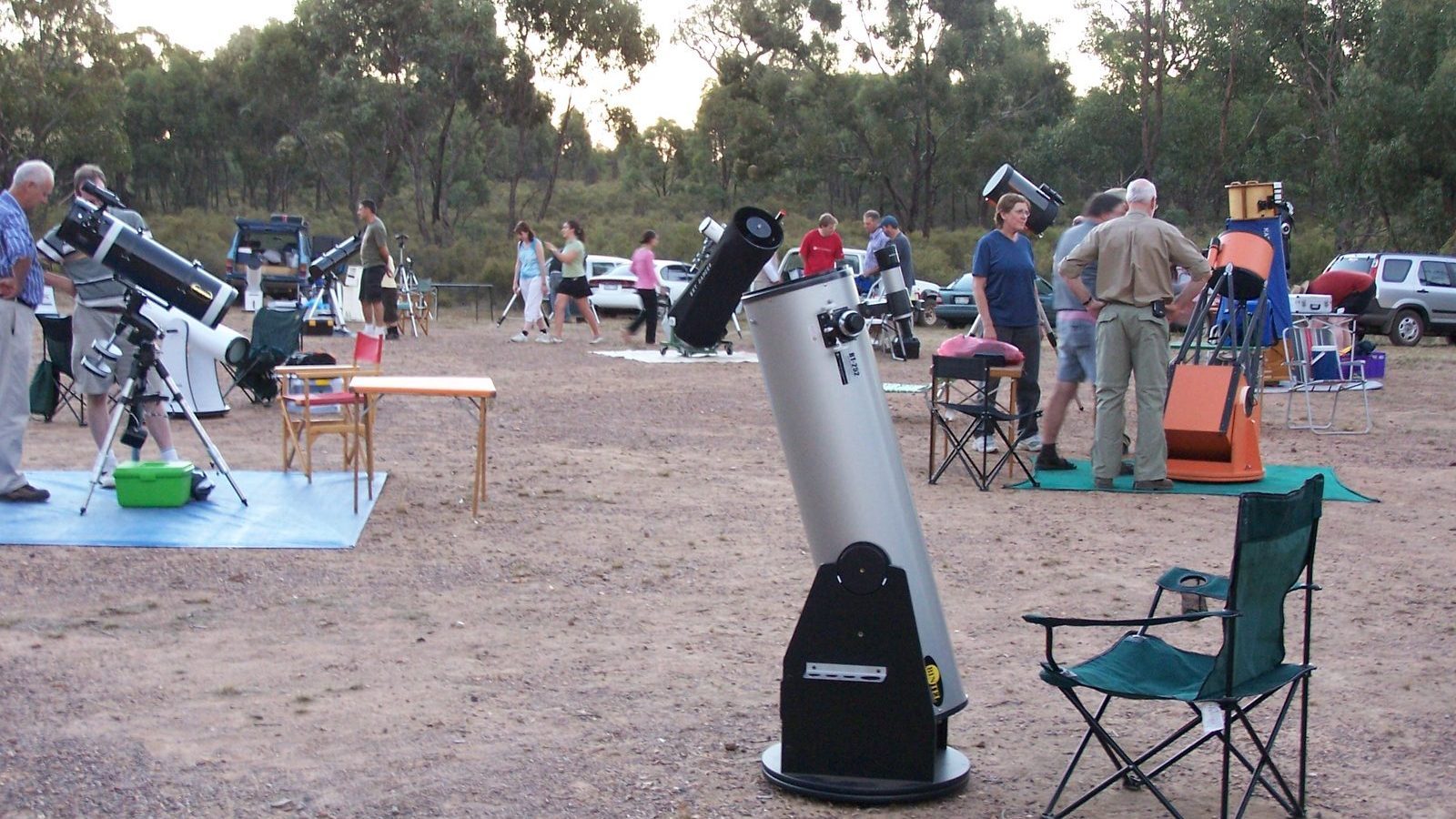
Northeast of Pittsburgh, in Deer Lakes Park near Tarentum, the Nicholas E. Wagman Observatory is run by the Amateur Astronomers Association of Pittsburgh — the first amateur observatory in Western Pennsylvania built for public education. From April through November the club holds free public star parties there, and visitors can look through its two big permanent telescopes: a 21.5-inch reflector, the largest eyepiece on this page, and an 11-inch refractor that John Brashear built by hand in 1910, plus a scatter of members’ portable scopes set up across the grounds.
Admission is free, though the club gladly takes a donation to cover the cost of keeping the lights (well, the red lights) on. The star-party dates run on the club’s schedule rather than a fixed weekly night, so check the calendar or call (724) 224-2510 before you go — and because it’s a club event, the members are there because they want to show you the sky. That 1910 Brashear refractor is a piece of Pittsburgh history you can still put your eye to.
Davey Lab Observatory, Penn State, State College: free every Friday, no reservation
In the middle of the state, Penn State’s Department of Astronomy & Astrophysics opens the rooftop telescopes on Davey Laboratory to the public every Friday night from 8:30 to 10 p.m., weather permitting, during the academic term. It is free, and there is no registration — you walk up. Students and faculty put various objects on display through the roof telescopes and answer whatever you want to ask.
Because the roof is exposed and central Pennsylvania weather is fickle, the department keeps a last-minute status line: call (814) 863-1234, extension 7, before you head over. Penn State also runs two bigger annual events worth catching if your timing lines up — AstroFest in mid-July during the arts festival, and AstroNight during fall Parents & Families Weekend, both free and open to all. But the standing Friday-night habit is the easy one: for anyone in the State College area, it’s the most reliable free eyepiece around.
Naylor Observatory, near Harrisburg: free public observing under four domes
Just south of Harrisburg, in Lewisberry, the Naylor Observatory is the home site of the Astronomical Society of Harrisburg, one of the oldest clubs in the region, with four small observatory buildings and a range of telescopes on a dark rural rise. The club puts the cost plainly: “There is no fee to attend our Public Observing Sessions, however donations are always appreciated to help keep our Naylor Observatory functioning.”
The public sessions run on selected evenings across the observing season — roughly monthly from spring into fall, on dates the society posts each year — timed to when the sky is worth showing. Weather decides whether they open, so if it looks iffy, check the site or call (717) 938-6041 starting 30 minutes before sunset. For the Harrisburg, York and Lancaster corner of the state, this is the free night to build around; check the club’s calendar for the next date before you drive out.
Cupillari Observatory, Keystone College: free Wednesdays and Fridays in the northeast
Up in the northeast, near Scranton, Keystone College runs the Thomas G. Cupillari ’60 Observatory in Fleetville, and its public programs are, in the college’s own words, “provided as a community service and are free of charge. No registration required.” The heart of the observatory is a Clark refractor that has anchored it since 1973, and public visitors observe the Moon, planets and stars through it and the site’s other telescopes.
The fall program runs Wednesday and Friday evenings, 8 to 10 p.m. (in 2026, September 16 through November 20), with summer sessions on the same two nights earlier in the year; Monday evenings are held for groups of 20 or more. It’s free, it’s twice a week in season, and it’s the easiest standing eyepiece for the Scranton–Wilkes-Barre region — a short drive off the main campus at the corner of Route 107 and Hack Road.
Peter van de Kamp Observatory, Swarthmore College: a free rooftop open house near Philadelphia
In the Philadelphia suburbs, on the roof of the Science Center at Swarthmore College, the Peter van de Kamp Observatory holds a free public open house on the second Tuesday of each month — 9 to 10 p.m. during daylight saving time, 8 to 9 p.m. in winter. The rooftop dome houses a 24-inch telescope, and the physics and astronomy department opens the observatory to anyone who wants to come up and look.
There’s a public parking lot next to the Science Center, off Whittier Place, and the campus is an easy hop off the north entrance from Elm Avenue. As with every site here, a cloudy sky cancels it, so if the weather is questionable the department posts a message on its page — check before you make the trip. For the western Philadelphia suburbs and Delaware County, this is the free monthly night to circle on the calendar.
The famous Pennsylvania telescopes, and why they aren’t on the free list
A couple of Pennsylvania names come up that aren’t on the list above. The Franklin Institute in Philadelphia has a genuine rooftop observatory — the Holt & Miller (Joel N. Bloom) Observatory, with five telescopes it opens on clear days — but you reach it through the museum on paid general admission, and its after-dark “Night Skies” sessions carry their own ticket, so it’s a paid visit rather than the “zero dollars” deal this page is about. And Eastern University’s Bradstreet Observatory in St. Davids runs excellent public nights that are free — but they’re so popular the reservations open months ahead and fill fast, so it’s worth watching for rather than a walk-up. Both are great; neither fits the “show up free tonight” test.
What a public observatory night is actually like
None of these is a planetarium show. You’re visiting a working telescope run by staff, students or volunteers who show up because they like showing people the sky, and the evening has a rhythm worth knowing before you arrive.
- You’ll wait, then look, then wait again. A dome holds a dozen or so people and the telescope shows one object at a time, so expect a couple of minutes at the eyepiece per target. Ask the operator what’s next; it’s their favorite question.
- Red light only. Every site here runs on red light after dark to protect night vision. Bring a red flashlight (our red flashlight guide has picks from $10) and dim your phone before you walk up — a white screen in a dark dome is the one sure way to annoy everyone around you.
- Dress warmer than you think. Observatory domes sit at the outside air temperature, and Pennsylvania clears off coldest on exactly the nights worth going — a crisp, transparent autumn or winter sky. A hat and a layer past what the day called for are the difference between staying two hours and leaving after twenty minutes.
- It cancels for cloud, and that’s a feature. A telescope aimed through overcast shows nothing, so every site above decides that evening. Check the status line, the page, or the club’s Facebook before you leave — and don’t take a cancellation personally, it just means the next clear night will be worth it.
- The Moon is a target, not an enemy. Dark-sky trips want a new Moon; observatory nights are the opposite. A first-quarter Moon through a big telescope is the best thing on the menu, its craters lit from the side. Our Moon-observing guide explains why the terminator, not the full Moon, is where the detail lives.
What you’ll see, by season
The planets set the calendar. Saturn is the reason most people say “oh” out loud at the eyepiece, and it’s an evening object from late summer through the end of the year; our Saturn guide has the dates. Jupiter follows it into autumn and winter, its four bright moons rearranged every night. Summer brings the Ring Nebula and the great globular cluster in Hercules; autumn the Andromeda Galaxy, a soft oval even from a lit city but the light of a trillion suns that left two and a half million years ago; winter the Orion Nebula, spectacular in any aperture. Pennsylvania’s clearest, steadiest nights come in the cold months, when the summer haze is gone — bundle up, because that crisp December sky is when a big telescope earns its dome. The Moon is up about half the nights of any month, and through these telescopes it never gets old.
If the eyepiece gets you
It does that. Half the people who own a telescope bought one after a night like this. The next step isn’t a 21.5-inch; it’s the beginner’s guide to learning the sky with your eyes, then a pair of astronomy binoculars or one of our beginner telescope picks, most of which cost less than a nice dinner out. When you want the sky itself and not just the objects, Pennsylvania has one of the darkest skies in the eastern United States — Cherry Springs State Park, up in the Pennsylvania Wilds, a certified International Dark Sky Park where the Milky Way is bright enough to cast a shadow; our Northeast stargazing guide has it, along with the best national parks for stargazing across the country. And if you’re reading this from another state, the New York, New Jersey, Massachusetts, California, Texas and Florida lists do the same thing there. Do the free night first. Zero dollars and someone else’s telescope is the best deal in astronomy.
Frequently Asked Questions
Which Pennsylvania observatories are open to the public for free?
Six on a regular schedule: the Allegheny Observatory in Pittsburgh (free guided tours two nights a week April through October, ending at a historic 13-inch Fitz-Clark refractor — reservation required); the Wagman Observatory in Deer Lakes Park near Tarentum, run by the Amateur Astronomers Association of Pittsburgh (free public star parties April through November, through a 21.5-inch reflector and an 11-inch Brashear refractor from 1910); Penn State’s Davey Lab Observatory in State College (free rooftop stargazing every Friday, 8:30 to 10 p.m., during the term, no registration); the Naylor Observatory near Harrisburg, home of the Astronomical Society of Harrisburg (free public observing sessions on selected dates); Keystone College’s Cupillari Observatory near Scranton (free, no registration, Wednesday and Friday evenings in season); and Swarthmore College’s Peter van de Kamp Observatory near Philadelphia (a free rooftop open house the second Tuesday of each month). A couple welcome a small donation, but none charges admission to look.
Can I look through the telescope at Allegheny Observatory in Pittsburgh, and is it free?
Yes, and yes — with one condition. The Allegheny Observatory runs free guided tours twice a week from April through October, each starting at 8 p.m. and ending, on a clear night, at its historic 13-inch Fitz-Clark refractor. The tours are free of charge, but you must reserve a spot ahead through Eventbrite or by calling (412) 321-2400, because they fill up. One tip from the observatory itself: much of the tour is inside the telescope domes, which sit at the outdoor temperature, so dress warmly — even a clear summer night can be chilly.
Do I need a reservation for a public observatory night in Pennsylvania?
For most, no. Penn State’s Friday nights in State College, Keystone College’s Wednesday and Friday sessions near Scranton, and Swarthmore’s second-Tuesday open house near Philadelphia are all walk-up, and the Wagman and Naylor club star parties are scheduled events you simply show up to on the posted dates. The one that requires a reservation is the Allegheny Observatory in Pittsburgh, whose free tours are booked ahead through Eventbrite. Every site decides that evening based on the weather, so whether or not you reserve, confirm the go/no-go before you leave.
What is the biggest public telescope in Pennsylvania you can look through for free?
Among the free public nights, the Wagman Observatory near Pittsburgh opens the largest you can put your eye to — a 21.5-inch reflector, alongside an 11-inch refractor John Brashear built by hand in 1910. Swarthmore’s rooftop dome near Philadelphia houses a 24-inch telescope used mainly for research, and the Allegheny Observatory in Pittsburgh ends its free tour at a historic 13-inch Fitz-Clark refractor. Larger research telescopes exist in the state, but the ones the public can look through for free are these.
Is the Franklin Institute observatory in Philadelphia free?
No. The Franklin Institute’s rooftop Holt & Miller (Joel N. Bloom) Observatory has five telescopes it opens on clear days, but you reach it through the museum on paid general admission, and its after-dark “Night Skies” sessions carry their own ticket — so it’s a paid visit rather than a free public night. For the free options near Philadelphia, Swarthmore College’s Peter van de Kamp Observatory holds a free rooftop open house the second Tuesday of each month.
Are public observatory nights good for kids?
Yes for school-age children, with a little planning. The club and campus star parties are relaxed, welcoming affairs where nobody minds a beginner’s questions, and a first look at Saturn or the Moon lands hard at any age. Bring a red flashlight, keep phone screens dark, and dress warmer than the day called for — observatory domes sit at the outside temperature, and Pennsylvania’s clearest nights are also its coldest, so a hat and an extra layer are the difference between a good night and a short one.
Rob founded Outer Space Trip and writes its operator cost guides, the Space Tourism Price Index, and the See Space Now gear guides. He has observed since a high-school observatory in the 1990s and still runs the 10-inch Meade LX200 he bought after college. How we pick and source ▸
Free Observatory Nights in Illinois
The historic 18.5-inch Alvan Clark refractor that first split the companion of Sirius, open free every Friday at Northwestern; a 128-year-old refractor at the University of Illinois; free Wednesday nights at NIU; and free public star parties from the Chicago suburbs to Carbondale — six public telescopes, which night each opens and what you’ll see.
Read →Free Observatory Nights in Ohio
A 28-inch telescope under a dark Hocking Hills sky open free Friday and Saturday, two 36-inch reflectors near Mansfield and in Geauga County, free campus nights in Athens, and free public star parties around Cleveland and Dayton — six public telescopes, which night each opens and what you’ll see.
Read →Free Observatory Nights in New York
A free rooftop telescope night in Manhattan, a 12-inch refractor from 1922 open every Friday at Cornell, a 20-inch Dobsonian near Buffalo, and public domes on Long Island and in the Hudson Valley — six public telescopes, which night each opens and what you’ll see.
Read →Free Observatory Nights in New Jersey
A 20-inch telescope ten miles from Manhattan, open free every Wednesday, plus five more public domes across the state — which night each opens and what you’ll see.
Read →Free Observatory Nights in Massachusetts
Harvard’s historic Great Refractor, a rooftop dome at the Museum of Science open free every clear Friday, and two 19th-century college refractors in the Pioneer Valley — six public telescopes, which night each opens and what you’ll see.
Read →Free Observatory Nights in Florida
A 16-inch open free the first Friday near Punta Gorda, an observatory roof that rolls back on clear Saturdays in Miami, a historic Alvan Clark refractor open Fridays at UF, and free public star parties from Tampa Bay to Fort Lauderdale — six public telescopes, which night each opens and what you’ll see.
Read →Free Observatory Nights in California
The Zeiss 12-inch at Griffith — the most-looked-through telescope on Earth — open free every clear night, plus a 36-inch in Oakland and four more public domes across the state.
Read →Free Observatory Nights in Texas
A historic 9-inch refractor UT reportedly bought from a circus, open free every Friday and Saturday in Austin, a 32-inch near Stephenville, a 20-inch outside Houston, and free public domes in San Antonio, San Marcos and the Piney Woods — six public telescopes, which night each opens and what you’ll see.
Read →Stargazing for Beginners
Explore space tonight — what to see with your eyes, binoculars, or a first telescope.
Read →The Best Beginner Telescopes
2026 picks — from a $200 starter to an 8-inch Schmidt-Cassegrain — to get you viewing on night one.
Read →Best Binoculars for Stargazing in 2026
The most underrated astronomy tool — cheap, portable, zero setup. Our picks from a $45 starter to image-stabilized glass.
Read →