How to See Earth from Space
The one world you cannot point a telescope at. But you can watch the space station pass overhead, and see the planet's own shadow at sunset.
In this guide
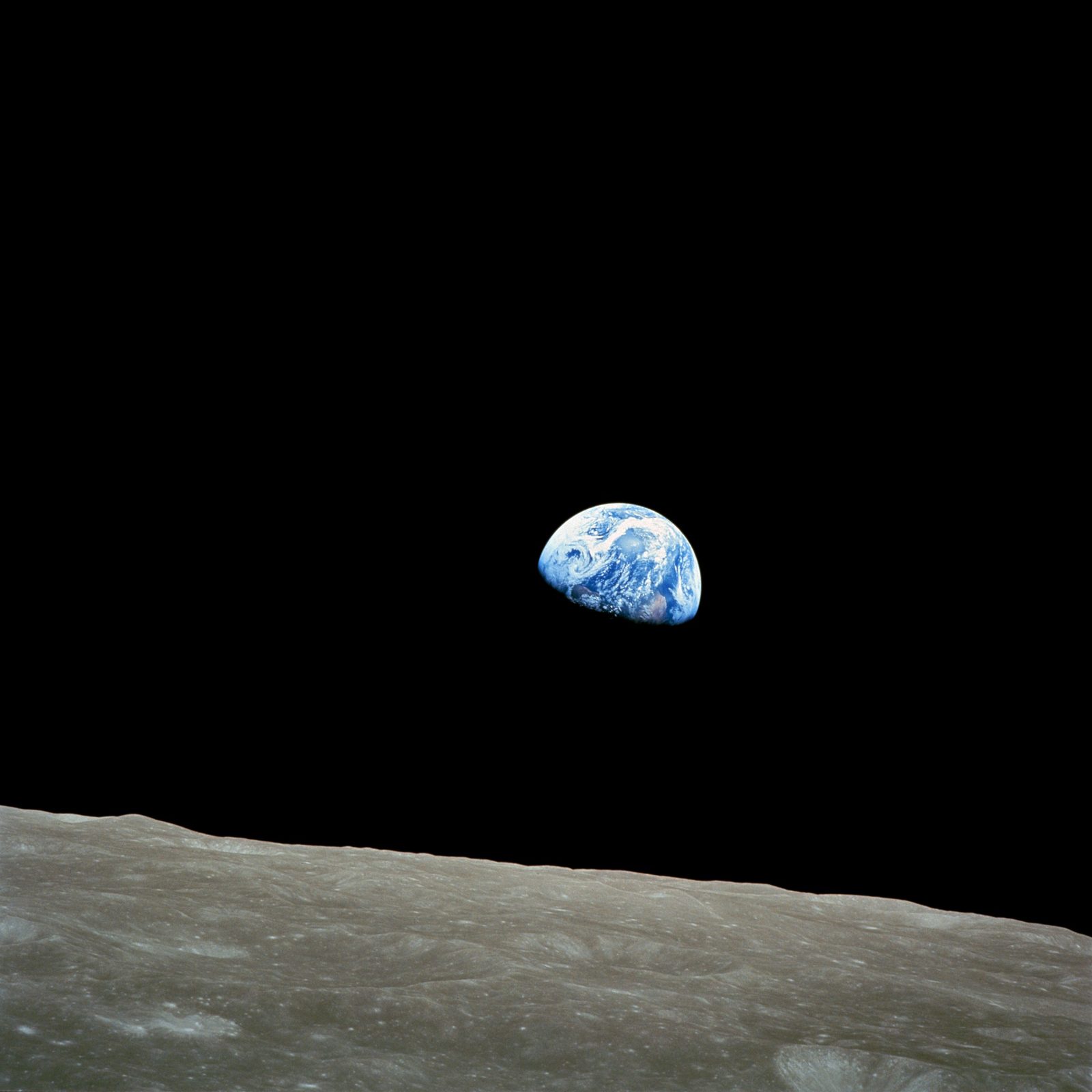
Every other guide in this cluster ends with a telescope pointed outward. This one is the exception, because you are standing on the subject. The picture at the top of this page is the one that made the point: the crew of Apollo 8 went to photograph the Moon, looked up, and took the photograph that changed how people thought about home.
There are three ways to actually see Earth as a planet, and two of them are free and happen tonight.
Watch the space station go over
The International Space Station is bright, obvious, and passes over most inhabited places several times a week. It looks like a very bright star moving steadily and silently, taking a few minutes to cross the sky. It does not blink, which is how you tell it from an aircraft.
NASA’s free Spot the Station service will tell you when the next visible pass is from your location, which direction it rises, and how high it climbs. Passes shortly after sunset or before sunrise are the visible ones — the station is catching sunlight while you are already in darkness.
You are looking at a structure the size of a football field with people inside it, moving at about five miles a second. No equipment required, and it is the closest most of us will come to seeing humans in space with our own eyes.
If a pass happens to coincide with a spacewalk, our spacewalk guide covers how to follow along.
See Earth’s own shadow
This one almost nobody knows about, and it happens every clear evening.
Just after sunset, turn around and face east, away from the sunset. Low on the horizon you will see a dark blue-gray band rising, with a soft pink glow sitting on top of it. The dark band is the shadow of the Earth cast onto its own atmosphere. The pink band above it — the Belt of Venus — is air still catching reddened sunlight.
Watch for ten minutes and you can see the shadow climb as the planet turns. It is the only time you get to look directly at evidence that you are standing on a sphere rotating into its own darkness, and it costs nothing but turning around.
Watch it live from orbit
NASA streams live video from cameras on the space station. When the station is in daylight you get a continuously moving view of the planet from 250 miles up; when it passes into night you see city lights, lightning storms flickering inside cloud tops, and occasionally aurora from above.
It is the closest thing to the view the Apollo 8 crew described, available on a laptop, and it is oddly hard to stop watching.
The view that changed people
Astronauts describe a consistent reaction to seeing Earth whole: borders vanish, the atmosphere looks alarmingly thin, and the planet reads as fragile rather than vast. It has a name — the overview effect — and it comes up again and again in first-hand accounts.
We collected what people actually say about it in what space feels like, and if you want to know what it would take to see it yourself, the eligibility check spells out the cost.
Why this counts as a planet guide
Because Earth is the control. Every judgement in the other nine — that Mars is rust-colored, that Uranus is a blue-green dot, that Venus is blindingly bright — is made from here, through this atmosphere, by people standing on this surface.
And it is the third planet, which is the whole reason a bedtime rhyme in our house ends in an argument about the ninth.
Frequently Asked Questions
How can I see the International Space Station?
Use NASA's free Spot the Station service, which gives the times of visible passes from your location along with the direction it rises and how high it climbs. The station looks like a very bright star moving steadily across the sky over a few minutes, and it does not blink - that is how you tell it from an aircraft. Passes shortly after sunset or before sunrise are the visible ones.
What is the Belt of Venus?
The pink band that sits just above the horizon opposite the sunset, with a dark blue-gray band beneath it. The dark band is Earth's own shadow cast onto its atmosphere, and the pink glow above is air still catching reddened sunlight. Face east shortly after sunset on a clear evening and you can watch the shadow climb as the planet rotates.
Can you watch live video of Earth from space?
Yes. NASA streams live video from cameras aboard the International Space Station. In daylight you see the planet moving past from about 250 miles up; on the night side you see city lights, lightning inside cloud tops, and sometimes aurora viewed from above.
What is the overview effect?
The name given to a reaction astronauts consistently report on seeing Earth whole from space: borders become invisible, the atmosphere looks strikingly thin, and the planet reads as fragile rather than limitless. It recurs across first-hand accounts from many different missions and nationalities.
Rob founded Outer Space Trip and writes its operator cost guides, the Space Tourism Price Index, and the See Space Now gear guides. He has observed since a high-school observatory in the 1990s and still runs the 10-inch Meade LX200 he bought after college. How we pick and source ▸
See the Planets
Every world you can find from a backyard, one guide at a time — what each actually looks like in the eyepiece, when to look in 2026, and the gear that earns its spot.
Read →How to Observe the Moon
The full Moon is the worst night to look — the terminator at a half Moon is where the craters stand up in relief. What to see and when, plus the $19 map that makes the surface legible.
Read →How to Watch a Spacewalk Live
NASA’s three-spacewalk August 2026 ISS series wrapped with a two-part antenna swap. How to watch the next one free on NASA+, and what you’ll actually see, hour by hour.
Read →What’s in the Sky Tonight
Tonight’s Moon phase and a live countdown to the next meteor shower, eclipse and sky event — the page to check before you head outside.
Read →Commercial Space Stations: The Race to Replace the ISS
Vast, Axiom, Starlab and Orbital Reef compared — who’s building what, when each flies, and what NASA’s 2026 course change means.
Read →