The Best Telescope for Light Pollution
You can do astronomy from a city backyard — you just have to know what the glow leaves you. The smart telescope that pulls nebulae out of the orange sky, the scope for the Moon and planets that light pollution can’t touch, and how to read the Bortle scale for your own address.
In this guide
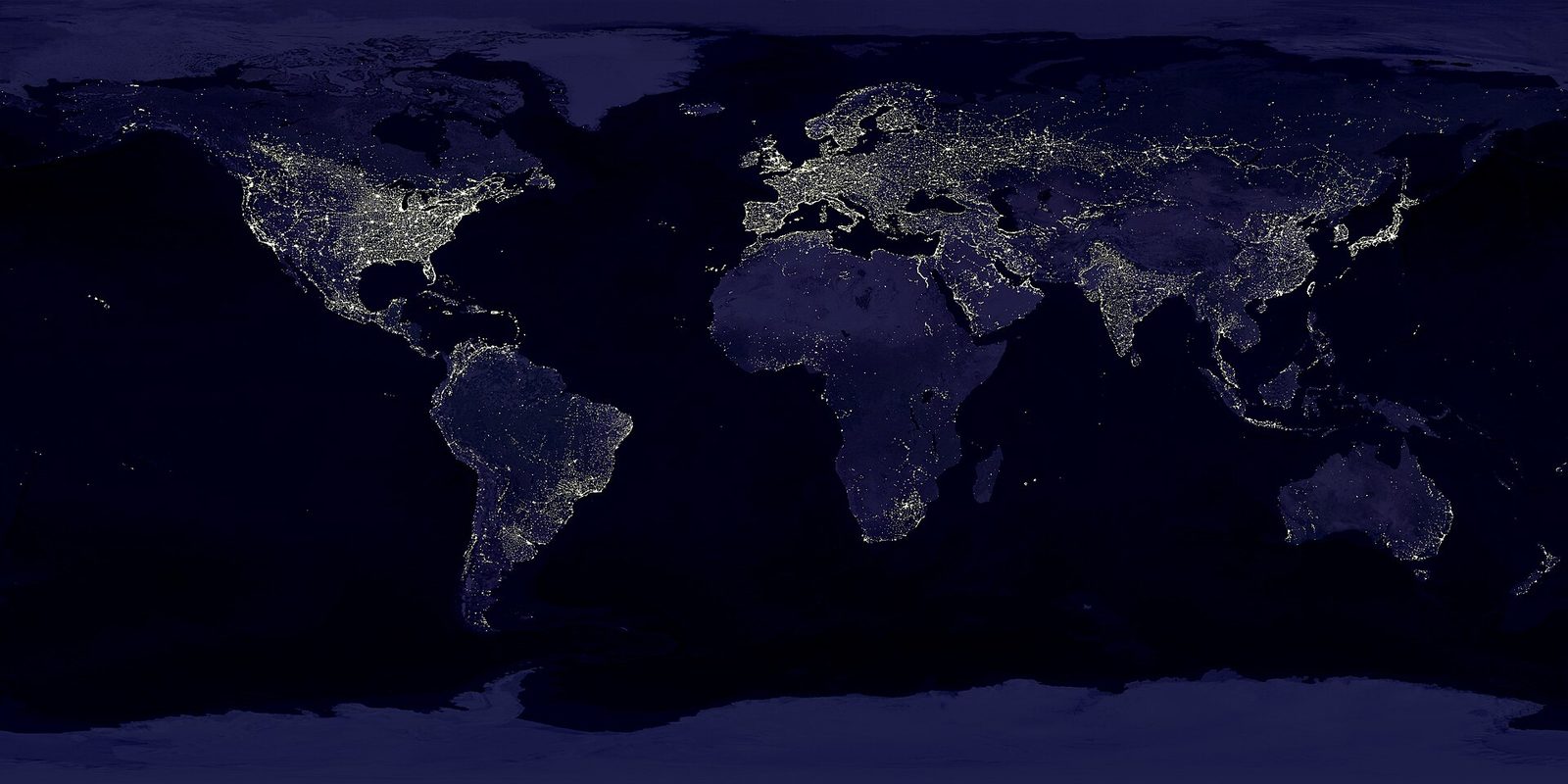
Step onto a city balcony on a clear night and the sky is the wrong color. Not black, but a flat orange-gray, and you can count the stars on your fingers. The real question is whether a telescope changes that at all, and the answer comes in two halves: for some of the sky, completely, and for the rest, only one kind of telescope does. Knowing which half you are after is the whole decision.
Here is the split that governs everything below. The Moon, the planets, and the brightest double stars are so bright that light pollution barely touches them — Saturn’s rings look the same from a downtown rooftop as from a dark field. Nebulae and galaxies are the opposite: faint, spread-out light that city skyglow simply drowns, so no eyepiece shows them from a bright backyard no matter how big the mirror. The trick that changed this is the smart telescope, which stacks a photograph instead of relying on your eye, and that is why the top picks here are smart scopes and the visual picks are the ones built for the Moon and planets.
Outer Space Trip may earn a commission from links on this page; your price is the same. How we choose. Prices are approximate; the links show current pricing.
Our picks at a glance

ZWO Seestar S30
The honest answer to a bright sky: it stacks dozens of short exposures behind a dual-band filter and pulls the Orion Nebula or the Andromeda galaxy onto your phone from a backyard where your eye sees nothing but orange glow. At about $399 it is the cheapest thing that does that, and the one I’d hand most city observers first.
- This is your first smart telescope and you want the least to go wrong
- You want one price to be the whole price — nothing else to order
- You can wait for a restock — if tonight is the point, take the Dwarf Mini
- Prone to selling out at ZWO’s store — check availability before you count on it
- 30mm of aperture: deep-sky targets are photographed, not seen bright
- Equatorial mode needs ZWO’s separate TH10 head at about $99
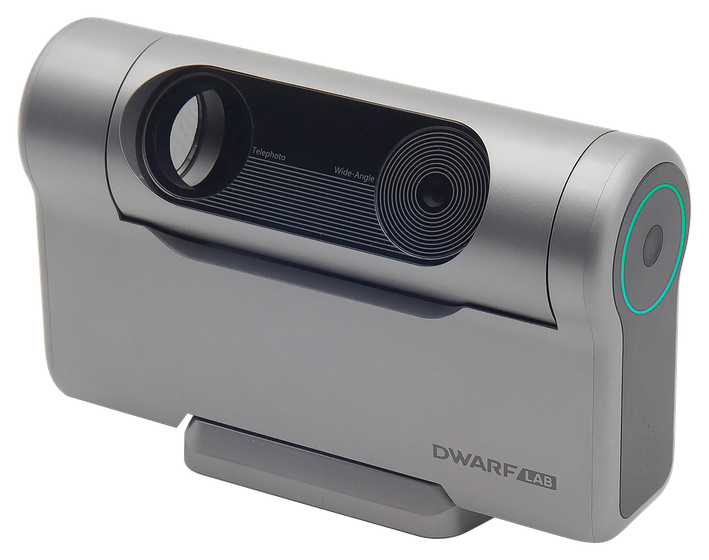
DwarfLab Dwarf 3
A wider field than the Seestar with the same light-pollution filtering, so large targets — the North America Nebula, the Pleiades — frame in a single shot. The pick when you want variety in what you can capture from the city, not just the brightest handful of objects.
- You want auroras, star trails and the Milky Way as well as deep-sky targets
- You’d rather have the bigger sensor than the lighter body — that’s the Mini trade
- You’ll take it to dark skies rather than leave it in the yard
- No tripod in the box, so add about $89
- 35mm on the telephoto gathers less light than a bigger optic — faint targets take longer
- Two cameras and more modes mean more to learn than a single-lens scope
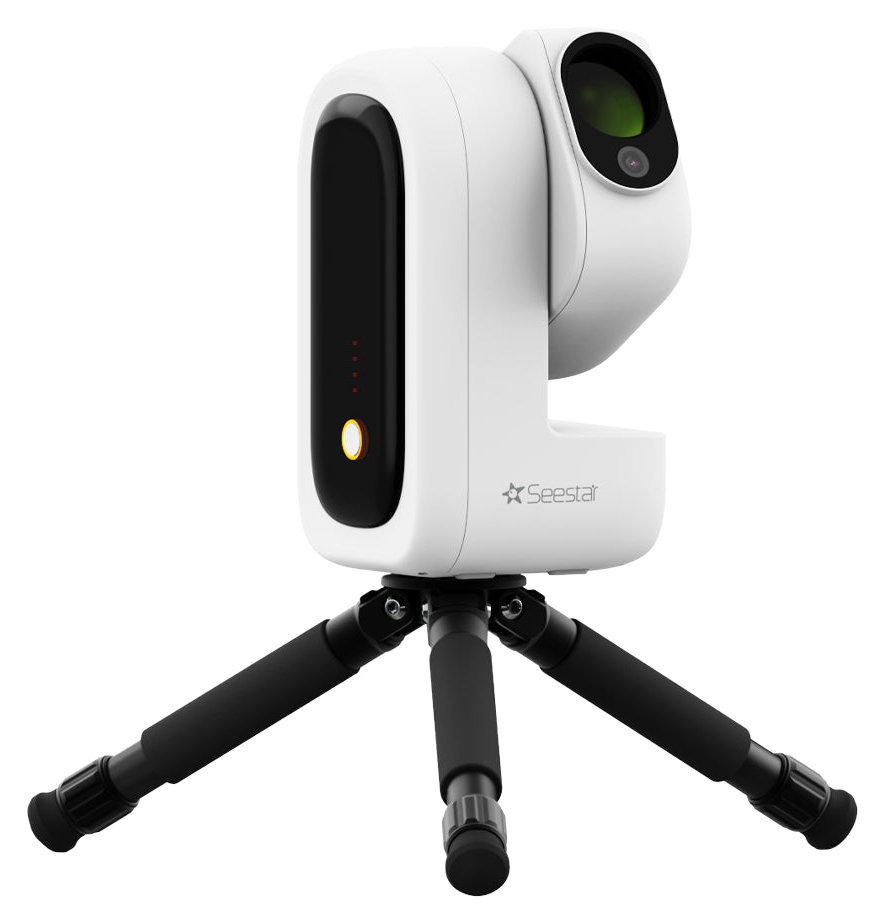
ZWO Seestar S50 Pro
Fifty millimeters of aperture against the S30’s thirty gathers more than twice the light before stacking and the dual-band filter even start. The step up for a city observer who wants the faintest the sky will allow and has the budget for it.
- Galaxies, clusters and small nebulae are the goal — 260mm of focal length frames them far tighter than any 30mm scope
- You want the most light the Seestar app can drive short of Vaonis money
- You can wait: ZWO’s store is taking pre-orders that ship in about 3–4 weeks
- Brand new — no independent long-term reviews yet, so this is ZWO’s spec sheet, not a year of owners
- 2.8 kg, the heaviest of the small smart scopes, and $300 over the S30 Pro; the tighter field means the big showpieces need mosaic mode
- Equatorial mode again leans on ZWO’s separate $99 TH10 head, which ZWO lists as recommended for it

Celestron StarSense Explorer DX 130AZ
For the Moon, Jupiter and Saturn, which shine straight through light pollution, this is the eyepiece scope I’d pick for a city: its phone app points you at targets even when skyglow has erased the faint guide stars you’d normally star-hop by.
- You’ve never used a telescope and don’t want to learn star-hopping first
- You want Jupiter or Saturn in the eyepiece tonight, not after a month of practice
- You’re happy using your phone as part of the setup
- It’s a Newtonian, so the mirrors need occasional collimating
- The finding trick depends on your phone — and its battery
- An open tube means dust and dew reach the optics

Sky-Watcher Heritage 130
A real 130mm telescope that sets on a balcony rail or a kitchen table and needs no room to swing a tripod. For an apartment with a sliver of southern sky, it is the most aperture that will actually get used.
- Your budget tops out around $250, or it’s a first scope for a kid
- Storage or trunk space is tight
- You want real optics, not a big-box toy
- Tabletop design — you supply the table, stool or crate
- The collapsible open tube lets in stray light and dust a closed tube keeps out
- Smallest aperture here, so faint galaxies stay faint
Telescopes for light pollution, compared
The picks at a glance, with the one thing each is for. Full reasoning is below.
| Pick | Type | Best from the city for | Price |
|---|---|---|---|
| ZWO Seestar S30 | Smart scope, 30mm | Deep-sky, cheapest way in | ~$399 |
| DwarfLab Dwarf 3 | Smart scope, wide field | Large nebulae, variety | ~$549 |
| ZWO Seestar S50 Pro | Smart scope, 50mm | The faintest the sky allows | ~$999 |
| Celestron StarSense Explorer DX 130AZ | 130mm reflector | Moon, planets, with app finding | ~$350–499 |
| Sky-Watcher Heritage 130 | 130mm tabletop | A balcony or a tiny yard | ~$280–310 |
Not sure which is you? Our telescope finder sorts it in four questions.
First, find your sky on the Bortle scale
Amateur astronomers rate how dark a sky is on the Bortle scale, a nine-class system the astronomer John E. Bortle set out in Sky & Telescope in 2001. Class 1 is a pristine desert sky where the Milky Way casts a shadow; Class 9 is the center of a major city. A free online light-pollution map will tell you your class from your address, and it decides what a telescope can realistically do for you.
| Your sky | Bortle | What the eye sees | What to buy |
|---|---|---|---|
| Rural / dark | 1–3 | Vivid Milky Way; nebulae and galaxies plain in any scope | Anything; light pollution isn’t your problem |
| Suburban | 4–5 | Milky Way visible but washed near the horizon; brighter deep-sky with effort | Any eyepiece scope, plus a nebula filter for the faint stuff |
| Bright suburb / small city | 6–7 | Milky Way faint to gone; Moon, planets and clusters are easy | A smart scope for deep-sky; an eyepiece scope for the planets |
| City / inner city | 8–9 | Only the Moon, planets, bright stars and a few of the brightest deep-sky objects | A smart telescope for deep-sky; an eyepiece scope for the Moon and planets |
The pattern is simple: the brighter your sky, the more a smart telescope earns its keep for anything beyond the Solar System, and the less a bigger visual mirror helps. A 10-inch Dobsonian in a Bortle 8 backyard still shows a washed-out smudge where a galaxy should be, because the problem is the sky between you and the galaxy, not the size of your mirror.
Why a smart telescope is the city’s best trick
A smart telescope like the ZWO Seestar S30 has no eyepiece. It aligns itself, then takes a long series of short exposures and stacks them into one image on your phone, adding the faint light frame by frame until a nebula rises out of the background. Crucially, it does this behind a dual-band filter that passes only the two narrow colors most nebulae glow in and blocks the broad orange of streetlights. That combination — stacking plus filtering — is what pulls the Orion Nebula or the Andromeda galaxy out of a sky where your eye sees nothing. It is the one reliable way to do deep-sky from a Bortle 8 backyard, and it is why these scopes sit at the top of this page. The full category, and how the models compare, is in our smart telescope guide; the Seestar S30 vs Dwarf Mini page weighs the two cheapest ways in.
The limit worth knowing: a smart scope hands you a photograph, not the live view through an eyepiece. If the dream is putting your own eye to the glass and watching Saturn hang there, that is the other half of this page.
If you’d rather look through an eyepiece
For the Moon and the planets, light pollution is almost irrelevant, and a good visual scope from the city shows you exactly what one from a dark site would. The catch in a bright sky is finding things: skyglow erases the faint stars you would normally star-hop by. That is why the Celestron StarSense Explorer DX 130AZ is the eyepiece pick here: its phone app reads the sky through your camera and points you at a target even when you can only see a dozen stars. For an apartment with no room for a tripod, the Sky-Watcher Heritage 130 sets on a balcony rail or a table and still shows Jupiter’s moons and Saturn’s rings.
If you already own a telescope, the cheapest upgrade for a light-polluted sky is a filter, not a new scope. A broadband or UHC filter screws into the eyepiece and darkens the background so the brighter nebulae lift out of the glow — a $30 to $100 fix. Which one depends on your targets, and our telescope filter guide has the picks. A filter does nothing for galaxies, which is where the smart scope earns its place.
What to skip
Skip anything sold on “sees deep space from your backyard” with a cheap long-tube refractor and a stack of color filters — the aperture is too small and the mount too wobbly, and no eyepiece filter makes a galaxy appear in a city sky. Skip, too, the advice to just buy the biggest Dobsonian you can afford: in a Bortle 8 sky the extra aperture gathers more skyglow along with more starlight, so faint deep-sky stays washed out. A big Dob is a wonderful scope to drive to a dark site; it is not the answer to a bright backyard. And ignore magnification claims on the box; from the city, your limit is the sky’s brightness, never the eyepiece.
If you want one answer
If you live under a bright suburban or city sky and want to see nebulae and galaxies, buy the ZWO Seestar S30: it is the cheapest thing that reliably does it, and the images land on your phone the first night. If what you want is to look through an eyepiece at the Moon and the planets — the half of the sky the city can’t take from you — buy the StarSense Explorer DX 130AZ and let its app find targets the glow has hidden. The one thing not to do is buy a big visual scope expecting it to punch through the skyglow to the galaxies. It won’t, and that disappointment is the most common reason a city telescope ends up in a closet.
Frequently Asked Questions
What is the best telescope for light pollution?
For deep-sky objects such as nebulae and galaxies from a light-polluted city, the best tool is a smart telescope like the ZWO Seestar S30 (about $399): it stacks many short exposures behind a dual-band filter and builds up an image on your phone that your eye could never see through an eyepiece. For the Moon and the planets, which shine through light pollution, a visual scope with app-guided finding such as the Celestron StarSense Explorer DX 130AZ is the better buy. Which one is right depends on whether you want photographs of faint objects or a live view of the bright ones.
Can you see galaxies and nebulae from a city?
With your eye through an eyepiece, almost never from a Bortle 8 to 9 city sky: the skyglow drowns the faint, spread-out light of galaxies and most nebulae, and a bigger telescope does not fix it because the problem is the sky, not the mirror. With a smart telescope that stacks exposures behind a light-pollution filter, yes: the Orion Nebula, the Andromeda galaxy and dozens of others come out as images on your phone even from a bright backyard. The Moon, planets and bright star clusters are visible from any city.
Do light pollution filters really work?
For some targets. A UHC or broadband light-pollution filter blocks the colors of streetlights and lets through the colors emission nebulae glow in, so the brighter nebulae lift out of the background glow in an eyepiece. They do little for galaxies and star clusters, which shine across the whole spectrum like the streetlights do. A filter is a $30 to $100 upgrade to a scope you already own, not a substitute for a dark sky or a smart telescope.
What telescope is good for an apartment or a balcony?
A tabletop Dobsonian such as the Sky-Watcher Heritage 130 (about $280 to $310) sets on a balcony rail or a table, needs no room to swing a tripod, and still shows Jupiter's moons and Saturn's rings. For deep-sky from a balcony, a smart telescope like the Seestar S30 is even more compact and handles the light pollution electronically. Both are small enough to carry out, use, and bring back in minutes, which is what gets a scope used in a flat.
What is the Bortle scale?
The Bortle scale is a nine-class rating of how dark a night sky is, introduced by amateur astronomer John E. Bortle in Sky & Telescope in 2001. Class 1 is a pristine dark-sky site where the Milky Way casts a faint shadow; Class 9 is an inner-city sky where only the Moon, planets and brightest stars show. A free online light-pollution map gives your class from your address, and it tells you plainly what a telescope can do for you before you spend any money.
Is a smart telescope or a regular telescope better for light pollution?
They do different jobs. A smart telescope is better for deep-sky objects from a bright sky, because it photographs and filters rather than relying on your eye. A regular telescope is better for the Moon and planets and for anyone who wants to look through an eyepiece at a live view, and those bright targets look nearly the same from the city as from a dark site. Many city observers end up owning both: a smart scope for the faint stuff and a small visual scope for the Solar System.
Rob founded Outer Space Trip and writes its operator cost guides, the Space Tourism Price Index, and the See Space Now gear guides. He has observed since a high-school observatory in the 1990s and still runs the 10-inch Meade LX200 he bought after college. How we pick and source ▸
Best Smart Telescopes for 2026
Auto-aligning telescopes that photograph galaxies and nebulas with a tap — $400 to $3,000 picks for every budget.
Read →The Best Beginner Telescopes
2026 picks, from a $200 starter to an 8-inch Schmidt-Cassegrain, to get you viewing on night one.
Read →The Best Telescope Filters for 2026
A $30–100 filter pulls the Orion Nebula out of city glow and tames the Moon’s glare. Moon, nebula, and planetary picks — two of them made in Germany.
Read →Types of Telescopes Explained
Refractor, reflector, Dobsonian, or catadioptric — what each design shows you, what it costs, and which one fits how you’ll observe.
Read →Telescope Finder
Answer four quick questions and get matched to the right first telescope — with a runner-up and a budget pick.
Read →The Best Telescopes Under $500
Seven scopes that earn the money — the one I’d hand most first-time buyers, the most mirror per dollar, a GoTo that finds targets itself, and the smart scope that hands you photos instead of an eyepiece.
Read →Space Gear Deals: Our Picks on Sale Right Now
Which of our telescope, binocular and star-projector picks are marked down, re-checked by hand — plus the year’s real buying windows.
Read →