Zero-G Flight: What a Weightless Flight Is Really Like
What a Zero-G weightless flight is really like: the parabolas, whether U.S. flights are running right now, what it costs, and who can fly.
In this guide
Here is the part most people don’t realize: you can float in true weightlessness (the real thing, not a harness or a wind tunnel) without ever leaving the atmosphere or buying a ticket to space. A Zero-G flight does it for a few thousand dollars instead of a few hundred thousand. It’s the same technique NASA uses to train astronauts, and it remains the single most accessible way to feel what spaceflight feels like.
Outer Space Trip may earn a commission from some booking links on this page; your price is the same. Prices and availability change. Always confirm with the operator before booking.
What a Zero-G flight actually is
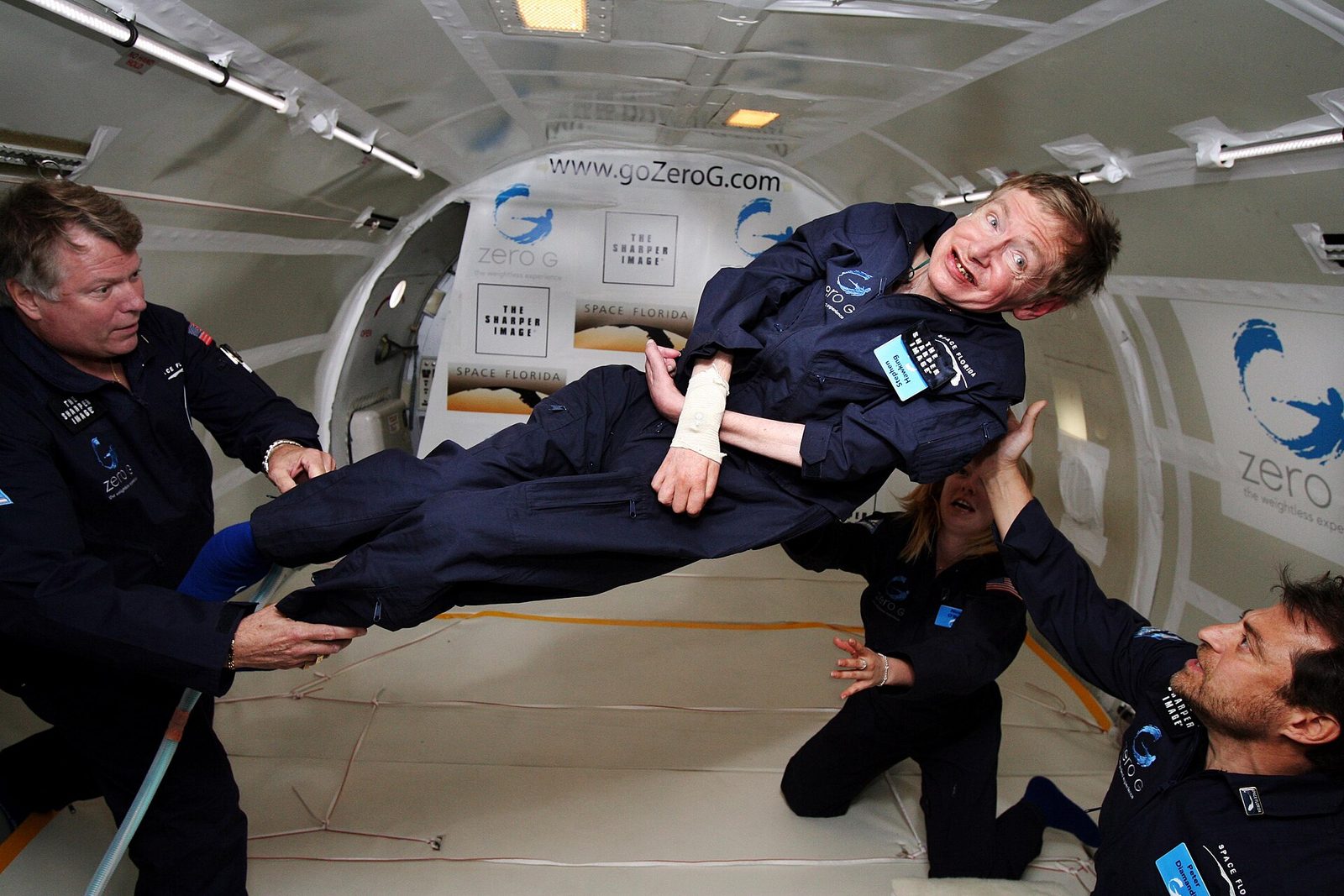
Weightlessness isn’t about being “above gravity” — it’s about free fall. A specially modified jet (in the U.S., Zero Gravity Corporation flies a converted Boeing 727 nicknamed G-Force One) climbs steeply, then arcs over the top of a giant invisible hill in the sky called a parabola. For the 20–30 seconds the aircraft follows that ballistic curve, everyone inside is falling at exactly the same rate as the plane, so you float, just as astronauts do in orbit.
A typical flight flies about 15 parabolas. The first few are usually eased in at Martian gravity (about one-third of Earth’s, enough to do one-handed push-ups off the floor) and lunar gravity (about one-sixth, the bounding Apollo-astronaut feeling), before the rest deliver full zero-G. The whole experience runs roughly 90 to 100 minutes from boarding to landing.
What it actually feels like
As the plane pulls up into each parabola you feel about 1.8 G — nearly double your weight, pressing you gently to the padded floor. Then the pilots push over the top and the weight simply vanishes. There’s no falling sensation like a drop tower; it’s more like the floor releasing you. You drift up, tumble, push gently off a wall and sail across the cabin. Water poured from a bottle becomes a wobbling silver sphere you can drink out of the air. Then a coach calls “feet down, coming out,” and gravity returns for the climb to the next parabola. People come off these flights grinning like children. It is, by wide consensus, one of the great bucket-list experiences.
Is Zero-G still flying in 2026?
Not in the U.S., as of this writing — and it’s worth knowing before you set your heart on a date. In its own public update (dated July 2026), Zero Gravity Corporation says its sole aircraft, the Boeing 727 G-Force One, sustained extensive damage in July 2025 at a third-party maintenance facility and is currently not airworthy, which is why it has run no public flights since. The company says it has filed suit over the damage and is pursuing insurance, and it states plainly that it does not anticipate a return earlier than mid-2027. It still takes email signups for schedule alerts, so it isn’t gone — but I’d treat any “book now” link with real skepticism until a bookable date actually shows up on the calendar.
In Europe, Air Zero G runs public parabolic flights on an Airbus A310 out of Bordeaux-Mérignac, open to the public the same way the U.S. flights were. Be warned, though: as of this writing, every date it lists — from October 2026 out through late 2027 — reads “this flight is full,” with only a waiting list to join. So the honest picture right now is that there is no zero-G seat you can simply buy and fly on a near date; the realistic move is a waitlist or a schedule alert on either operator. Always confirm live on the operator’s own site before you plan around it, since schedules like this shift fast.
What it costs
A seat on a Zero-G-style flight runs in the neighborhood of $8,900 plus tax in the U.S. (based on Zero Gravity Corporation’s last published pricing) or around €7,950 on Air Zero G in France, which works out to roughly the same figure once you convert it. The price typically includes a flight suit, a pre-flight briefing, all the parabolas, a post-flight certificate and a celebration. It is a genuine splurge — but compared with the $150,000-and-up cost of an actual suborbital flight, it’s the affordable way to feel weightless. Seats are sometimes discounted for full-plane charters and special event flights.
Who can fly, and what to wear
You do not need any astronaut training, medical clearance, or special fitness. Flights are generally open to anyone roughly age 8 and up who can board a commercial aircraft; there’s no centrifuge and nothing to “pass.” Wear comfortable clothes and flat shoes. You’ll be given a flight suit to pull on over them. Empty your pockets: in zero-G, anything loose floats away. That’s about the extent of the preparation.
The motion-sickness question
The old nickname “vomit comet” scares people off, but it’s mostly outdated. Operators offer anti-nausea medication ahead of the flight, and with it the large majority of fliers feel fine. The repeated shift between heavy and weightless is what can unsettle your inner ear, so the practical advice is simple: take the offered medication, eat a light meal beforehand rather than flying on an empty (or overfull) stomach, and during float time fix your gaze on a fixed point and move slowly rather than spinning. Most people are pleasantly surprised.
Where you can do it
Zero Gravity Corporation historically ran U.S. public flights out of a rotating set of cities (often Florida, Las Vegas, and others), and says it hopes to return to that pattern — but, on its own timeline, not before mid-2027. Air Zero G in France flies from Bordeaux-Mérignac, though its listed dates are currently waitlist-only. Confirm a real, published, bookable date before you plan around either operator; don’t assume a flight is available on demand.
Is it worth it?
If “floating like an astronaut” is on your list and you can absorb the cost, yes — few experiences deliver such a pure, otherworldly sensation, and nothing else short of orbit reproduces real weightlessness. It’s a spectacular gift, proposal, or milestone celebration. If the budget is tighter, treat it as the aspirational top of the Experience pillar and start with a launch viewing or a visit to Kennedy Space Center, then come back for the float when the moment’s right. Curious what the real thing feels like? See our guide to what it feels like to go to space.
While U.S. flights are grounded
With Zero Gravity Corporation grounded until at least mid-2027 and no bookable date anywhere, “I’ll book it when it’s back” is a fair plan that doesn’t give you anything to do tonight. Our beginner telescope guide and astronomy binoculars guide won’t get you weightless, but they’ll get you outside and looking up in the meantime.
Frequently Asked Questions
Is Zero-G still flying in 2026?
Not in the U.S. as of this writing. In its own July 2026 update, Zero Gravity Corporation says its sole aircraft, the Boeing 727 G-Force One, was damaged in July 2025 and is not airworthy, and that it does not anticipate resuming flights before mid-2027. Air Zero G in France still runs public parabolic flights, but every date it currently lists reads as full, with only a waiting list to join. So there is no zero-G flight you can simply buy and board on a near date right now.
How much does a Zero-G flight cost?
A U.S. Zero Gravity Corporation flight was priced around $8,900 plus tax, typically including a flight suit, pre-flight briefing, all 15 parabolas, and a post-flight certificate; Air Zero G in France charges about €7,950, a similar figure once converted. It's a splurge either way, but far cheaper than the $150,000-plus cost of an actual suborbital spaceflight. Confirm current rates and operating status before you book.
Is a Zero-G flight real weightlessness?
Yes. During each parabola the aircraft and everyone inside it are in free fall together, which produces genuine weightlessness: the same physics as floating in orbit. It is not simulated by harnesses or a wind tunnel. Each weightless period lasts about 20 to 30 seconds, and a typical flight delivers around 15 of them, including some at lunar and Martian gravity.
Will I get sick on a Zero-G flight?
Most people don't. The 'vomit comet' nickname is largely outdated: operators provide anti-nausea medication, and with it the majority of fliers feel fine. Eating a light meal beforehand, taking the medication, and moving slowly while floating all help. The repeated switch between heavy (about 1.8 G) and weightless phases is what can unsettle a sensitive stomach.
Who can do a Zero-G flight?
Almost anyone. There's no training, medical screening, or fitness test. Flights are generally open to people roughly age 8 and up who can board a normal commercial aircraft. You wear comfortable clothes and a provided flight suit, and empty your pockets so nothing floats away. It's designed for the general public, not just astronauts.
Where can you take a Zero-G flight?
In the U.S., Zero Gravity Corporation historically flew from a rotating set of cities, frequently including Florida and Las Vegas, though it has run no public flights since its aircraft was damaged in 2025 and does not expect to return before mid-2027. In Europe, Air Zero G flies comparable parabolic flights from France, but its listed dates are currently waitlist-only. Confirm a published, bookable date on the operator's own site before you plan a trip around it.
Rob founded Outer Space Trip and writes its operator cost guides, the Space Tourism Price Index, and the See Space Now gear guides. He has observed since a high-school observatory in the 1990s and still runs the 10-inch Meade LX200 he bought after college. How we pick and source ▸
Kennedy Space Center Visitor Guide
Tickets, the must-see exhibits, bus tours, launch viewing, how many days you need, and where to stay.
Read →Space Camp: Is It Worth It?
Adult, kids and family Space Camp at the U.S. Space & Rocket Center — programs, prices, what you do, and whether it delivers.
Read →What Do Space Tourists Wear?
Nobody hands you a bulky white spacesuit. The flight suit each operator actually issues, what goes under it, what you may bring on board — and why none of it is for sale.
Read →What It Feels Like to Go to Space
Launch, weightlessness, the view, and re-entry — described.
Read →