Space Gift Finder
Pick who the gift is for and what you want to spend, and see every space and astronomy gift we recommend that fits, from a $5 book to a telescope that photographs galaxies.

Buying for someone who loves space goes wrong in two ways. The telescope with the biggest number on the box is usually the one that ends up in a closet, and most of what a search for “space gifts” turns up is a logo printed on something nobody asked for. So this page does the sorting. Every gift we recommend anywhere on the site is in one list below, and three questions cut it down to the handful that fit the person you are buying for.
Outer Space Trip may earn a commission from links on this page; your price is the same. How we choose. Prices move; the links show current pricing.
All 50 gifts, cheapest first
Nothing we recommend fits all three. Widen the budget or the kind of gift, or

Best for new readers
Space: Planets, Moons, Stars, and More!~$5
A Step into Reading Level 3 science reader: short sentences a kid can read alone, real NASA photos, and a tour of the solar system that stays current.
Check today’s price ▸Why we picked it →
Cover: Random House Children’s Books
Best stocking stuffer for a kid
There's No Place Like Space!~$6–13
The Cat in the Hat tours the solar system in rhyme, and a four-year-old has the planets in order by New Year’s.
Check today’s price ▸Why we picked it →
Cover: Random House Children’s Books
Best for babies & toddlers
Astrophysics for Babies~$8–10
A baby book with thick cardboard pages that turns real astrophysics into simple words and bold shapes — written by actual physicists.
Check today’s price ▸Why we picked it →
Cover: Sourcebooks
Best book
First Big Book of Space~$8–12On sale now
National Geographic’s first space book, with real photos rather than cartoons — the one kids ask you to read again.
Check today’s price ▸Why we picked it →
Cover: National Geographic Kids
Best LEGO for a stocking
LEGO Creator 3-in-1 Space Shuttle~$8–12
A 144-piece pocket set that rebuilds into a shuttle, a spaceship or an astronaut figure, for about ten dollars.
Check today’s price ▸Why we picked it →
Photos used with permission. ©2026 The LEGO Group
Best for tweens
Astrophysics for Young People in a Hurry~$9–14
The young reader edition of Neil deGrasse Tyson’s bestseller — the cosmos in bite sized, witty chapters with full color photos and infographics.
Check today’s price ▸Why we picked it →
Cover: W. W. Norton
Best first nonfiction
Moon! Earth's Best Friend~$11–20
The Moon tells its own story (how it formed, why it has phases, why it never leaves) in first person, with a face.
Check today’s price ▸Why we picked it →
Cover: Henry Holt and Company
Best astronaut story
Mousetronaut~$11–20
Astronaut Mark Kelly flew with real mice on the shuttle, and this is the story of the smallest one earning its place on the crew.
Check today’s price ▸Why we picked it →
Cover: Simon & Schuster Books for Young Readers
Best for kids
50 Things to See With a Telescope, Kids Edition~$12
Fifty targets built around constellations a kid can learn to recognize, and the book to pair with a kids’ telescope.
Check today’s price ▸Why we picked it →
Cover: John A. Read
Best stocking stuffer for a grown-up
Pale Blue Dot (Carl Sagan)~$12–18
Sagan’s sequel to Cosmos, opening on the photograph of Earth from four billion miles out.
Check today’s price ▸Why we picked it →
Cover: Ballantine Books
Best budget astronomy book
50 Things to See With a Small Telescope~$12–14
Fifty specific targets, each shown as it looks through a small telescope, with charts good through 2030.
Check today’s price ▸Why we picked it →
Cover: John A. Read
Best bedtime story by a real astronaut
The Darkest Dark~$14–18
Chris Hadfield’s own picture book about the night he watched the Moon landing and stopped being afraid of the dark.
Check today’s price ▸Why we picked it →
Cover: Little, Brown Books for Young Readers
Best illustrated guide
National Geographic Backyard Guide to the Night Sky~$14–25On sale now
The one to buy if the sky still looks like random dots.
Check today’s price ▸Why we picked it →
Cover: National Geographic
Best under $25
4M Solar System Planetarium~$15–25
Snap the planets together, paint them, and the finished model glows on a desk after lights out.
Check today’s price ▸Why we picked it →
Photo: 4M
Best stocking stuffer for a telescope owner
Celestron Night Vision Red Headlamp~$15–25
Red light keeps eyes adjusted to the dark, and a headlamp leaves both hands free for the eyepiece.
Check today’s price ▸Why we picked it →
Photo: Celestron
Best for grade schoolers
Professor Astro Cat's Frontiers of Space~$16–20
A gorgeously illustrated tour of the solar system, galaxy, and universe led by a physicist cat — deeper than the picture books, with retro art kids pore over.
Check today’s price ▸Why we picked it →
Cover: Flying Eye Books
Budget star projector
Astronaut Starry Sky Projector~$17–25On sale now
The viral astronaut: eight nebula colors and a starfield out of the helmet, a remote, and change back from $25.
Check today’s price ▸Why we picked it →
Photo: Amazon
Best for Moon nights
50 Things to See on the Moon~$20
Fifty lunar features, from craters to the Apollo landing sites, with annotated photos showing where each one sits.
Check today’s price ▸Why we picked it →
Cover: John A. Read
Best first astronomy book
NightWatch: A Practical Guide to Viewing the Universe~$25
The book I’d hand almost anyone starting out.
Check today’s price ▸Why we picked it →
Cover: Firefly Books
The helmet to go with the suit
Aeromax Youth Astronaut Helmet~$25–30
Light, padded, a visor that moves, and an opening a preschooler can see and breathe through.
Check today’s price ▸Why we picked it →
Photo: Amazon
Best under $30
Stomp Rocket~$25–30
No screen and no app on Christmas morning; the light-up rockets ship with their batteries.
Check today’s price ▸Why we picked it →
Photo: Stomp Rocket
Best step up reference
The Backyard Astronomer’s Guide~$28
The next book once you start asking gear questions: which eyepiece, whether a filter is worth it, how astrophotography works.
Check today’s price ▸Why we picked it →
Cover: Firefly Books
Cheapest real star map
Thames & Kosmos Planetarium Projector~$30–40
Two projectors in one box: a rotating star map dome with the constellations of both hemispheres, and a slide projector with 32 space photographs.
Check today’s price ▸Why we picked it →
Photo: Amazon
Best under $40
LEGO Creator 3-in-1 Space Exploration Telescope$34.99 list
A refractor on a tripod with a geared tilt, plus a tabletop Sun with seven planets that spin around it.
Check today’s price ▸Why we picked it →
Photos used with permission. ©2026 The LEGO Group
Best book to wrap with a telescope
Turn Left at Orion~$36
The answer to “what do I point it at?” A hundred-plus objects drawn as they look through a small telescope, with directions from a bright star to each one.
Check today’s price ▸Why we picked it →
Cover: Cambridge University Press
Best first optics under $50
Celestron Cometron 7×50~$38–48On sale now
A 7×50 shows the Moon’s craters, the Pleiades and Jupiter’s moons the night it is unwrapped, with nothing to assemble.
Check today’s price ▸Why we picked it →
Photo: Celestron
Most personal
Custom Night-Sky Star Map~$40–90
A framed map of the exact sky over a specific place and date — a wedding, a birth, an engagement.
Check today’s price ▸Why we picked it →
Photo: Amazon
Best for ages 10 and up
Estes Tandem-X Launch Set~$40–45
Two rockets a kid builds over the break, then launches on real engines from a pad with a push button controller.
Check today’s price ▸Why we picked it →
Photo: Amazon
Best under $60
LEGO Creator 3-in-1 Space Astronaut~$50–55
One box, three builds — a ten-inch posable astronaut with a gold visor helmet, a space dog, or a viper jet.
Check today’s price ▸Why we picked it →
Photos used with permission. ©2026 The LEGO Group
Best desk piece
Levitating Moon Lamp~$50–80
A softly glowing Moon that hovers and spins above its base by magnetic levitation.
Check today’s price ▸Why we picked it →
Photo: Amazon
Best Christmas-afternoon build
LEGO Technic NASA Artemis SLS Rocket~$60On sale now
632 pieces, built in an afternoon, with a crank that launches the rocket off its pad.
Check today’s price ▸Why we picked it →
Photos used with permission. ©2026 The LEGO Group
Best first telescope under $100
Celestron FirstScope 76~$60–80On sale now
A 76mm tabletop reflector with almost nothing to set up: sit it on a table, point it at the Moon, and a young child sees craters within a minute.
Check today’s price ▸Why we picked it →
Photo: Celestron
Best dress-up gift
Aeromax Jr. Astronaut Suit~$60–70
A real fabric jumpsuit with sewn-on NASA patches and working pockets, sized like clothing from 2/3 to 12/14.
Check today’s price ▸Why we picked it →
Photo: Amazon
Best engineering build
LEGO Technic NASA Perseverance Mars Rover~$90–100
All six wheels steer, the arm moves, and the rocker bogie suspension keeps every wheel gripping over obstacles — the same geometry as the real rover on Mars.
Check today’s price ▸Why we picked it →
Photos used with permission. ©2026 The LEGO Group
Best for a kid’s bedroom
Pococo Galaxy~$90–110On sale now
Switch off the lights and the ceiling becomes a real nebula.
Check today’s price ▸Why we picked it →
Photo: Amazon
Best for falling asleep
Sega Homestar Matataki~$100–130
The only Homestar whose stars twinkle, an effect plate under the star disc ripples the field like real atmosphere, plus built in sea and mountain soundscapes and a timer.
Check today’s price ▸Why we picked it →
Photo: Sega Toys
Best desk display
LEGO Icons Hubble Space Telescope~$135–140
The only set here that models a telescope instead of a rocket.
Check today’s price ▸Why we picked it →
Photos used with permission. ©2026 The LEGO Group
Best value planetarium
Sega Homestar Original~$140–160
The 2006 planetarium that built the category, still in production: the same 60,000 star disc system as the Flux, with rotation, a shooting star function and a timer, for meaningfully less money.
Check today’s price ▸Why we picked it →
Photo: Sega Toys
Best wow factor
Govee Galaxy Light 2 Pro~$150–180
The new king of the light show: a sharp 4MP lens gives its nebulae real structure and edges, eight swappable film discs plus 20+ app scenes keep it fresh, and it answers to Alexa, Google or Matter.
Check today’s price ▸Why we picked it →
Photo: Govee
Best wall art
LEGO Art The Milky Way Galaxy~$200
A framed relief of our galaxy (Pillars of Creation, Crab Nebula, Pleiades, a tiny “you are here”) built in layered brick over a week of quiet evenings.
Check today’s price ▸Why we picked it →
Photos used with permission. ©2026 The LEGO Group
Best indoor sky
Sega Homestar Flux~$200–260
A home planetarium, not a mood light: 60,000 real stars from a glass disc, with the constellations where they sit outside.
Check today’s price ▸Why we picked it →
Photo: Sega Toys
Best build for a grown-up
LEGO Icons Shuttle Carrier Aircraft~$230
A Boeing 747 carrying the Space Shuttle Enterprise, 2,417 pieces, and accurate enough to earn a shelf for good.
Check today’s price ▸Why we picked it →
Photos used with permission. ©2026 The LEGO Group
Cheapest way into app guided
Celestron StarSense Explorer LT 80AZ~$230–260
Dock a phone, open the StarSense app and follow the arrows to the target: the cheapest real telescope with phone guided pointing.
Check today’s price ▸Why we picked it →
Photo: Celestron
The showstopper
LEGO Icons NASA Artemis SLS~$260
The full Space Launch System with its mobile launch tower — retractable umbilicals, crew bridge, separating stages, Orion inside.
Check today’s price ▸Why we picked it →
Photos used with permission. ©2026 The LEGO Group
Best telescope to unwrap
Sky-Watcher Heritage 130~$280–310
The telescope I would hand most beginners, kid or adult: a 130mm tabletop Dobsonian with nothing to knock over and a mirror big enough for Saturn’s rings and the Orion Nebula.
Check today’s price ▸Why we picked it →
Photo: Sky-Watcher
Best step up scope
Sky-Watcher Heritage 150~$340–360
The same collapsible tabletop design as the Heritage 130 with a 6-inch mirror instead of a 5-inch — about 30% more light, which is the difference between a galaxy as a hint and a galaxy as a shape.
Check today’s price ▸Why we picked it →
Photo: Sky-Watcher
Best for an older kid who’s serious
Celestron StarSense Explorer DX 130AZ~$350–499On sale now
For a tween or teen who’s hooked, this one keeps them engaged: dock a phone and the StarSense app draws arrows to whatever you’re hunting — aim until they turn green and there’s Jupiter.
Check today’s price ▸Why we picked it →
Photo: Celestron
Best ultra portable
DwarfLab Dwarf Mini~$399–419On sale now
Half the weight of the Seestar S30 at nearly the same optics and the same $399 — the smart scope you can order the night the S30 is sold out.
Check today’s price ▸Why we picked it →
Photo: DwarfLab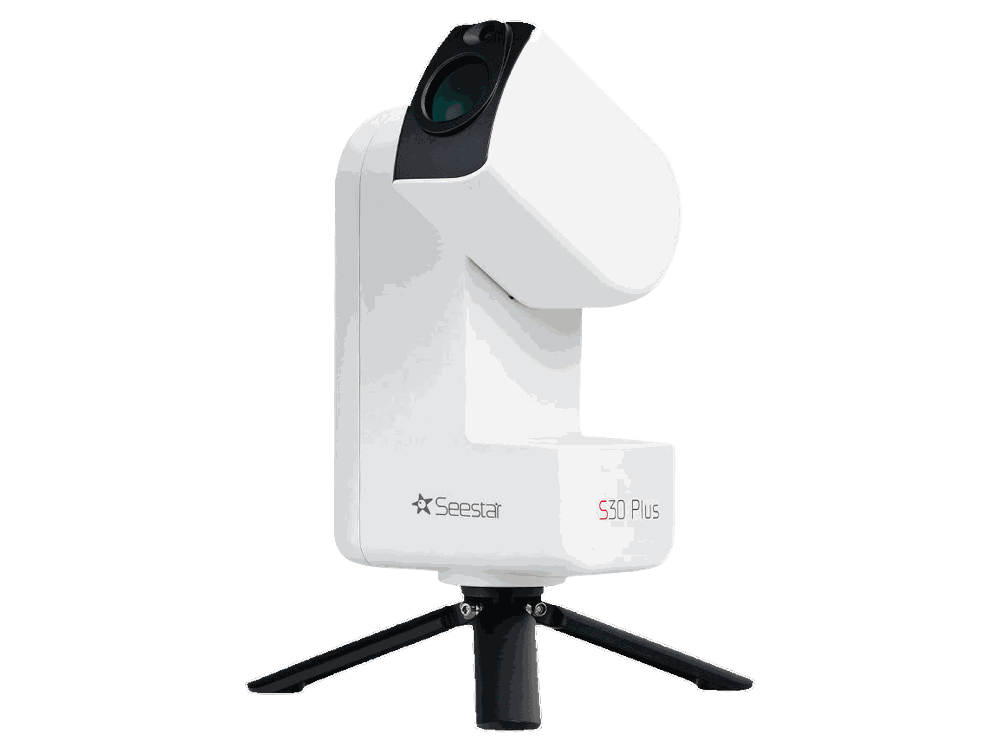
The splurge
ZWO Seestar S30 Plus~$499
Sets itself up, finds its target, and stacks a live photograph of a galaxy on a phone screen, with no charts and no learning curve.
Check today’s price ▸Why we picked it →
Photo: ZWO/Seestar
Best step up
ZWO Seestar S30 Pro~$699
The S30’s 90-second ease with a sharper 4-element apo lens and a 4K sensor roughly four times the size — cleaner stars and fainter targets from the same driveway.
Check today’s price ▸Why we picked it →
Photo: ZWO/SeestarHow the finder works
Nothing is on this list only because the finder needed filling. Each gift is already a pick on one of our guides, where the reasoning, the tradeoffs and the alternatives are written out; “Why we picked it” under any gift opens that guide. The price is the range printed on that pick’s own card, and the button opens today’s price. A gift marked on sale was below its usual price the last time this page was rebuilt, which happens several times most days.
The age groups follow the ages on each card: the maker’s own where the box prints one, our judgment where it does not. A gift can suit more than one person, so the Sega Homestar Flux shows up for a teenager, for an adult new to the sky and for someone who already owns a telescope.
Where to go from here
If you would rather read the case for a short list, start with our space Christmas gifts, which also covers when telescopes go on sale and when to order by. Space gifts for kids goes age by age, gifts for space lovers is the adult list, and gifts for aspiring astronauts is for the one who wants the suit. The gear deals board lists every pick of ours that is marked down right now. And if the gift is a first telescope, the telescope finder asks four questions and names one.
Frequently Asked Questions
What is a good space gift for a kid?
Under eight, a book they will ask for again: the First Big Book of Space is about ten dollars. From eight up, a real first telescope such as the Celestron FirstScope 76, or the Sky-Watcher Heritage 130 from about twelve. If you have no idea what they like, a Stomp Rocket gets used by any kid who can jump. Set the finder to the child's age group and your budget to see the rest.
What do you buy someone who already owns a telescope?
Something that makes the telescope they have more useful. Turn Left at Orion answers what to point it at, a red headlamp keeps their eyes adjusted to the dark with both hands free, and 50 Things to See on the Moon covers the nights when the Moon washes out everything else. Choose Someone with a telescope in the finder for the full list.
How much should I spend on a first telescope as a gift?
For a young child, the Celestron FirstScope 76 at about $60 to $80 is enough to show the Moon's craters. For an older kid or an adult, the Sky-Watcher Heritage 130 at about $280 to $310 is the one we would hand most beginners. If they would rather have photographs than an eyepiece view, the ZWO Seestar S30 Plus is about $499.
The Best Space Christmas Gifts
Seventeen gifts in a ladder from a $10 stocking stuffer to a telescope that photographs galaxies — plus the Black Friday window, the shipping cutoff and the full Moon on Christmas Eve.
Read →The Best Space Gifts for Kids
Half of all space gifts are in a closet by February. These are the seven kids keep using, by age, from an $8 picture book to the telescope a teenager won't outgrow.
Read →The Best Gifts for Space Enthusiasts
For the adult who tears up at a launch — picks from a $15 Carl Sagan classic to a smart telescope that photographs galaxies.
Read →The Best Gifts for Aspiring Astronauts
For the kid who wears the helmet to the store and the adult who checks the ticket price every quarter — seven gifts that feed the dream, plus the experiences that put them in a real Mission Control.
Read →Space Gear Deals: Our Picks on Sale Right Now
Which of our telescope, binocular and star projector picks are marked down, rechecked by hand — plus the year’s real buying windows.
Read →Telescope Finder
Answer four quick questions and get matched to the right first telescope — with a runner up and a budget pick.
Read →