The Complete Guide to Space Tourism Companies in 2026
Blue Origin, Virgin Galactic, SpaceX, Axiom Space and Space Adventures compared: who flies tourists, what each offers, and how to choose.
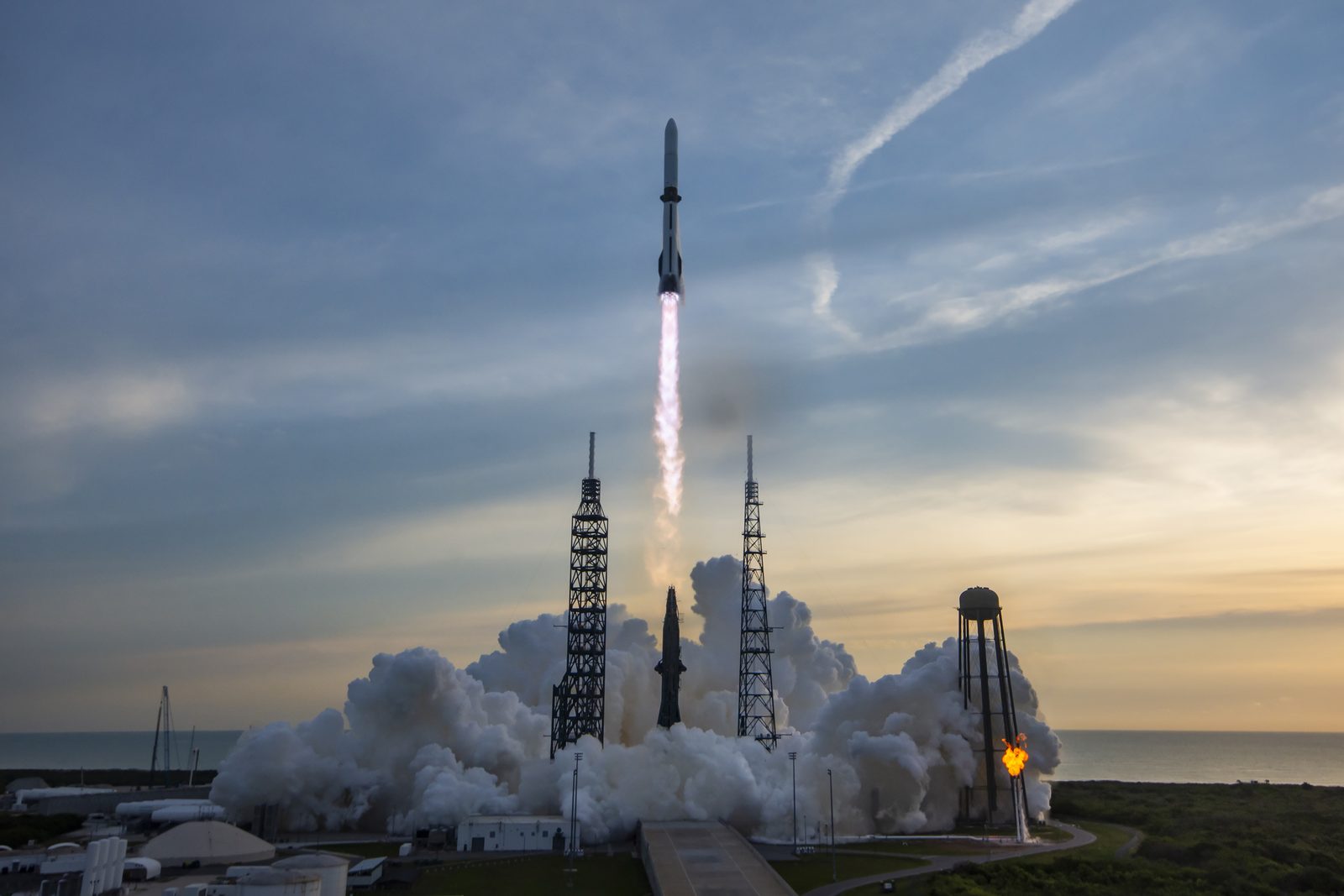
In this guide
- Space tourism operators at a glance
- Blue Origin
- Virgin Galactic
- SpaceX
- Axiom Space
- Space Adventures
- The emerging tier
- Safety, track record, and what to ask
- Where commercial space stations fit in
- What each operator costs
- Government and international players
- How to choose
- While you wait: watch these operators' hardware tonight
Space tourism is no longer a single-company novelty. By 2026 a handful of operators have built genuine, repeatable businesses around flying private citizens — some for a few minutes above the atmosphere, others for days in orbit. What they sell differs far more than the shared label suggests. And a growing roster of people has actually flown with them — the tourists, record-setters and national firsts of the commercial era, gathered in our record of who’s flown to space.
The market splits cleanly into two tiers. Suborbital operators fly you above the Kármán line (62 miles / 100 km) for a few minutes of weightlessness before gliding or parachuting back. Orbital operators put you into a sustained orbit around Earth for days, at roughly 100 times the price. Almost every company below lives firmly in one camp or the other.
Space tourism operators at a glance
Here is how every operator compares across the questions that matter for planning: can you book it today, what it costs, how long you are in space, and how high you go. I’ve sorted by current booking status — the open-now options first. For deeper breakdowns, see the operator cost guides below or the full space tourism price index.
| Operator | Status | Price / seat | Duration | Altitude |
|---|---|---|---|---|
| Axiom Space | Bookable | ~$55M | 10–14 days | ~400 km |
| SpaceX | Flying | Charter | 3–5 days | ~400 km |
| Virgin Galactic | Returns Feb 2027 | $750K | ~90 min | ~90 km |
| Zephalto | Targeting 2026 | ~$195K | ~6 hours | ~25 km |
| Vast Space | Targeting 2027 | By quote | ~14 days | ~400 km |
| Deep Blue Aerospace | Targeting 2027 | ~$210K | ~12 min | 100–150 km |
| Halo Space | Crewed tests 2027 | ~$164K | ~6 hours | ~35 km |
| InterstellOr | Targeting 2028 | ~$430K | Not disclosed | ~100 km |
| Blue Origin | Paused · 2028 | ~$150K–$450K | ~11 min | ~107 km |
| Space Perspective | Paused | ~$125K | ~6 hours | ~30 km |
| World View | Paused | $50K | 6–8 hours | ~30 km |
| Space Adventures | Dormant | Tens of $M | ~10 days | ~400 km |
Blue Origin
Jeff Bezos’s Blue Origin operates the New Shepard, a fully reusable suborbital rocket that launches from Launch Site One in West Texas. It carried crews from July 2021, when Bezos himself flew on the first crewed mission alongside Wally Funk, who at 82 became the oldest person to reach space at the time.
New Shepard’s pitch is simplicity: an automated capsule, no pilot required, the largest windows ever flown to space, and about 11 minutes door-to-door with three to four minutes of weightlessness. Training takes a single day. Seats have historically sold in the low-to-mid six figures, and the booster and capsule both return for reuse, which is the structural reason prices can keep falling.
Virgin Galactic
Virgin Galactic takes a different engineering path. Its SpaceShipTwo-class vehicles (and the newer Delta-class ships) are winged spaceplanes that are carried aloft by a twin-fuselage mothership, released at altitude, and then rocket upward before gliding back to a runway landing at Spaceport America in New Mexico.
The experience is closer to flying a high-performance aircraft than riding a rocket from the pad, and the company leans into that — astronaut training, a multi-day spaceport experience, and a runway return. Pricing is around the $750,000 mark. The trade-off versus Blue Origin is a more aircraft-like ride and a fixed runway operation, against a vertically launched capsule with very large windows.
SpaceX
SpaceX is the only company currently flying private citizens to orbit. Its Crew Dragon capsule, launched on the reusable Falcon 9, carried the all-civilian Inspiration4 crew on a three-day free flight in 2021 and has since flown private missions including the Polaris program, which conducted the first commercial spacewalk.
SpaceX generally does not retail individual seats directly to tourists; orbital missions are arranged either as full-capsule charters or through partners such as Axiom Space. Looking further out, SpaceX’s Starship, a fully reusable super-heavy vehicle, is the platform that underpins long-term lunar and Mars tourism ambitions. With the company now publicly traded (ticker SPCX) following its landmark IPO, it is also the most-watched name in the sector.
Axiom Space
Axiom Space is the leading broker and operator of private orbital missions to the International Space Station. It packages SpaceX Dragon transportation, NASA-facility training, and a stay aboard the ISS into a turnkey mission, with seats running in the region of $55 million for a roughly 10–14 day flight.
Axiom’s larger strategy is to build a commercial space station of its own, with modules designed to attach to the ISS before eventually flying free. That matters for tourism: a dedicated commercial destination is what would let orbital tourism scale beyond the handful of seats the ISS can host today.
Space Adventures
Space Adventures is the original space tourism company. It arranged the very first private orbital flight (businessman Dennis Tito’s 2001 trip to the ISS aboard a Russian Soyuz) and brokered seven more orbital tourist flights over the following decade. It operates as a broker rather than a vehicle builder, sourcing seats and arranging training and logistics.
Its historical role is hard to overstate: every orbital tourist who flew before the commercial-crew era went through Space Adventures. Today it continues to market orbital opportunities and experiences as new vehicles come online.
The emerging tier
Beyond the established five, a wave of companies is building the next generation of experiences:
- Vast and Sierra Space are developing commercial stations and crewed spacecraft that could expand orbital capacity — Vast’s Haven-1 aims to be the first to fly free of the ISS.
- Space Perspective and World View are pursuing a gentler, lower-altitude experience: pressurized capsules lifted by stratospheric balloons to the edge of space for several hours, at far lower prices than rocket flight.
- Zephalto is pursuing a similar high-altitude balloon concept with a luxury-dining angle.
- Halo Space unveiled its own balloon capsule (the Aurora, carrying eight to about 35 km) with a starting price near $164,000, and is targeting crewed test flights in late 2027.
- Deep Blue Aerospace and InterstellOr are new suborbital entrants racing to undercut the established rocket operators on price — both pre-launch as of 2026, and both tracked in our price index.
These balloon ventures are worth watching because they target a price point an order of magnitude below suborbital rockets, which could meaningfully widen who can afford a near-space experience.
Safety, track record, and what to ask
Commercial human spaceflight has a strong recent safety record, but it is still a high-energy activity, and an operator’s flight history matters. Blue Origin’s New Shepard and SpaceX’s Crew Dragon have each flown crews repeatedly; Virgin Galactic has carried commercial passengers from Spaceport America; and Axiom has now completed multiple crewed ISS missions. When you evaluate an operator, the questions worth asking are concrete: how many crewed flights has this vehicle flown, what is the abort and escape system, who trains you and where, and what medical support surrounds the mission.
Reusability is also a safety and economics signal worth understanding. A vehicle that flies and returns many times accumulates a track record and amortizes its cost across flights — which is why the reusable systems from SpaceX and Blue Origin are central to the industry’s direction.
Where commercial space stations fit in
The ceiling on orbital tourism today is destinations: the ISS can only host a handful of private visitors, and it is approaching the end of its operational life. That is why the most important developments in the sector are not rockets but commercial space stations. Axiom Space is building modules intended to attach to the ISS before flying free as an independent station, while companies such as Vast and Sierra Space are developing their own free-flying habitats.
When these come online, the economics of orbital tourism change: a dedicated commercial destination, rather than a borrowed seat on a research station, is what would let the orbital tier grow from a few seats a year into a genuine travel category.
What each operator costs
Pricing clusters by tier. The two suborbital operators land in a similar band — Blue Origin in the low-to-mid six figures (it does not publish a fixed fare) and Virgin Galactic at roughly $750,000. The orbital tier is about a hundred times higher: an Axiom Space private mission to the ISS runs around $55 million per seat, while SpaceX free-flying charters are priced for the whole capsule and reach into the hundreds of millions across a crew. The stratospheric-balloon newcomers undercut everyone: World View at $50,000 and Space Perspective at $125,000 for multi-hour near-space flights, though neither has yet begun commercial operations.
For a complete, regularly updated breakdown across every operator and tier, including historical pricing, see our space tourism price index and our full cost guide.
Government and international players
The commercial operators above did not invent space tourism — governments did, indirectly. From 2001 to 2009, every private orbital tourist flew aboard a Russian Soyuz spacecraft to the International Space Station, with seats brokered by Space Adventures. Those eight flights, beginning with Dennis Tito, established that a private citizen could buy a trip to orbit at all, and Roscosmos remained the only path to orbit for tourists until the commercial-crew era arrived.
Today the field is broadening internationally. National space agencies increasingly sponsor their citizens on commercial missions (several Axiom crews have included government-backed astronauts from countries building their human-spaceflight presence) effectively using private operators as a service. China, meanwhile, operates its own Tiangong space station and has signaled long-term interest in commercial spaceflight, though it does not currently sell tourist seats. The practical takeaway for a prospective traveler is that the bookable options remain the US-based commercial operators, with national programs acting as sponsors rather than direct sellers.
How to choose
If your goal is the fastest, most accessible path to the Kármán line, the suborbital operators, Blue Origin and Virgin Galactic, are the realistic options, with a single day of training and six-figure pricing. If you want the full, sustained experience of orbiting Earth, that means an orbital mission through Axiom Space (flying on SpaceX hardware) or a charter, at eight-figure pricing and months of preparation. If budget is the binding constraint, keep an eye on the stratospheric-balloon companies as they move toward commercial service.
Whichever tier you’re considering, our cost guide breaks down current pricing, and our beginner’s guide walks through how booking actually works.
While you wait: watch these operators' hardware tonight
Every company on this page is already visible in the sky, whether or not you can afford a seat. Falcon 9 launches, Starlink trains, and the ISS itself (Axiom’s current destination) all cross overhead on a predictable schedule. Our astronomy apps guide covers the free trackers that tell you exactly when to look up, and our launch viewing guide covers where to stand for an actual liftoff.
Frequently Asked Questions
Which company is the cheapest way to go to space?
Suborbital operators are the most affordable path to space today. Blue Origin's New Shepard and Virgin Galactic's spaceplanes fly above the Kármán line for a few minutes of weightlessness at six-figure prices, far below the eight-figure cost of an orbital mission. Stratospheric-balloon companies such as World View ($50,000) and Space Perspective ($125,000) aim to undercut even that, though neither has yet launched commercial flights.
Which companies actually fly tourists to orbit?
As of 2026, orbital private missions are flown on SpaceX Crew Dragon, typically arranged through Axiom Space, which packages transport, training, and a stay aboard the International Space Station. Space Adventures pioneered orbital tourism using Russian Soyuz flights starting in 2001.
Is SpaceX the same as space tourism companies like Blue Origin?
They compete in different tiers. Blue Origin and Virgin Galactic fly short suborbital hops, while SpaceX flies multi-day orbital missions on Crew Dragon and is developing Starship for future lunar and Mars travel. SpaceX usually sells full-mission charters or works through partners rather than retailing single tourist seats.
Rob founded Outer Space Trip and writes its operator cost guides, the Space Tourism Price Index, and the See Space Now gear guides. He has observed since a high-school observatory in the 1990s and still runs the 10-inch Meade LX200 he bought after college. How we pick and source ▸
How Much Does a Space Trip Cost in 2026?
A full breakdown of suborbital, orbital, lunar and Mars pricing.
Read →Beginner’s Guide to Space Tourism
What it takes, who can go, and how to book your first flight.
Read →The Space Tourism Flight Timeline
Every milestone space tourism flight since 2001 — who flew, on what, and why it mattered, each one sourced.
Read →Who’s Flown to Space?
The private citizens, record-setters and national firsts of the commercial era — the people who’ve flown since Dennis Tito bought the first ticket, and the records they set.
Read →How to Take a Private Flight to Space
The three routes a private citizen can actually book — suborbital, orbital, and near-space — what each costs, and how to get in line.
Read →How to Invest in Space Tourism
Stocks, ETFs and private markets in the commercial space sector.
Read →Space Tourism Statistics 2026
How many people have flown, on which vehicles, for how much, and how safely — every number computed from our dated flight log and price index, with an anchor you can cite.
Read →