The Best Binocular Mounts and Accessories for Steady Sky Viewing in 2026
Anything past 10x shakes in your hands. The tripod adapters, parallelogram mounts, and harnesses that hold astronomy binoculars steady, and what to skip.

In this guide
Binoculars are the most underrated astronomy tool — until you try to hold them steady on the sky. Past about 10×, your pulse and the tiny tremor in your arms turn crisp stars into a jittery smear, and the view of the Andromeda Galaxy you were promised looks like a shaky blob. Almost every “binoculars are disappointing for astronomy” complaint is really a steadiness problem, and it’s cheap to fix.
These are the accessories that turn a pair of astronomy binoculars from frustrating to great — steadier views, a comfortable carry, and a real mount for the big glass.
Outer Space Trip may earn a commission from links on this page; your price is the same. here’s how we choose. Prices move — the links show current pricing.
Our picks at a glance
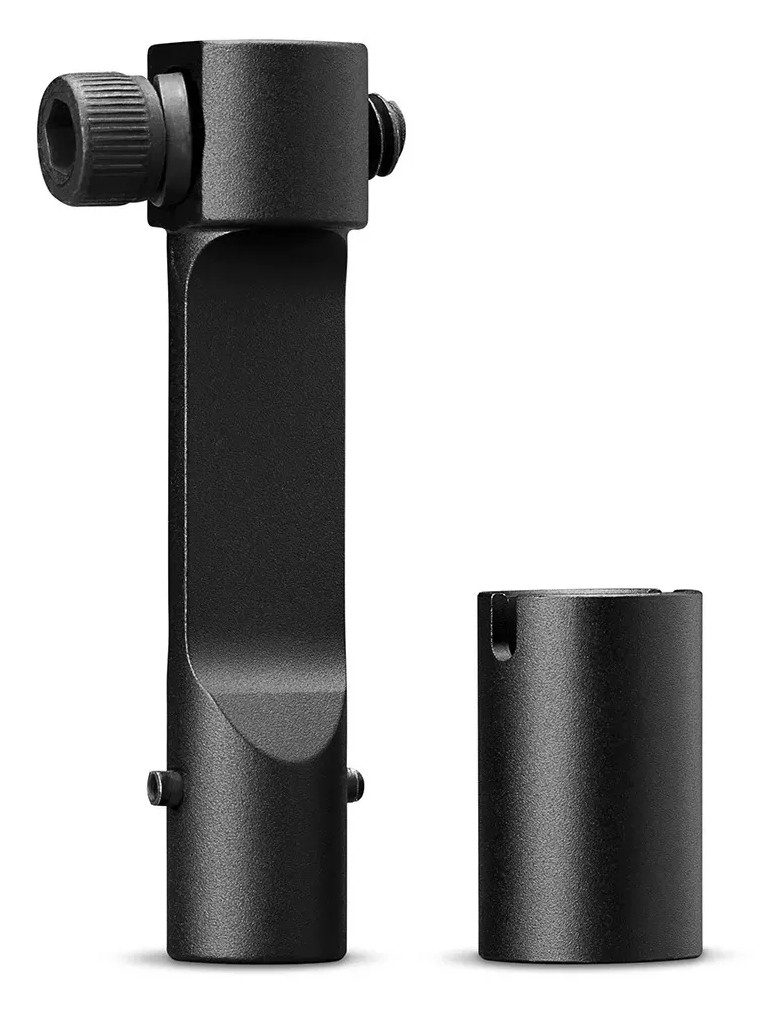
Vortex Sport Adapter
Binoculars past about 10× shake too much to hold steady, and this is the cure: a quick-release clamp that sits between the barrels and drops the glass onto any photo tripod, then pops it off again without unscrewing anything. It takes over from Vortex’s Uni-Daptor, which held this slot until Vortex retired the model — the Sport does the same job for less money. The single best upgrade for handheld astro binoculars.
- An adapter only — the tripod underneath is a separate purchase
- Your binoculars need a tripod socket under the front cap; a few compact models don’t have one
- Vortex’s Pro adapter is sleeker, but its stud installs semi-permanently into one pair — the Sport moves between binoculars

Celestron 93524 Adapter
A simple, sturdy L-bracket that connects roof or porro binoculars to a tripod for a few dollars. No frills, but it does the one job — a stable view — and it’s the cheapest way to end the hand-shake.
- No frills includes no quick release — you screw it on and off
- Still just an adapter: the steady view needs a tripod under it
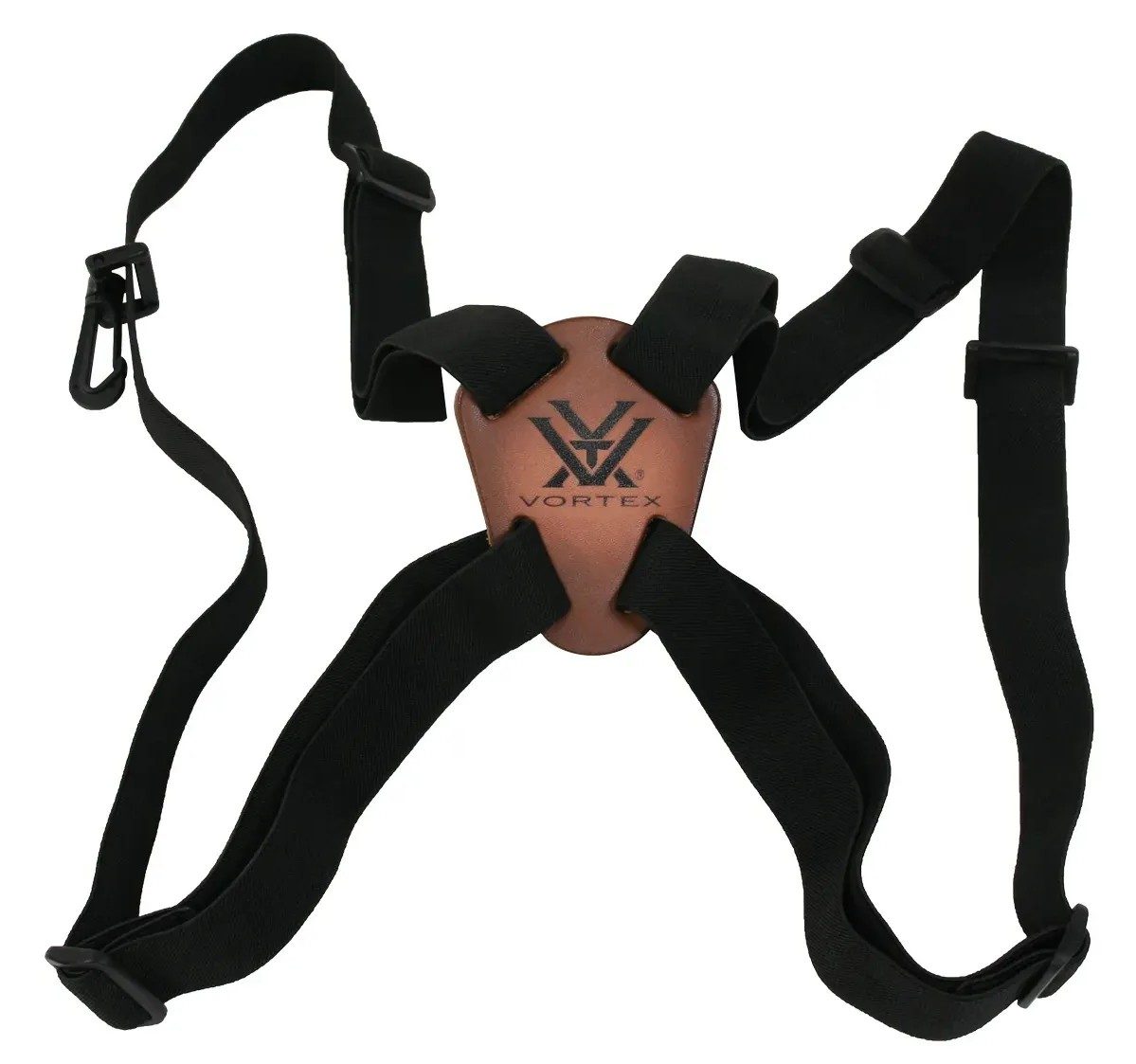
Vortex Harness Strap
A neck strap turns a night of binocular observing into a sore neck; a harness spreads the weight across your shoulders and keeps the binoculars tucked to your chest. Cheap, and the difference between a short session and a long one.
- It solves carrying, not shaking — steadying the view is the adapters’ job
- One more thing to strap on in the dark
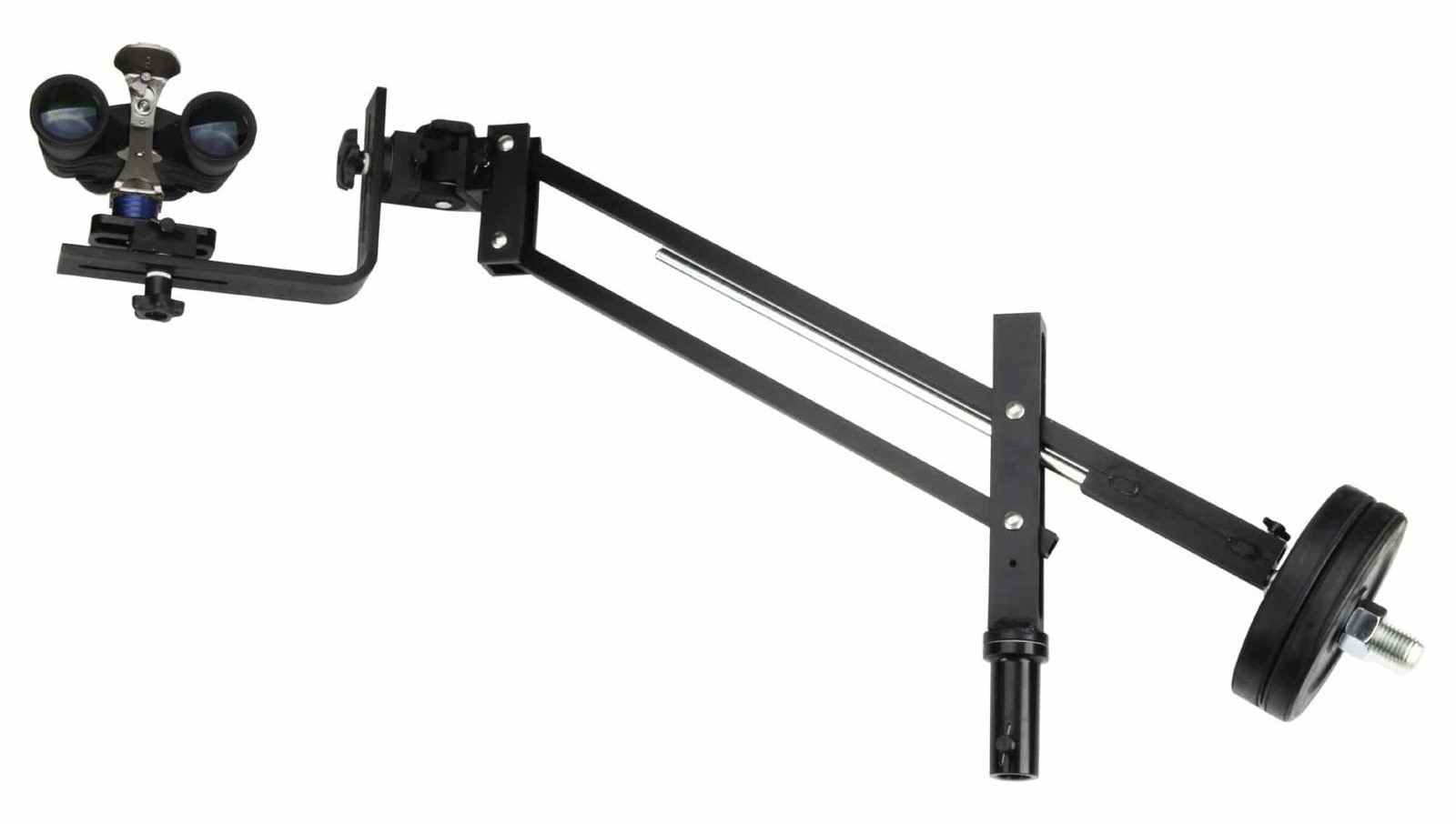
Farpoint UBM Parallelogram
For 70mm-and-up astronomy binoculars, a parallelogram mount is the real answer: it holds heavy glass rock-steady yet swings smoothly to any part of the sky and lets a second person look without re-aiming. Carries up to 12 lb. The upgrade that makes giant binoculars usable.
- At about $500 it costs more than most of the binoculars it carries
- 12 lb is the ceiling — weigh your glass before you buy
- Overkill for handheld-size binoculars; it exists for 70mm and up

LCNCY Binocular Tripod
If you don’t already own a tripod, this is an inexpensive full-height one that ships with the binocular adapter included — a complete grab-it-and-go solution for mid-size binoculars without piecing parts together.
- Built for mid-size binoculars — giant 100mm glass wants the parallelogram above
- A budget brand: you’re buying the price and the included adapter, not a name
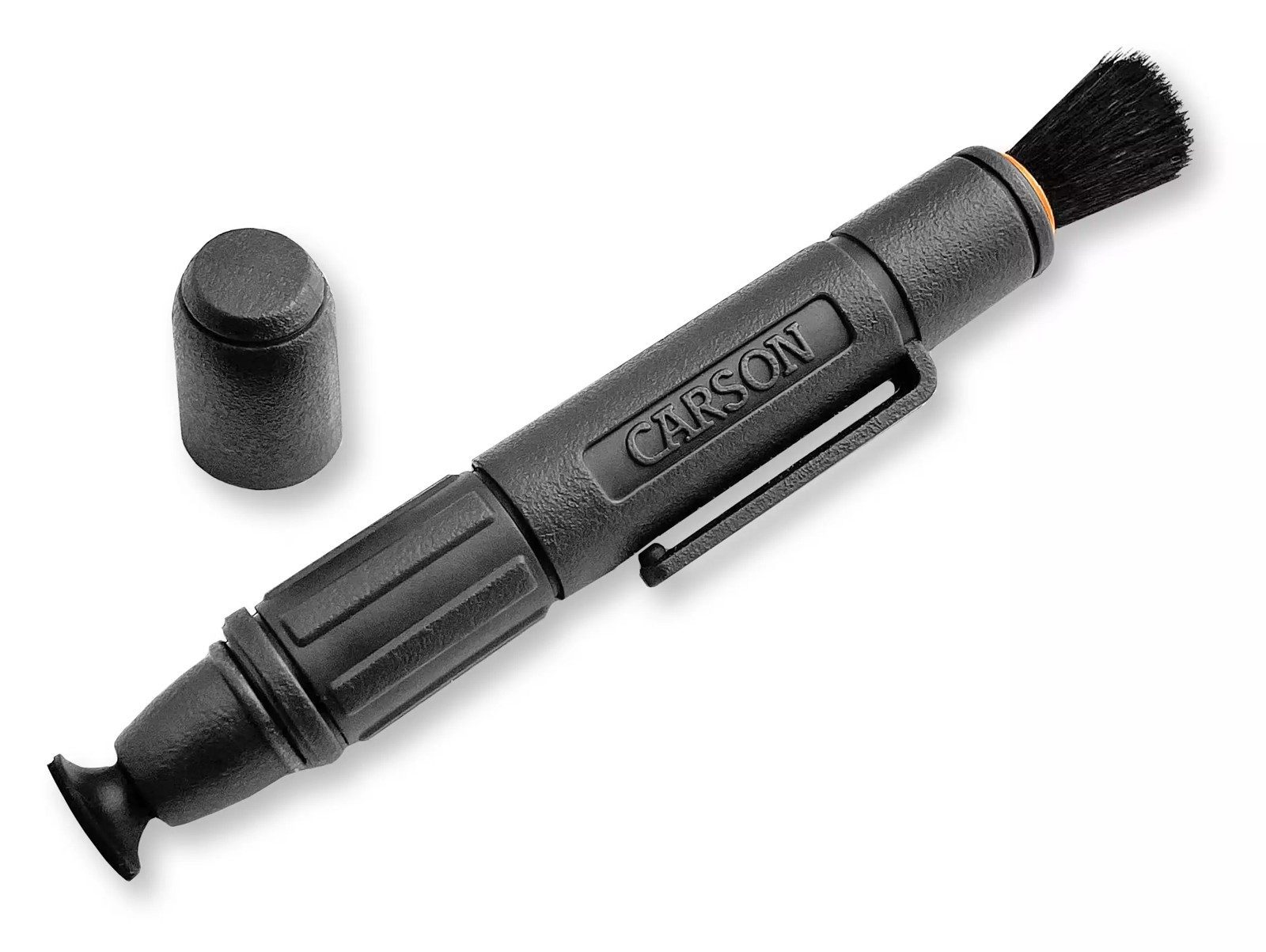
Carson C6 LensPen
Dew, fingerprints, and pollen find binocular objectives fast, and wiping them with a shirt is how coatings get scratched. A LensPen does it right — a retractable brush sweeps grit off first, then a curved carbon-cleaning tip lifts smudges with no fluid to spill in the dark. It fits the objective and eyepiece lenses of binoculars, finders, and eyepieces alike. Carson is a US optics brand. Cheap insurance for every other piece of glass on this page.
- Dry cleaning only — it lifts smudges, it doesn’t wash a truly grimy lens
- A maintenance tool: the least exciting $12 on the page, until you need it
The picks at a glance
| Accessory | What it fixes | Price |
|---|---|---|
| Vortex Sport Adapter | Puts binoculars on a tripod | $19–25 |
| Celestron 93524 Adapter | Budget tripod adapter | $15–20 |
| Vortex Harness Strap | Neck & shoulder comfort | $25–35 |
| Farpoint UBM Parallelogram | Mounts big 70mm+ binoculars | $499 |
| LCNCY Binocular Tripod | Full tripod + adapter kit | $38–48 |
| Carson C6 LensPen | Cleans coated optics safely | $10–15 |
The one fix that matters most — get them off your hands
If you take one thing from this page: mount your binoculars. The jump in what you can see when the image stops shaking is startling — suddenly the moons of Jupiter are pinpoints, star clusters resolve into individual stars, and faint fuzzies actually look like something. For most binoculars, the cheapest path is a tripod adapter plus any photo tripod you own. The Vortex Sport Binocular Adapter (~$19–25) is a quick-release adapter from a reputable US optics brand that pops the binoculars on and off without unscrewing anything. Check price ▸ Vortex also sells a Pro version, a two-part design whose threaded stud installs into the binocular with an Allen wrench: sleeker once it is set up, but roughly three times the price and happiest left on one favorite pair. Check price ▸
On a tight budget, the Celestron 93524 (~$15–20) is a plain, sturdy L-bracket that does the same core job for a few dollars. Check price ▸ And if you don’t own a tripod at all, the LCNCY Binocular Tripod (~$38–48) is an inexpensive full-height tripod that ships with the adapter included. Check price ▸
Save your neck — a binocular harness
Around $25–35. A thin neck strap on a night of observing leaves you aching; a harness spreads the weight across both shoulders and keeps the binoculars snug to your chest, out of the way until you raise them. It sounds minor and it changes how long you’ll happily stay out. The Vortex harness is a comfortable, well-made pick. Check price ▸
For giant astronomy binoculars — a parallelogram mount
Around $499, sold direct by Farpoint. Big 70mm-and-up astronomy binoculars are too heavy and too high-power for a simple tripod adapter to be comfortable — point them near the zenith and you’re on the ground. A parallelogram mount like the Farpoint UBM holds heavy glass rock-steady, swings smoothly to any part of the sky, and (the magic part) lets a second person step in and look without re-aiming. It carries up to 12 lb and is the accessory that makes giant binoculars usable at all. Check price ▸
Keep the glass clean — a LensPen
Around $10–15. The one accessory that protects every other piece of glass you own. Dew, fingerprints, and pollen land on objectives constantly, and the instinct to wipe them with a shirt hem is how coatings pick up fine scratches. A Carson C6 LensPen does it properly: a retractable brush flicks off grit first, then a curved carbon tip lifts oily smudges with no fluid to spill in the dark. It works on binoculars, finderscopes, and eyepieces alike, and Carson is a US optics brand. Toss one in the bag and stop cleaning your glass the wrong way. Check price ▸
What to skip
Cheap flimsy tripods for anything bigger than compact binoculars — a wobbly tripod barely helps, since the shake just moves from your hands to the legs. And “universal” phone-style clamps sold for binoculars; they slip and don’t hold alignment. Spend on a solid adapter and a steady support, not a gadget.
The bottom line
The single upgrade that transforms astronomy binoculars is getting them off your hands: a Vortex Sport adapter (or the budget Celestron adapter) on a decent tripod, or the LCNCY kit if you need the tripod too. Add a harness for comfortable carrying, and if you’ve got giant 70mm+ binoculars, a Farpoint parallelogram mount is the real answer. Steady the view and binoculars become one of the best ways to see the sky.
Shopping for the binoculars themselves? See our best binoculars for stargazing, and for safe daytime solar use, the solar binoculars guide.
Frequently Asked Questions
How do I keep binoculars steady for astronomy?
Mount them. Past about 10x magnification, hand tremor turns stars into a shaky smear, so the fix is to get the binoculars off your hands. The cheapest path is a tripod adapter (like the Vortex Sport adapter, ~$19-25) plus any photo tripod. For big 70mm+ astronomy binoculars, a parallelogram mount is the more comfortable answer. Steadying the view dramatically increases how much detail you can see.
What is a binocular tripod adapter and do I need one?
It's a small bracket that connects your binoculars to a standard 1/4-inch tripod thread. You need one if your binoculars are 10x or higher or feel shaky handheld, which is most astronomy binoculars. The Vortex Sport adapter (~$19-25) is a quality quick-release option; the Celestron 93524 (~$12-18) is a solid budget bracket. It's the single best upgrade for handheld astronomy binoculars.
What's the best mount for large astronomy binoculars?
A parallelogram mount like the Farpoint UBM (~$499). Giant 70mm-and-up binoculars are too heavy and high-powered for a simple tripod adapter to be comfortable, especially near the zenith. A parallelogram mount holds them rock-steady, swings smoothly across the sky, and lets a second person look without re-aiming. It carries up to about 12 lb.
Is a binocular harness worth it?
For long observing sessions, yes. A thin neck strap concentrates all the weight on your neck and gets uncomfortable fast, while a harness spreads the load across both shoulders and keeps the binoculars against your chest and out of the way. It's inexpensive (~$25-35) and it meaningfully extends how long you'll comfortably stay out under the stars.
Can I use a regular camera tripod for binoculars?
Yes, with a tripod adapter, as long as the tripod is sturdy enough. A regular photo tripod works well for compact and mid-size binoculars once you add an adapter like the Vortex Sport adapter. Just avoid the flimsiest tripods for larger binoculars, since a wobbly tripod simply moves the shake from your hands to the legs. Big 70mm+ binoculars are better on a parallelogram mount.
What binocular accessories are actually worth buying?
In order of impact: a tripod adapter (or a parallelogram mount for giant binoculars) to steady the view, and a harness for comfortable carrying. Those two solve the real problems, shake and neck strain, that make people think binoculars are disappointing for astronomy. Skip flimsy tripods and slippery 'universal' clamps; spend on a solid adapter and a steady support instead.
Rob founded Outer Space Trip and writes its operator cost guides, the Space Tourism Price Index, and the See Space Now gear guides. He has observed since a high-school observatory in the 1990s and still runs the 10-inch Meade LX200 he bought after college. How we pick and source ▸
Best Binoculars for Stargazing in 2026
The most underrated astronomy tool — cheap, portable, zero setup. Our picks from a $45 starter to image-stabilized glass.
Read →SkyMaster 15×70 vs. Pro 15×70
Same 15×70 on paper — so the Pro’s ~3× price buys BaK-4 prisms and fully multi-coated glass, better contrast and cleaner edges, not more sky.
Read →Solar Binoculars: See the Sun Safely
The one way to look at the Sun that won’t blind you — ISO 12312-2 solar binoculars for sunspots, eclipses, and transits, and how to safely filter binoculars you own.
Read →Stargazing for Beginners
Explore space tonight — what to see with your eyes, binoculars, or a first telescope.
Read →