Stargazing for Beginners: How to Start Exploring the Night Sky
You don't need a rocket, or even a telescope, to start exploring space tonight. What to see with your eyes, when to add binoculars, and where it's dark.
In this guide
You don’t need a rocket, or even a telescope, to start exploring space. On any clear night the universe is already overhead, and the difference between a sky full of random dots and a sky you can actually read is mostly knowing where to look. This is the practical companion to the rest of Outer Space Trip: a trip to orbit is still six figures, but stargazing is the way to experience space tonight, for free.
Here is the natural progression every beginner follows (your eyes first, then binoculars, then maybe a telescope) plus exactly what to look at so your first nights are wins, not frustration.
Start with your eyes
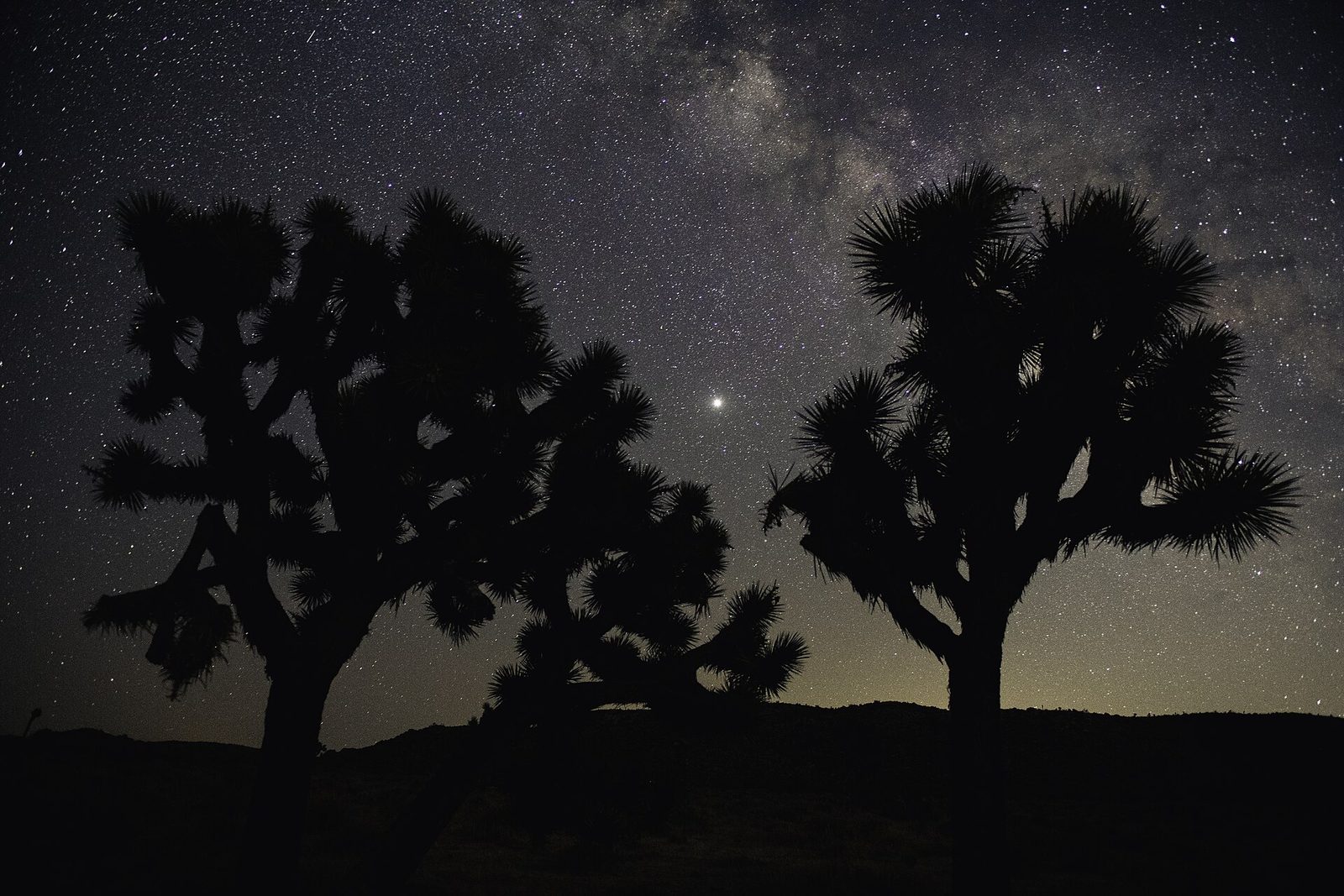
The biggest upgrade in astronomy isn’t gear, it’s a darker sky and twenty minutes for your eyes to adapt. With nothing but your eyes you can already see a surprising amount: the Moon’s craters thrown into relief along the day-night line, the brightest planets (Venus, Jupiter, Mars and Saturn) shining as steady, non-twinkling “stars,” the constellations, the arch of the Milky Way from a dark site, meteor showers, and satellites, including the International Space Station, sliding silently overhead.
Outer Space Trip may earn a commission from links on this page; your price is the same.
Two free habits do more than any purchase. Give your eyes 15–20 minutes away from bright screens to dark-adapt, and use a dim red light (most phone flashlights have a red mode or filter app, or pick up a cheap dedicated red flashlight) so you don’t reset that adaptation every time you check the sky.
The most underrated first instrument: binoculars
Most beginners assume the first purchase is a telescope. It isn’t — it’s a decent pair of binoculars. A common 10x50 pair (cheap, throw-in-a-bag portable, no setup) will show you Jupiter’s four largest moons as tiny points beside the planet, craters on the Moon, the Pleiades star cluster blazing with dozens of stars, the Orion Nebula as a soft glow, and rich sweeps of the Milky Way. They’re forgiving, they double for daytime use, and they teach you the sky before you spend on anything bigger. If you buy one thing to start, make it binoculars.
When to consider a telescope (and when not to)
A telescope earns its place once you know you’ll keep observing and you want detail: Saturn’s rings, the cloud bands of Jupiter, sharp lunar relief, and the brighter galaxies and nebulae. The classic mistake is buying too much too soon, a giant scope that’s a chore to carry outside ends up gathering dust. For beginners the sweet spot is a sturdy, simple mount and a modest aperture you’ll actually set up on a weeknight. Under See Space Now you’ll find dedicated buying guides for best astronomy binoculars, best beginner telescopes, and smart telescopes, so you can match a first instrument to your budget without overspending.
Find a darker sky
Light pollution is the main thing between you and a great night. Astronomers rate skies on the Bortle scale, from a glowing city center where only the Moon and planets cut through, to a truly dark site where the Milky Way casts a faint shadow. You don’t need wilderness: a 20–30 minute drive away from city lights often reveals more than any gear upgrade. Use a light-pollution map to find a darker spot near you, and plan deep-sky nights around the new moon, when the sky is darkest.
What to look at first
Beginners give up when they aim at faint, fuzzy targets and see nothing. Start instead with the guaranteed crowd-pleasers:
- The Moon: best a few days before full, when shadows along the terminator make craters pop.
- Jupiter and its four Galilean moons, visible even in binoculars, and they shift position night to night.
- Saturn’s rings — the “wow” moment that hooks most people, through even a small telescope.
- The Orion Nebula: a glowing stellar nursery, easy in winter skies.
- The Pleiades, a sparkling cluster that looks fantastic in binoculars.
- The ISS: a brilliant, fast-moving point with predictable bright passes.
- A meteor shower, the Perseids in August and Geminids in December are the reliable highlights.
Free tools that make it easy
A free sky-map app turns the whole sky into a label: hold your phone up and it identifies the star, planet or constellation you’re looking at in real time. Pair it with an ISS pass predictor and a clear-sky forecast and most of the early learning curve disappears. Our best astronomy apps guide covers the five worth installing: all free, covering everything from real-time AR identification to satellite tracking. These tools are how a complete beginner goes from “which dot is Jupiter?” to confidently touring the sky in a single evening.
Your first month
A simple plan beats good intentions. Week 1: eyes only plus a sky-map app, then learn three constellations and spot a planet. Week 2: borrow or buy binoculars and find Jupiter’s moons and the Pleiades. Week 3: drive to a darker site on a new-moon weekend and look for the Milky Way. Week 4: decide whether a telescope is worth it — by now you’ll know what you most want to see, which is exactly how to choose one.
The bottom line
Going to space is the dream; seeing space is something you can do tonight. Start with your eyes, add a pair of binoculars, and let curiosity rather than gear lead the way — the equipment makes far more sense once the sky is already familiar. When you’re ready to dream bigger, read what it actually feels like to go to space and our beginner’s guide to space tourism.
Frequently Asked Questions
Do you need a telescope to start stargazing?
No. The best way to start is with your eyes and a dark-enough sky, plus a free sky-map app to identify what you see. A pair of 10x50 binoculars is a better and cheaper first instrument than a telescope, showing Jupiter's moons, the Moon's craters, and star clusters. Buy a telescope later, once you know you'll keep observing and want more detail.
What should a beginner look at first?
Start with bright, easy targets that guarantee a 'wow': the Moon (best a few days before full), Jupiter and its four large moons, Saturn's rings, the Orion Nebula in winter, the Pleiades star cluster, and bright International Space Station passes. Faint galaxies and nebulae are easy to get discouraged by, so save those until you're comfortable finding things.
How do I find a dark place to stargaze?
Use a light-pollution map or app to find darker areas near you; a 20 to 30 minute drive away from city lights usually makes a dramatic difference. Plan your darkest-sky nights around the new moon, let your eyes adapt for 15 to 20 minutes, and use a dim red light to preserve that night vision.
Rob founded Outer Space Trip and writes its operator cost guides, the Space Tourism Price Index, and the See Space Now gear guides. He has observed since a high-school observatory in the 1990s and still runs the 10-inch Meade LX200 he bought after college. How we pick and source ▸
Free Observatory Nights in New Jersey
A 20-inch telescope ten miles from Manhattan, open free every Wednesday, plus five more public domes across the state — which night each opens and what you’ll see.
Read →Upcoming Meteor Showers: Dates, Peak Nights & Moon Conditions
The next shower, whether it is worth the drive, and every 2026 and 2027 peak with the Moon on each night. Plus how to watch.
Read →Guided Stargazing & Dark-Sky Tours
No telescope, no dark-sky research, no planning — a local guide sets up the gear and points out the sky. Real, bookable tours from $20.
Read →The Best Red Flashlights for Astronomy
One glance at a white screen resets 30 minutes of dark adaptation. The red lights that don’t — led by a US-assembled Rigel that runs 320+ hours.
Read →The Best Beginner Astronomy Books
Seven books that teach you to read the sky, from a $12 first read to the one you keep at the eyepiece.
Read →