Seestar S30 vs. Dwarf 3: Which Smart Telescope Wins?
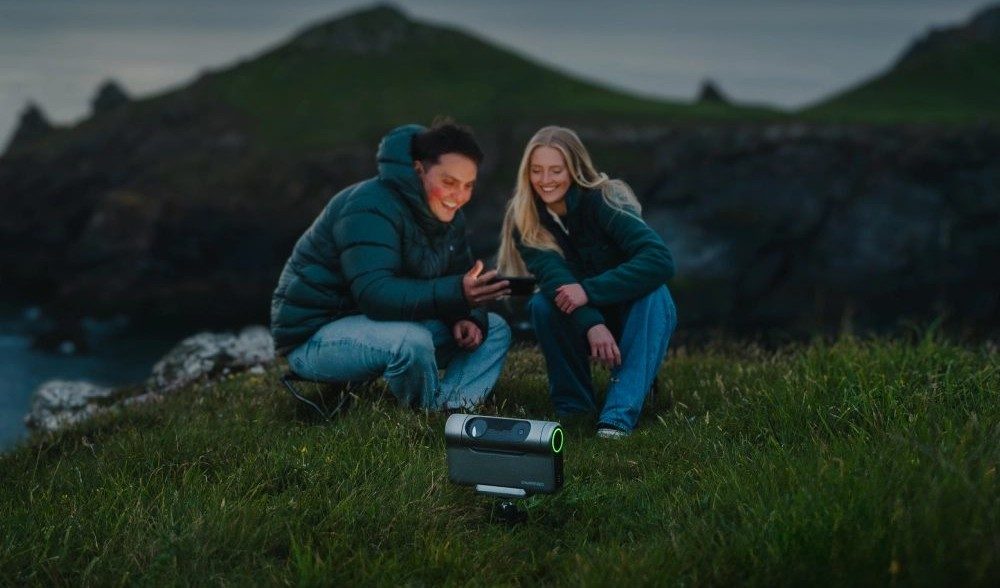
ZWO Seestar S30 vs. DwarfLab Dwarf 3, the two smart telescopes most beginners choose between: $399 with the tripod in the box, or $549 plus a stand.
In this guide
Two smart telescopes sit at the top of almost every beginner’s shortlist, and they are the two people can’t decide between: the ZWO Seestar S30 at around $399, and the DwarfLab Dwarf 3 at around $549. Both find the target themselves, track it, and hand you a finished color photo on your phone a few minutes later. On the spec sheet they look like cousins. The $150 between them buys something specific, though — and for most first-time buyers the second camera settles it.
The short version: the S30 is the one I’d hand most people buying their first smart telescope — it’s cheaper, the tripod is in the box, and it does the core job with the least fuss. The Dwarf 3 is the one to buy if you specifically want range: it shoots a tight galaxy and a horizon-to-horizon Milky Way panorama in the same evening, and no other scope at this price does both.
Outer Space Trip may earn a commission from links on this page; your price is the same. How we choose. Prices are approximate — the links show current pricing.
Short answer: cheapest entry, or the most range
- Buy the Seestar S30 (~$399) if it’s your first smart telescope, you want the lowest all-in price, and you mostly want deep-sky objects — galaxies, nebulae, star clusters — framed and photographed with as little setup as possible. The tripod is included, so $399 is the real out-the-door number.
- Buy the DwarfLab Dwarf 3 (~$549) if you want variety more than you want to save $150: its dual-camera design shoots both tight deep-sky targets and wide Milky Way panoramas, and its larger sensor resolves more detail when you crop into an image.
What you get either way
Most of the spec sheet is a tie, and knowing which lines are ties keeps you from paying for one. Both are all-in-one smart telescopes: no eyepiece, no star charts, no manual alignment. You set the scope down, open the app, tap a target, and the scope plate-solves against the star field, slews to the object, and starts live-stacking exposures into a photo that brightens on your phone over the next several minutes. Both are pocket-sized and battery-powered. Both carry a built-in light-pollution filter — the thing that lets either of them pull a nebula out of suburban skyglow — and both ship with a magnetic solar filter for daytime Sun and eclipses. If you just want to photograph the Orion Nebula from your driveway, either one delivers, and the pictures will look more alike than different.
What the extra $150 buys (and what else it costs)
The gap is design philosophy. The S30 is a single-camera instrument built to do one thing cheaply and well. The Dwarf 3 is a two-camera instrument built for range.
| ZWO Seestar S30 | DwarfLab Dwarf 3 | |
|---|---|---|
| Current price | ~$399 (tripod included) | ~$549 (+ ~$89 tripod) |
| Aperture | 30 mm | 35 mm |
| Cameras | One (telephoto) | Two (telephoto + wide) |
| Sensor | Sony, ~2 MP | 1/1.8″ Sony, 8.3 MP |
| Weight | ~1,650 g | ~1,360 g (about 3 lb) |
| Signature move | Cheapest all-in entry | Deep-sky and panorama |
| Maker | ZWO (China) | DwarfLab (China) |
Why you’d buy the Dwarf 3: two cameras
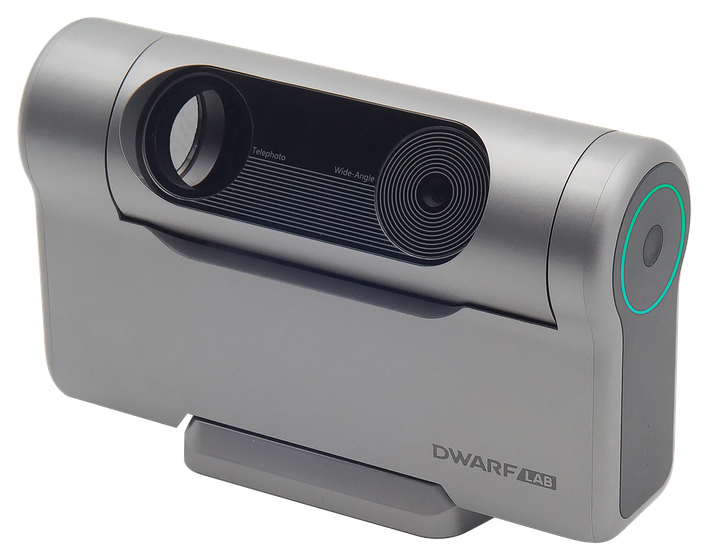
This is what the extra $150 buys, and it’s a real thing, not a spec-sheet flourish. The Dwarf 3 carries a telephoto camera for galaxies and nebulae and a separate wide camera for landscapes. No other scope in this price range shoots a tight deep-sky object and a horizon-to-horizon Milky Way panorama in the same evening. Pair that with a bigger 1/1.8-inch, 8.3-megapixel sensor — roughly four times the area of the S30’s smaller chip — and you get an image that holds together when you crop into it. At 35 mm of aperture the telephoto also gathers a little more light than the S30’s 30 mm optic, sitting between the Seestar and the pricier Vaonis scopes. If you already know you want variety — nightscapes one night, a galaxy the next — the Dwarf 3 is the more capable camera.
Why you’d buy the S30: it’s $399, all-in

The Seestar S30’s advantage is boring and decisive: it costs less and there’s nothing else to buy. The tripod is in the box, which is what keeps it a true $399 all-in pick rather than a $399 scope that needs another $89 stand before it can stand up. It auto-aligns in about 90 seconds, and for the single job most first-time buyers actually do — point it at Andromeda, the Pleiades, or the Orion Nebula and get a photo — it does that as well as anything here. The tradeoff is honesty about the ceiling: at 30 mm and a smaller sensor, faint targets take longer and crop softer than they do on the Dwarf 3, and it has one camera, so there are no wide panoramas. If your reason for buying is deep-sky photos and a low price, none of that costs you the thing you came for.
Equatorial mode, noise and color
Three differences decide what actually comes out of these scopes, and only one of them shows up in a price comparison.
Equatorial mode. This is the one most head-to-heads get wrong. Both scopes can track in equatorial mode, which cancels field rotation and unlocks long exposures, but they get there very differently. The Dwarf 3 has it built in. DwarfLab’s own page describes its Equatorial Mount Mode as breaking past “the limitations of traditional theodolite equipment” and eliminating field rotation, with no extra hardware. The Seestar S30 needs an accessory to do it. ZWO’s product page is explicit that you enable EQ mode “by using the dedicated Seestar TH10 mount,” and ZWO’s own US store sells that tripod head for $99. So the real price of an S30 that can do long-exposure equatorial work is $399 plus $99, or about $498 — which closes most of the gap to the $549 Dwarf 3. Bear in mind the Dwarf still needs its own tripod at around $89, so on an equal footing the two land within about $140 of each other rather than the $150 the sticker prices suggest.
Noise. The Seestar’s answer is automatic. ZWO builds in AI noise reduction and a one-tap post-process that, in its words, “reduces noise while preserving target details,” alongside a dark-field filter that automatically subtracts the noise long exposures generate. That is the reason S30 images tend to look clean straight out of the app with nothing asked of you.
Color. The Dwarf 3’s answer is manual. DwarfLab gives it curve color grading with fine adjustment of the RGB channels, so you redistribute the color balance yourself. More control, and more work. The Seestar hands you a good result and lets you nudge the style afterward.
It’s one personality difference showing up three ways: the Seestar decides for you and is usually right; the Dwarf hands you the controls. Which one that makes better depends on whether you want to be the photographer or want a photograph.
Deep-sky only, or the Milky Way too?
The question that settles it: do you specifically want wide Milky Way panoramas, or do you mostly want deep-sky objects?
If the answer is deep-sky — galaxies, nebulae, clusters, framed and photographed — the S30 does that for $150 less with the tripod already included, and I’d buy it without a second thought. If you already picture yourself shooting the arch of the Milky Way over a landscape and chasing galaxies, the Dwarf 3’s second camera and bigger sensor are worth the money, and nothing cheaper matches them. What I’d avoid is paying for the range and then only ever shooting deep-sky — that’s $150 for a camera you don’t use.
DwarfLab also makes the Dwarf Mini, which trades the Dwarf 3’s big sensor and second camera for a lighter body at roughly the S30’s price. If it’s a straight price match to the Seestar you’re after, the Mini — not the pricier Dwarf 3 — is DwarfLab’s closest rival; we compare those two in Seestar S30 vs. Dwarf Mini, and walk through the whole lineup in the full smart-telescope guide.
Where to buy
Both scopes are worth checking current pricing on before you commit — smart-telescope prices move, and the S30 in particular shares its name with the pricier S30 Pro editions, so read the listing carefully to make sure you’re getting the $399 scope and not a $699 one.
- ZWO Seestar S30 (~$399) — Check price ▸
- DwarfLab Dwarf 3 (~$549) — Check price ▸
New to the category and not sure either is right? The telescope finder matches you to a first scope in four questions, and how smart telescopes work explains what’s happening on your phone while the scope does the work.
Frequently Asked Questions
Is the Seestar S30 or the Dwarf 3 better for beginners?
For a true first smart telescope, the Seestar S30 is the easier recommendation. It's about $150 cheaper, the tripod is included so $399 is the whole price, and it auto-aligns in roughly 90 seconds. The Dwarf 3 is the better buy for someone who already knows they want range — its second camera shoots wide Milky Way panoramas the S30 can't — but that's a reason to spend more, not an easier starting point.
Is the Dwarf 3 worth $150 more than the Seestar S30?
It's worth it if you specifically want variety. The Dwarf 3's two cameras let it shoot both a tight galaxy and a horizon-to-horizon Milky Way panorama in the same night, and its larger 8.3-megapixel sensor resolves more detail when you crop in. If you only ever plan to photograph deep-sky objects — galaxies, nebulae, clusters — the S30 does that job for less, and the extra $150 buys a camera you wouldn't use.
Can the Seestar S30 shoot wide Milky Way panoramas like the Dwarf 3?
No. The S30 has a single telephoto camera built for framing deep-sky objects, so it doesn't do the wide landscape-and-Milky-Way panoramas that are the Dwarf 3's signature trick. That dual-camera range is the main reason to pay more for the Dwarf 3; if panoramas aren't on your list, it's not a gap that matters.
Seestar S30 or Dwarf Mini — which DwarfLab model matches the S30 on price?
The Dwarf Mini, at about $399, is DwarfLab's closest price match to the Seestar S30 — not the $549 Dwarf 3. The Mini trades the Dwarf 3's bigger sensor and second camera for a lighter body at the S30's price point. The Dwarf 3 competes a tier up, against the extra capability its price buys rather than against the S30's value.
Does the Seestar S30 have equatorial mode?
Yes, but not on its own. ZWO's own product page says you enable EQ mode “by using the dedicated Seestar TH10 mount,” which ZWO's US store sells separately for $99. The Dwarf 3 has equatorial mount mode built in with no extra hardware. So if long-exposure, field-rotation-free deep-sky imaging is why you're buying, the S30's real cost is about $498 rather than $399 — worth knowing, because most price comparisons leave the mount out.
Which has better noise reduction, the Seestar S30 or the Dwarf 3?
They solve it from opposite ends. The Seestar S30 does it for you: ZWO builds in AI noise reduction and a one-tap post-process that reduces noise while preserving target detail, plus a dark-field filter that automatically subtracts the noise long exposures generate, so images look clean straight out of the app. The Dwarf 3 gives you the controls instead — curve color grading with fine RGB channel adjustment, so you set the color balance yourself. Cleaner with no effort goes to the S30; more control over the final image goes to the Dwarf 3.
Rob founded Outer Space Trip and writes its operator cost guides, the Space Tourism Price Index, and the See Space Now gear guides. He has observed since a high-school observatory in the 1990s and still runs the 10-inch Meade LX200 he bought after college. How we pick and source ▸
Seestar vs. Dwarf: Every Model Compared
ZWO’s Seestars against DwarfLab’s Dwarfs — today’s prices for every current model, where each brand wins, and which matchup your budget puts you in.
Read →Best Smart Telescopes for 2026
Auto-aligning telescopes that photograph galaxies and nebulas with a tap — $400 to $3,000 picks for every budget.
Read →How Do Smart Telescopes Work?
Plate solving, live stacking, and the app that runs it all — how a Seestar or Dwarf turns twenty minutes on a driveway into a color photo of a nebula.
Read →Seestar S30 vs. Dwarf Mini
The two $399 smart telescopes with nearly the same optics — so the decision is the tripod, the weight, and one question you can answer in a second.
Read →Seestar S30 Pro vs. Dwarf 3
It looks like $699 against $549. Add the tripod the Dwarf 3 doesn’t ship with and the gap is about $60 — this is the page on whether that $60 buys anything you’d notice.
Read →Vespera II vs. Seestar S30 Pro
Same 8.3 MP Sony sensor in both — so the extra $900 buys light grasp and image scale, and costs you a narrower field.
Read →Telescope Finder
Answer four quick questions and get matched to the right first telescope — with a runner-up and a budget pick.
Read →