The Best Red Flashlights for Astronomy in 2026
One glance at a white phone screen erases 30 minutes of dark adaptation. The red flashlights that don't, led by a US-assembled Rigel, from $15 to $48.
In this guide
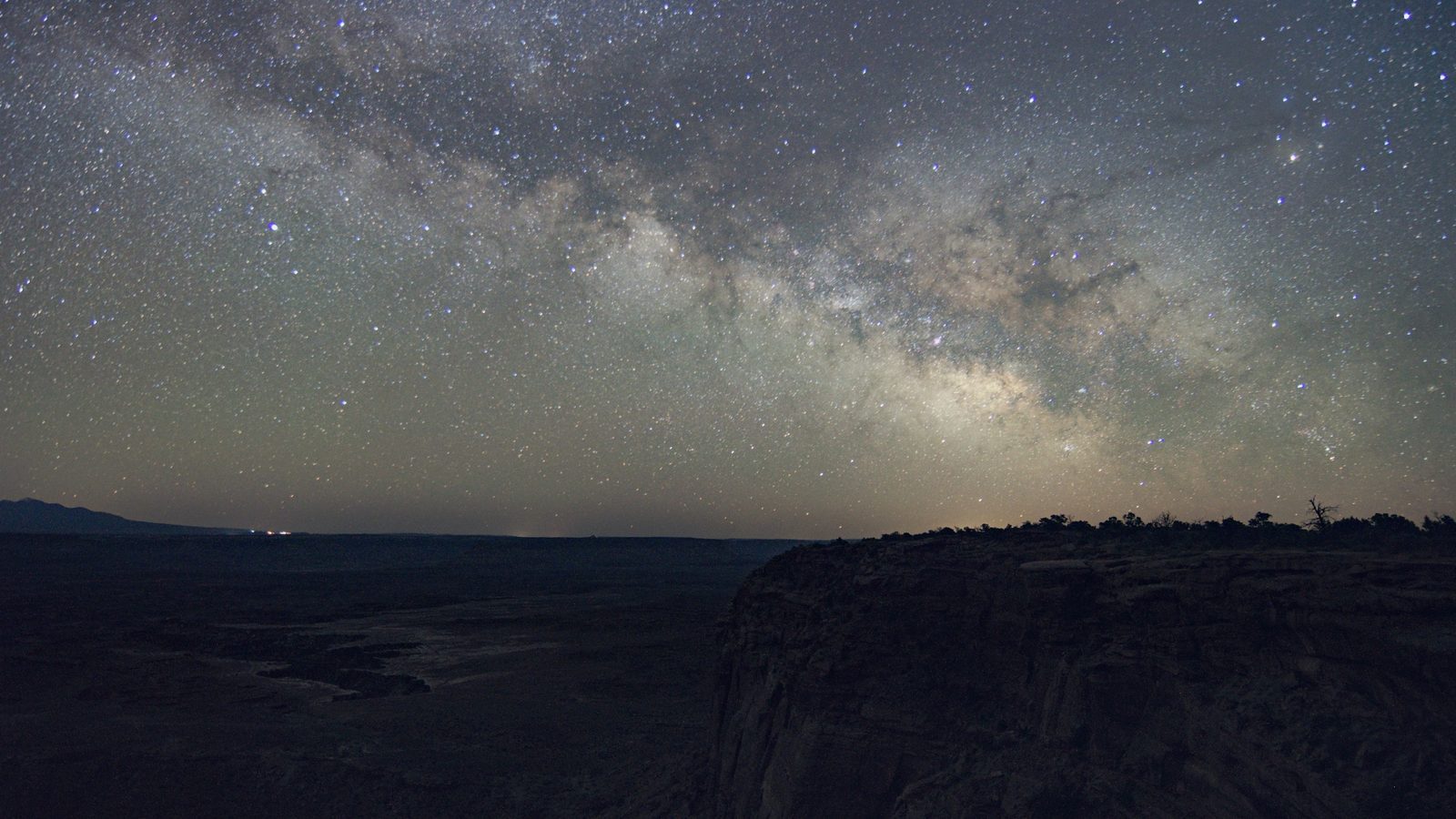
Spend twenty minutes in real darkness and something quietly remarkable happens: your eyes get dramatically more sensitive, and stars you couldn’t see start filling in. It’s called dark adaptation, it takes up to half an hour to build… and one glance at a white phone screen wipes it out in a second. That’s the whole reason a red flashlight exists. Deep red light lets you read a star chart, find an eyepiece, or step over a tripod leg without resetting your night vision.
The catch is that most “red” flashlights are still too bright, with no way to dim them. The good ones share one feature above all: adjustable brightness, so you can turn the red down to a whisper. Here are the ones worth owning.
Outer Space Trip may earn a commission from links on this page; your price is the same. How we choose. Prices move — the links show current pricing.
Our picks at a glance

Rigel Systems Skylite Mini
A US-assembled star-party favorite from the company that invented the astronomer’s red flashlight: switchable 2-red / 2-white LEDs and, crucially, a thumbwheel that dims the red all the way down — the feature cheap lights skip. Runs 320+ hours on the low setting from a single 9V, in a pocket-size 3-ounce body.
- Half its LEDs are white — mind which switch you throw mid-session
- Roughly twice the price of the basic Celestron for the same core job
- Function-first: you’re paying for the thumbwheel, not for looks

Rigel Starlite & Skylite Water Resistant
The full-size 1984-lineage originals, back in production and now water resistant: the same thumbwheel dimmer and 320+ hour battery life, built to order in your choice of LED colors from 660nm deep red to blue — even infrared. Starlite is one color, Skylite switches between two. Sold direct from Rigel.
- Not on Amazon — buy direct from Rigel or through their dealers (Agena, High Point Scientific, Astronomics)
- Built to order direct — you pick the LED colors, which means a decision the grab-and-go picks skip
- Full-size body; the Skylite Mini above is the pocket version
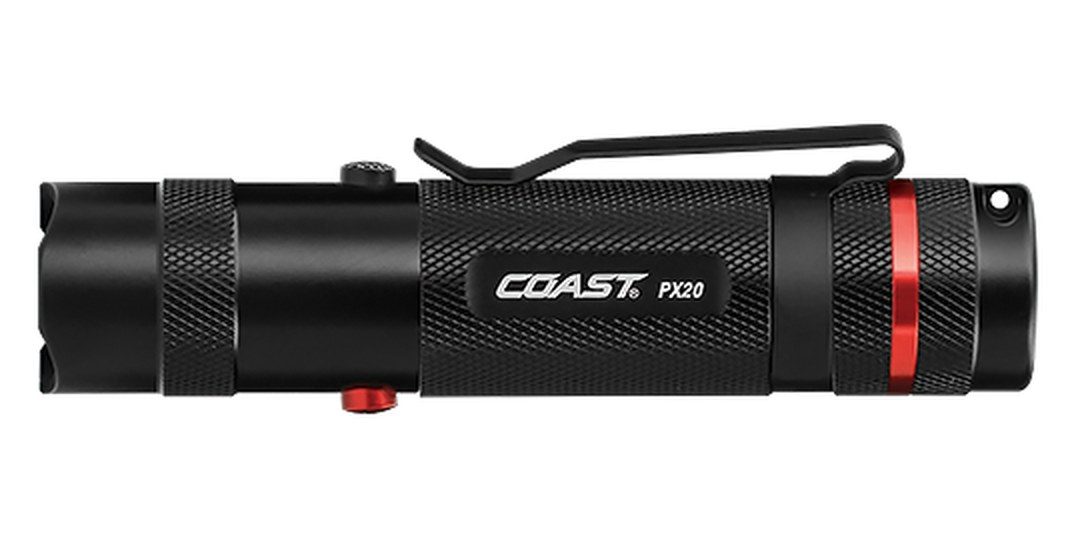
Coast PX20
One click for red, one for white — separate switches, no cycling through modes in the dark. The red is for chart-reading and setup without wrecking your night vision; the white is a real flashlight for the walk back. From Coast (Portland, Oregon), with a lifetime warranty and an aluminum body.
- One red LED against five white: a flashlight that does red, not a red-first astronomy light
- The Rigel’s down-to-a-whisper thumbwheel is the feature this one isn’t built around

Celestron Night Vision 93588
The classic first red light — a design that began as Rigel Systems’ original Starlite, which Rigel supplied to Celestron in 1994. Two red LEDs, a thumbwheel dimmer, a flat square body that won’t roll off the table, and a 9V battery you can swap anywhere. It does the one job — adjustable red — for the price of lunch; the Rigel above is the original maker’s current version.
- Runs on a 9V block — an old-fashioned battery to keep a spare of
- Not fancy is accurate: no white mode, no headlamp option, no power-bank tricks

Celestron PowerTank Glow 5000
A handheld red LED light with three brightness levels bolted to a 5,000 mAh USB power bank — so it also tops up a phone, dew heater, or GoTo handset in the field. The pick if you want one thing in the bag instead of two.
- Three fixed levels, not the smooth down-to-a-whisper dimming this guide keeps preaching
- Two gadgets in one shell — if you never top up gear in the field, half of it idles

Celestron Night Vision Red Headlamp
The hands-free option — red light on your forehead so both hands are free to read a chart, swap an eyepiece, or set up in the dark. Multiple red brightness levels and a long runtime; the pick when you don’t want to hold anything.
- Red only — you’ll still want a white light for the walk back
- An elastic band on your head all evening isn’t everyone’s idea of comfort
The picks at a glance
Every light here, what sets it apart, and what it costs. Detail on each follows below.
| Light | Why it stands out | Origin | Price |
|---|---|---|---|
| Rigel Systems Skylite Mini | Dims to nothing, 320+ hr on one 9V | USA | $32 |
| Rigel Starlite & Skylite Water Resistant | The full-size 1984 originals, any LED color, direct only | USA | $34–40 |
| Coast PX20 | Dual red/white, one-click | US brand | $17–28 |
| Celestron Night Vision 93588 | Cheap classic, 9V, won’t roll | — | $21–29 |
| Celestron PowerTank Glow 5000 | Red light + 5,000 mAh power bank | — | $40–48 |
| Celestron Red Headlamp | Hands-free chart reading | — | $15–25 |
Why red, and why dimming matters most
Your eye’s low-light cells are far less sensitive to deep red than to white or blue light, so red illumination lets you see what you’re doing while barely touching your dark adaptation. But “red” isn’t enough on its own: a red light blazing at full brightness still floods your pupils and undoes the effect. The single most important feature in an astronomy light is a brightness control that goes dim — dimmer than you’d expect to need. Every top pick here has one. That’s also why your phone’s “red mode” is a poor substitute: even at its lowest, a screen is usually far too bright.
You’ll sometimes hear that red is passé — that “the military switched to blue-green.” Dr. Leon Palmer of Rigel Systems, who invented the astronomer’s red flashlight, keeps the receipts on this one: the military’s own human-factors standard, MIL-STD-1472, specifies low-luminance red light above 620 nm wherever complete dark adaptation is required. Blue-green cockpit lighting exists for a different reason entirely — to keep panel light out of night-vision goggles, which filter out blue-green but are overwhelmed by red and infrared. If you’re observing with your own eyes rather than through image intensifiers, red is still the answer. And the same spec makes a second point our picks are built around: the brightness must be adjustable across its whole range — which is exactly what a thumbwheel dimmer is for.
Best overall — Rigel Systems Skylite Mini (assembled in the USA)

Around $32, direct from Rigel. A star-party staple from the original pioneer of the astronomer’s flashlight, still assembled in the USA four decades on. The Skylite Mini switches between two red and two white LEDs, but the reason to buy it is the thumbwheel: you can dial the red down to almost nothing, which is exactly what protecting your night vision requires. It runs over 320 hours on the low setting from a single 9V battery, in a pocket-size body that weighs about three ounces. If you buy one astronomy light for life, this is it. Check price ▸
Worth knowing: every Rigel light is available for purchase in two versions. Skylite means switchable between two LED colors; Starlite means one color, for a few dollars less. Ordering direct from Rigel ($24.95 Starlite Mini / $31.95 Skylite Mini, built to order) also opens the full LED color menu — 660nm deep red, amber, blue-green, white, blue, even infrared — where the Amazon listing sells the standard red/white Skylite. Prefer a telescope shop? Rigel itself points buyers to the specialist dealers Agena Astro, High Point Scientific, and Astronomics for price and shipping.

Want one light that covers both jobs? The Coast PX20 (~$17–28) has separate switches for red and white — one click for a chart-safe red, one for a real white beam for the walk back to the car — from the US brand Coast (Portland, Oregon), with a lifetime warranty. Check price ▸
The water-resistant originals — Rigel Starlite & Skylite
Around $34–40, direct from Rigel. The full-size Starlite and Skylite are the lights this whole category descends from — the original astronomer’s LED flashlight, first built in 1984 — and they’re back in production, now in water-resistant bodies. Same thumbwheel dimmer, same brightness-regulation circuitry that keeps the LEDs steady as the battery ages, 320+ hours on the dimmest setting from one 9V. Each is built to order in your choice of LED colors, from 660nm deep red through amber, blue-green, white and blue to infrared — a menu no store-shelf light offers.
You won’t find these on Amazon: buy direct from Rigel ($33.95 Starlite, $39.95 Skylite) — the route that opens the full built-to-order color menu — or through the dealers above, who also stock Rigel’s lights. Either way, if dew-soaked eyepiece cases are your normal and you like owning the original of a thing, this is the original.
Best budget — Celestron Night Vision 93588
Around $21–29. The classic first red light — and here’s a piece of history most owners never learn: this design began as Rigel Systems’ original Starlite, which Rigel supplied to Celestron in 1994 to sell under the Night Vision name. Two red LEDs, a thumbwheel dimmer (the feature that matters), and a flat square body that won’t roll off the observing table into the grass. It runs on a single 9V battery you can replace anywhere. It does the one job for the price of lunch — and if you like the idea, the Skylite Mini above is the original inventor’s current version of it. Check price ▸
Best two-in-one — Celestron PowerTank Glow 5000
Around $40–48. A handheld red LED light with three brightness levels built onto a 5,000 mAh USB power bank — so the same thing that lights your star chart also tops up a phone, a dew heater, or a GoTo handset in the field. The pick if you’d rather carry one device than two, or if cold nights keep killing your phone battery at the scope. Check price ▸
Best hands-free — Celestron Night Vision Red Headlamp
Around $15–25. Sometimes you want both hands free — to hold a star chart, swap an eyepiece, or set up in the dark. A red headlamp does that, and Celestron’s has several red brightness levels so you can run it dim enough to protect your night vision. The pick when you’d rather wear the light than hold it. Check price ▸
What to skip
Any red flashlight with no brightness control — a fixed, too-bright red is almost as bad as white light for your night vision. Tactical “red” lights built to be seen at distance (they’re far too powerful for close-up chart reading). And leaning on your phone’s red screen mode: even at minimum, a screen usually blows your dark adaptation the moment you look at it.
The bottom line
For a light to keep for years, the US-assembled Rigel Skylite Mini is the one — it dims to nothing, which is the whole game. On a budget, the Celestron 93588 does the same core job. Want one light for red and white? The US-brand Coast PX20. Prefer hands-free? A Celestron red headlamp. Want field power too? The PowerTank Glow 5000. Whatever you pick, make sure it dims — that one feature is the difference between seeing the faint stuff and washing it out.
New to observing? Start with our stargazing for beginners guide, and for the darkest skies to use that night vision under, see the best dark-sky destinations.
Frequently Asked Questions
Why do astronomers use red flashlights?
Because red light barely affects dark adaptation. After 20-30 minutes in darkness your eyes become far more sensitive and you can see fainter stars, but white or blue light resets that instantly. Your eye's low-light cells are much less sensitive to deep red, so a red flashlight lets you read charts and handle gear while keeping your night vision intact.
What is the best red flashlight for astronomy?
The US-assembled Rigel Systems Skylite Mini (~$32) is the best overall. The key feature is a thumbwheel that dims the red down to almost nothing, which is what actually protects night vision; it also runs 320+ hours on a single 9V battery. On a budget, the Celestron Night Vision 93588 (~$21-29) does the same core job.
Can I just use my phone's red screen mode instead?
Not really. Even at minimum brightness, a phone screen is usually far too bright and blows your dark adaptation the moment you look at it, and most red screen modes still emit some blue light. A dedicated red flashlight with a proper dimmer goes far dimmer than any screen, which is the whole point.
What makes a good astronomy flashlight?
Adjustable brightness above all else, a red light you can dim to a whisper. Deep red (not pink or orange) light, a body that won't roll off a table, and long battery life help too. A fixed, too-bright red is nearly as disruptive to night vision as white light, so avoid any red flashlight without a brightness control.
Is a red headlamp better than a red flashlight for stargazing?
A headlamp frees your hands, which is handy for setup and note-taking, but the same rule applies: it must dim down far enough. A too-bright red headlamp pointed at a chart is worse than a dim handheld. If you want hands-free, choose a red headlamp with a genuine low mode; otherwise a dimmable handheld like the Rigel Skylite Mini is the safer pick.
How dim should a red astronomy light be?
Dimmer than feels natural, just enough to read a chart or find an eyepiece, no more. That's why a brightness control matters so much: on a dark night you'll often run a good light near its lowest setting. If a red light only has one brightness and it's bright enough to light a path clearly, it's too bright for preserving night vision at the eyepiece.
Rob founded Outer Space Trip and writes its operator cost guides, the Space Tourism Price Index, and the See Space Now gear guides. He has observed since a high-school observatory in the 1990s and still runs the 10-inch Meade LX200 he bought after college. How we pick and source ▸
The Man Who Invented the Astronomer’s Flashlight
The red light stargazers use was invented in 1984 by an astronomer whose flashlight kept dying at 3am — and he’s still building it by hand. The Rigel Systems story, in Dr. Leon Palmer’s own words.
Read →Stargazing for Beginners
Explore space tonight — what to see with your eyes, binoculars, or a first telescope.
Read →The Best Dark-Sky Destinations
Where to travel for a truly dark sky — Atacama, Aoraki Mackenzie, La Palma and more, with when to go and how to book a stargazing tour.
Read →