Stargazing in the Atacama Desert, Chile
San Pedro de Atacama sits at about 2,400 m in one of the driest places on Earth. The tours worth booking, which to skip, the dry season, and the observatories you can visit.

In this guide
The van stops fifteen minutes out of town, the guide kills the headlights, and for a moment nobody gets out. Then somebody does, looks up, and says something unprintable. The Milky Way over San Pedro de Atacama isn’t a faint band. It has texture: dark lanes of dust cut through it, dark enough that the Andean peoples who have lived here for thousands of years saw animals in them, a llama among them. Two small glowing clouds hang off to one side. They are the Magellanic Clouds, whole galaxies, and most people north of the equator have never seen them.
The desert makes it easy. San Pedro sits at about 2,400 meters in one of the driest places on Earth, and a $33 tour gets your eye to a telescope under that sky.
Short on time? Jump to the four tours worth booking (and the three to skip).
Outer Space Trip may earn a commission from booking links on this page; your price is the same — here’s how we choose.
Why the Atacama sky is this good
Water is the enemy of a clear sky, and there is almost none here. The Atacama is one of the driest places on the planet, the town sits high on the edge of the Andes, and the nearest city of any size, Calama, is about 100 km away by road. Less water vapor and less air overhead mean a steadier, darker, sharper sky.
Professional astronomers noticed long ago. About 40 km east of San Pedro, on the Chajnantor plateau at 5,000 meters, the ALMA observatory runs 66 radio antennas that can spread across up to 16 km and work as one telescope. ALMA’s own site data show the air above Chajnantor holding less than a millimeter of precipitable water vapor for more than half the time between April and December. That is the sky the tours are borrowing, from a couple of thousand meters lower down.
You also get a different sky from the one at home. San Pedro is about 23° south of the equator, so the center of our galaxy, in Sagittarius, passes within a few degrees of straight overhead on winter nights. The Southern Cross, Alpha Centauri and both Magellanic Clouds are all in view. If you’ve only ever looked up from the U.S. or Europe, half of what you see here is new.
Stargazing on your own, and the altitude
You don’t need a tour to be floored. Walk out past the edge of town on a moonless night, give your eyes twenty minutes, and the Milky Way will do the rest. What you give up is the telescope and a guide who can find the Jewel Box or Omega Centauri for you. The town’s lights are modest but they are still a town’s, which is why the operators drive out before they set up.
Keep a few things in mind if you go it alone:
- Treat the altitude as real. About 2,400 meters is high enough to give some visitors a headache, nausea or a bad night’s sleep in the first day or two. Chile’s tourism board says to hydrate and rest when you arrive; ESO’s advice for its own visitors adds avoid alcohol. Several tours below pour wine at the end, so your first night in town might be a good one to take the hot chocolate.
- Driving at night is its own risk. Most visitors fly into Calama and drive the 100 km (about 90 minutes) on Route 23, and most tours include pickup precisely so you don’t have to navigate unlit desert tracks in the dark.
- Bring your own red light. A white phone screen undoes twenty minutes of dark adaptation in a second. A proper red flashlight is the one piece of gear worth packing even if you pack nothing else.
The guided tours, and which to skip
San Pedro is one of the densest stargazing markets anywhere: GetYourGuide listed more than 25 astronomy tours in town when we checked. Almost all of them follow the same shape: an evening pickup or meeting point in town, a short drive out, a naked-eye sky tour with a laser pointer, time at the telescopes, a photo of you under the Milky Way, and a hot drink. The telescopes, the group size and the reviews are where they differ. The four I’d pick from:
- Stargazing & Andean astronomy experience (from $33, 2.5 hours, 4.7 stars from 782 reviews): my default pick, and the most-reviewed astronomy tour in town. It runs in two halves: the Western sky through telescopes first, then how the Andean cultures read the same sky, dark constellations included. Pickup from your hotel between 9:00 and 9:30 PM, and it ends with coffee, tea or red wine.
- Stargazing experience (from $33, 2.5 hours, 4.8 stars from 781 reviews): the equal-value alternative with a slightly higher rating. You meet at a point in town and drive about 15 minutes out; the sky tour starts naked-eye, then moves to the telescopes for planets, double stars, clusters, nebulae and galaxies. The same operator runs a Moon-and-planets version for bright-Moon nights.
- The Roofless Experience (from $65, 2.5 hours, 4.9 stars from 130 reviews): the small-group upgrade. Four large telescopes, blankets, wine or hot chocolate with snacks, hotel pickup and a professional photo. Worth the extra $32 if a big group around one eyepiece would spoil it for you.
- Astro tour with big telescopes (from $68, 2 hours, 5.0 stars from 20 reviews): the highest rating of the four on by far the smallest review count, so weigh that. The observing site is laid out as a chakana, the Andean cross, around a shallow pool that reflects the stars, and the guide covers both the Andean and the Greek and Roman constellations.
Dates for the most-reviewed one, the stargazing-and-Andean-astronomy night:
Three to skip. At the same prices or higher, a few listings rate far below the rest: a “Stargazing Tour” at 3.9 stars from 98 reviews ($49), a “Stargazing Tour w/ Telescopes & Snacks” at 2.9 from 34 ($42), and an “Astronomical Tour: San Pedro de Atacama” at 2.3 from 7 ($72). With 4.7-and-up options at $33, there is no reason to gamble.
Compare every listing with current prices and free-cancellation windows on GetYourGuide’s San Pedro stargazing page. If you want the town as a base for a week of nights, San Pedro’s hotels run from hostels to desert lodges. (How these compare with tours elsewhere is in our guided stargazing tours guide.)
Prices and review counts as listed on GetYourGuide on September 26, 2026.
Visiting the professional observatories
The big telescopes are the other reason people come. One of the two famous ones is closed to tourists right now.
ALMA, the one closest to San Pedro, has suspended its public visit program. Its website says it is working to reopen and will post updates there; for now, visits are limited to educational and research institutions and the media. Its base camp is about 40 minutes’ drive from town, at 2,900 meters. Check almaobservatory.org before your trip, and if a tour lists an ALMA stop, confirm exactly what it includes.
Paranal, home of ESO’s Very Large Telescope, runs free guided tours every Saturday, year-round, in a morning (10:00–13:00) and an afternoon (14:00–17:00) slot. Registration is compulsory through ESO’s online form, children under four can’t visit, and you go inside one of the 8.2-meter Unit Telescopes or the VISTA survey telescope. Two catches: ESO provides no transport, and Paranal is nowhere near San Pedro. It sits 120 km south of Antofagasta, toward the coast, so it’s a separate trip, not an evening add-on. ESO also runs occasional free night visits, announced on its @eso.chile Instagram, with buses from Antofagasta or Taltal.
When to go
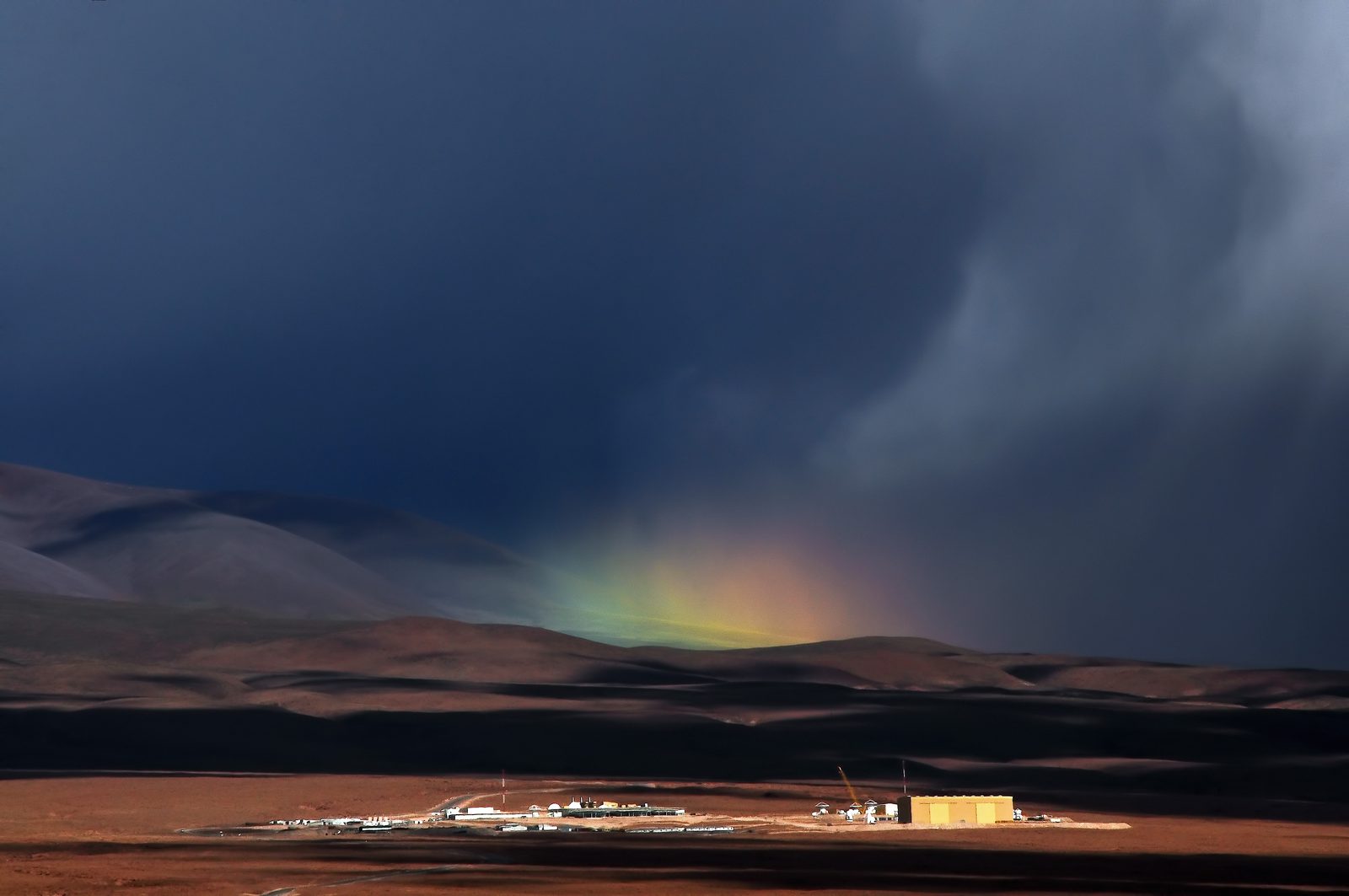
The sky is clear most of the year, but not all of it. Between about December and March, humid air from the Amazon side of the continent spills over the Andes in what Chileans call the altiplanic winter (you’ll also hear “Bolivian winter”): afternoon storms, rain, and now and then closed roads to the high-altitude sights. February is usually the worst of it, so a summer trip needs spare nights.
For stargazing, April through October is the safer bet. Chile’s tourism board points travelers to April–June for pleasant weather and thinner crowds; the professional data from Chajnantor say the driest air comes in the southern winter. The trade-off is cold. Winter nights in the desert get properly cold, and even autumn nights sit around 5°C (41°F). The better tours hand out blankets; bring a real jacket anyway.
Whatever the month, plan around the new Moon. A bright Moon washes out the Milky Way here as badly as anywhere. Tours still run under a bright Moon, and at least one operator switches to a Moon-and-planets night, which is a good night, just a different one. Our tonight’s sky page shows the current phase.
The Milky Way core and the Magellanic Clouds
The dry season and the Milky Way season are the same months, which is the best news in this guide. The bright galactic core is up in the evening from roughly April through September, and in June and July it climbs almost to the zenith. Lying on your back, the brightest part of the galaxy fills the sky directly above you. No sky in the U.S. can do that.
The Magellanic Clouds sit far enough south to be up for much of the night through most of the year, and they ride highest in the evening from about October through March. On a dark night they look like torn-off pieces of the Milky Way. If you want to take the picture home, our Milky Way photography guide covers the settings, though most tours here include a photo of you under the sky anyway.
What to bring
- A warm jacket, hat and gloves, in any month. The afternoon warmth is long gone by the time the telescopes come out.
- A red flashlight, or your phone dimmed all the way down.
- A refillable water bottle. The air is dry enough that you dehydrate without noticing, and that makes the altitude worse.
- Astronomy binoculars if you’ll be out on your own. Sweep them from Scorpius down through the Southern Cross and you hit cluster after cluster, no charts needed.
- A stargazing app set to your actual location. The southern constellations are unfamiliar, and our free app picks put names on them.
The bottom line
Come between April and October, pick a week around the new Moon, and take it easy on the first night at altitude. Book the $33 stargazing-and-Andean-astronomy tour for your first clear night, or the Roofless Experience if you want a small group. Skip anything rated under four stars. If the observatories are part of the plan, build a separate day for Paranal on a Saturday and check ALMA’s site for a reopening. Then lie back and find the Magellanic Clouds. They’re the thing you’ll describe to people afterward.
Frequently Asked Questions
Is the Atacama Desert good for stargazing?
Yes. The Atacama is one of the driest places on Earth, and San Pedro de Atacama sits at about 2,400 meters on the edge of the Andes, far from any big city. That combination of dry, thin, dark air is why ALMA and ESO's Very Large Telescope were built in the same desert. From about 23 degrees south you also get the southern sky: the Magellanic Clouds, the Southern Cross, and the Milky Way's core passing nearly overhead.
How much does a stargazing tour in San Pedro de Atacama cost?
The most-reviewed tours start at about $33 per person for two and a half hours, with telescopes, a guide, a photo and a hot drink. Small-group tours with larger telescopes run about $65 to $68. Private tours cost several hundred dollars. Prices are as listed on GetYourGuide on September 26, 2026, so check the current listing before you book.
When is the best time to stargaze in the Atacama?
April through October is the safest window. From about December to March, the altiplanic (or Bolivian) winter brings summer storms and occasional road closures, worst in February. The dry winter months are also when the Milky Way's core is highest. Whatever the month, plan around the new Moon.
Can you visit ALMA or the Paranal observatory?
Paranal, home of ESO's Very Large Telescope, runs free guided tours every Saturday with compulsory online registration, but ESO provides no transport and it is 120 km south of Antofagasta, far from San Pedro. ALMA, near San Pedro, has suspended its public visit program; its website says it is working to reopen, so check almaobservatory.org before you go.
Is altitude a problem in San Pedro de Atacama?
It can be. At about 2,400 meters some visitors get headaches, nausea or poor sleep in the first day or two. Drink plenty of water, rest on arrival and go easy on alcohol, which matters because many stargazing tours end with a glass of wine.
Do you need a tour to see the stars in the Atacama?
No. Walk out past the edge of town on a moonless night, let your eyes adapt for twenty minutes, and the Milky Way is obvious. A tour adds telescopes, a guide who knows the southern sky, a photo, and a driver, so you avoid unlit desert roads at night.
Rob founded Outer Space Trip and writes its operator cost guides, the Space Tourism Price Index, and the See Space Now gear guides. He has observed since a high-school observatory in the 1990s and still runs the 10-inch Meade LX200 he bought after college. How we pick and source ▸
The Best Dark-Sky Destinations
Where to travel for a truly dark sky — Atacama, Aoraki Mackenzie, La Palma and more, with when to go and how to book a stargazing tour.
Read →Guided Stargazing & Dark-Sky Tours
No telescope, no dark-sky research, no planning — a local guide sets up the gear and points out the sky. Real, bookable tours from $20.
Read →The Largest Telescopes in the World
The reigning 10.4 m champion, the 39 m giant that takes the title in 2029, the full ranked table — and which observatories you can actually visit.
Read →