The Best Refractor Telescope in 2026
Nine lens telescopes worth buying, from a $90 travel scope to an apochromatic triplet, what achromat and ED actually mean for what you see, and when a mirror is the better buy.

In this guide
When most people picture a telescope, they picture a refractor: a long tube with a lens at the front and an eyepiece at the back, the shape Galileo used and the shape on every kid’s bedroom poster. It is also the one telescope type that works the way people expect. Nothing to align, no mirror to collimate, a sealed tube that cools in minutes, and an image that is sharp from the first night to the last. The catch is price: a lens costs far more per inch than a mirror, so a refractor is either small or expensive, and the cheap big ones have a color problem.
This is the list I would hand someone who wants a lens telescope anyway, and there are good reasons to. Nine scopes, from a $90 travel tube to an apochromatic triplet, with the two words that decide the whole category, achromat and ED, explained in plain terms, and an honest line about when the Dobsonian across the aisle is the better buy.
Which refractor should you buy?
For a first telescope, the Celestron Inspire 100AZ: a 100 mm lens, a mount that is pleasant to use, and the phone holder and red light built in. Under $200, the AstroMaster 70AZ, whose long tube keeps planets sharp. If you want a lens telescope to grow into astrophotography, skip the achromats and go to the Sky-Watcher Evostar 80EDX or the Explore Scientific ED80 Essential, and budget for a mount. And for planets on an equatorial mount, the Omni XLT 102 is the classic.
Outer Space Trip may earn a commission from links on this page; your price is the same. How we choose. Prices move — the links show current pricing.
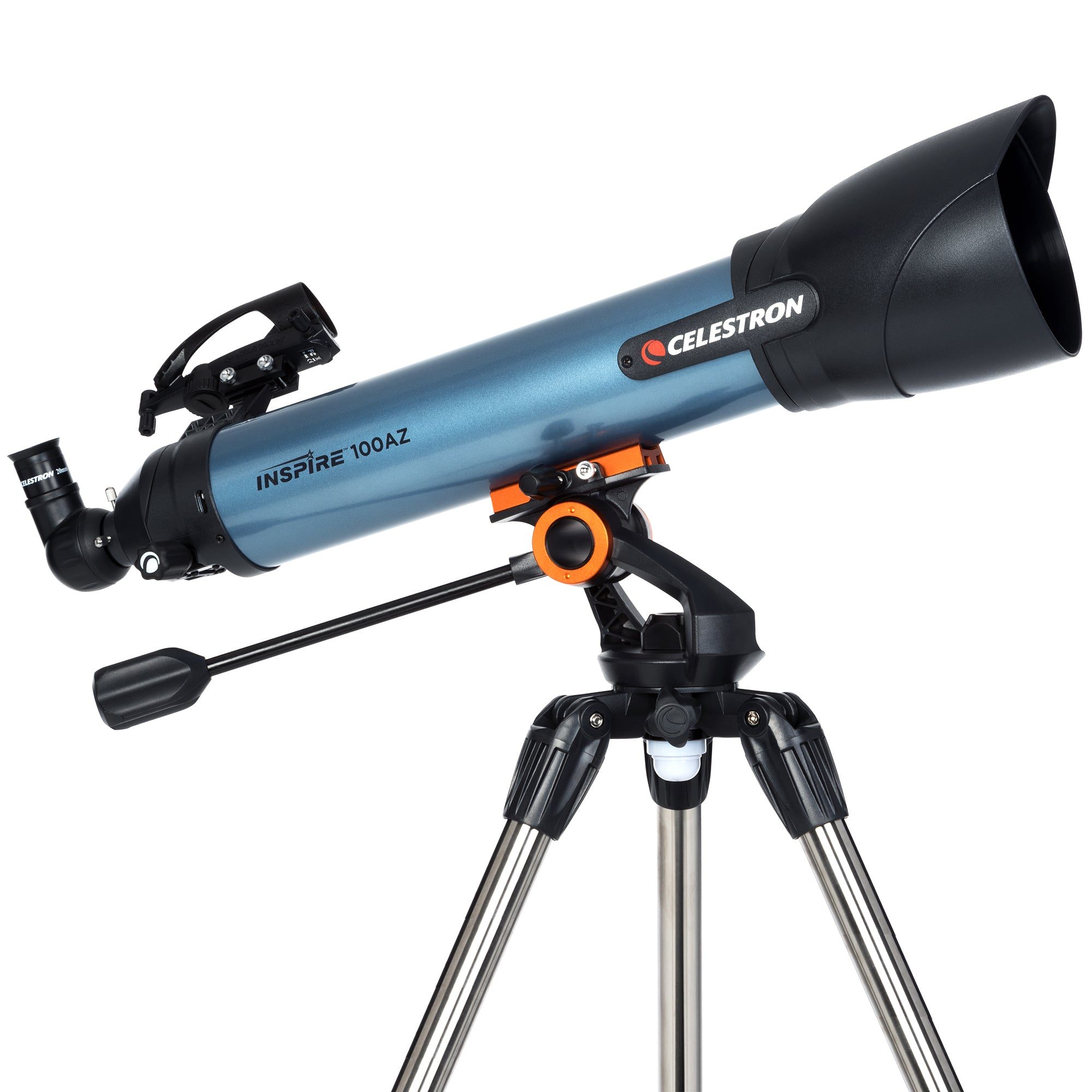
Celestron Inspire 100AZ
A 100 mm lens on a mount that is pleasant to use, with the two things a first-night refractor needs built in: a phone holder in the lens cap for the first Moon photo, and a red flashlight in the tripod leg. The Moon is sharp, Saturn’s rings separate cleanly, and nothing ever needs collimating.
- You want the classic telescope shape with no maintenance
- The first Moon photo matters to someone in the house
- An achromat: bright targets show a violet fringe at high power
- A light tripod — let it settle for a second after each touch
- A 100 mm lens gathers about 40% less light than a 130 mm reflector at the same price
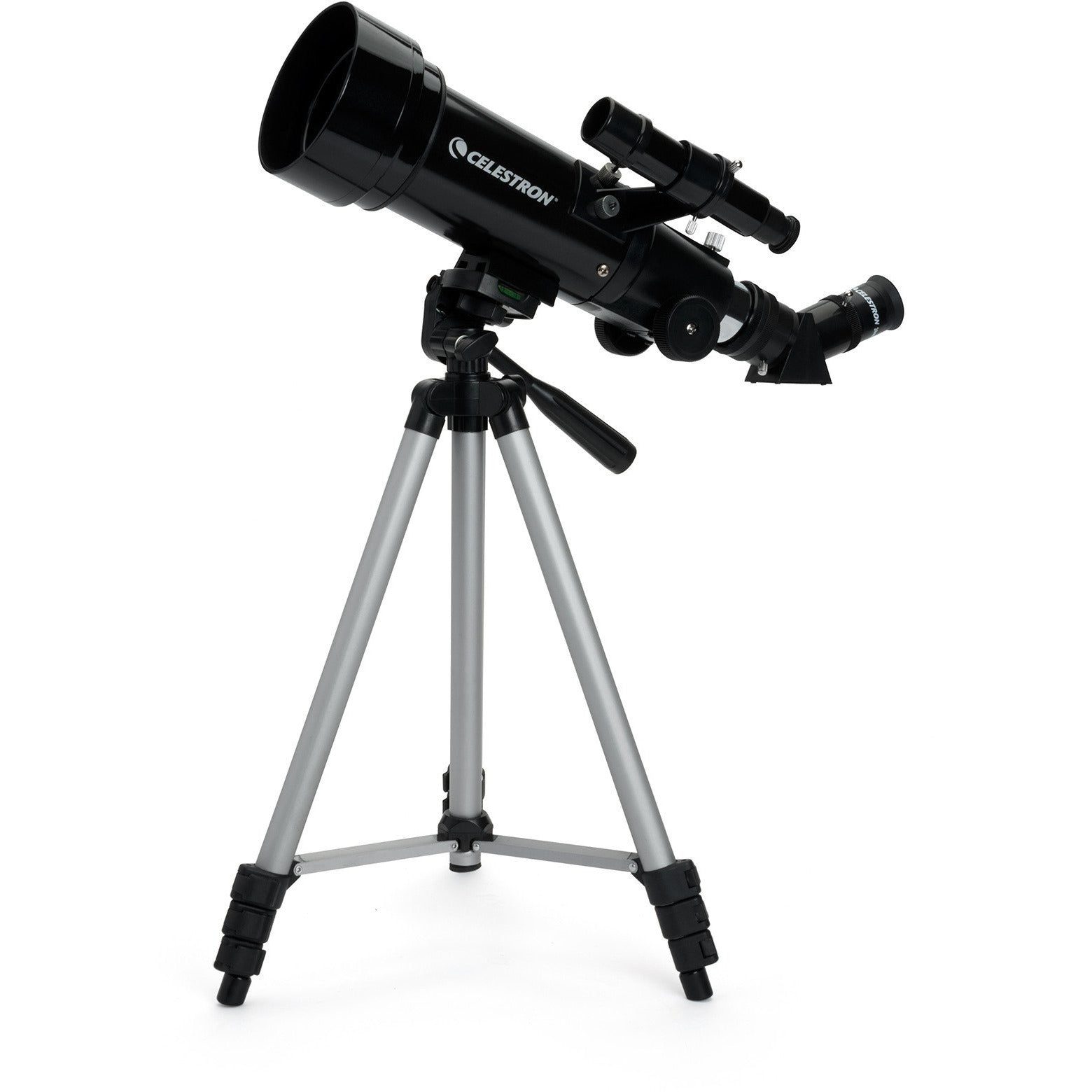
Celestron Travel Scope 70
A 70 mm lens in a backpack with its own tripod, for less than a good eyepiece. The Moon, Jupiter’s moons and Saturn’s ring are all in reach, and it doubles as a daytime spotting scope. The tripod is the weak link; set it low and it behaves.
- It has to fit in carry-on or a school bag
- Under $100 is the budget and you want real glass
- The included tripod shakes at high power — the scope deserves a sturdier one later
- Short focal length: planets stay small without a Barlow
- A first look, not a lasting scope
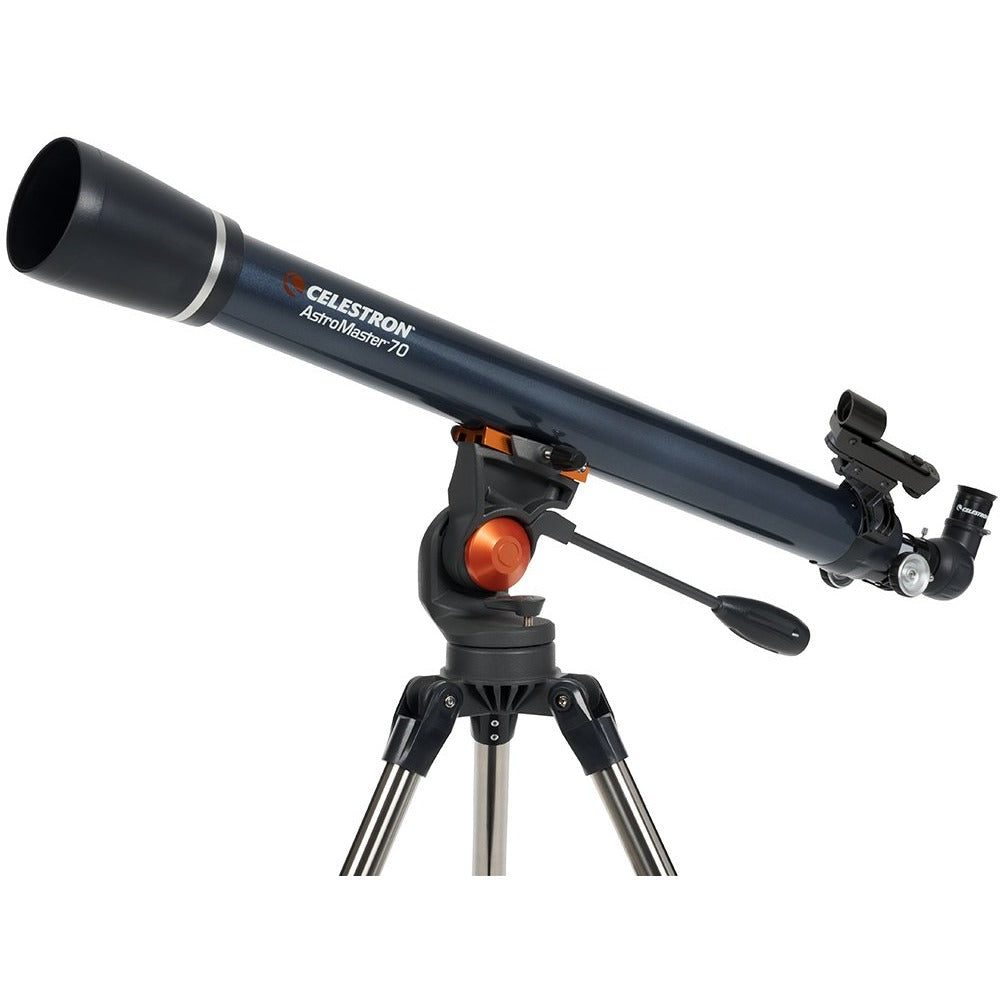
Celestron AstroMaster 70AZ
A 70 mm lens with a long 900 mm focal length, which is why it shows planets sharper than the short travel scopes at the same aperture: high power comes from ordinary eyepieces and the color fringing stays modest. A pan-handle mount a child can drive.
- Moon and planets are the goal and the budget is under $200
- You want the simplest possible mount
- 70 mm caps the faint stuff: galaxies stay out of reach
- A long tube on a light tripod — wait out the wobble
- The red-dot finder is basic
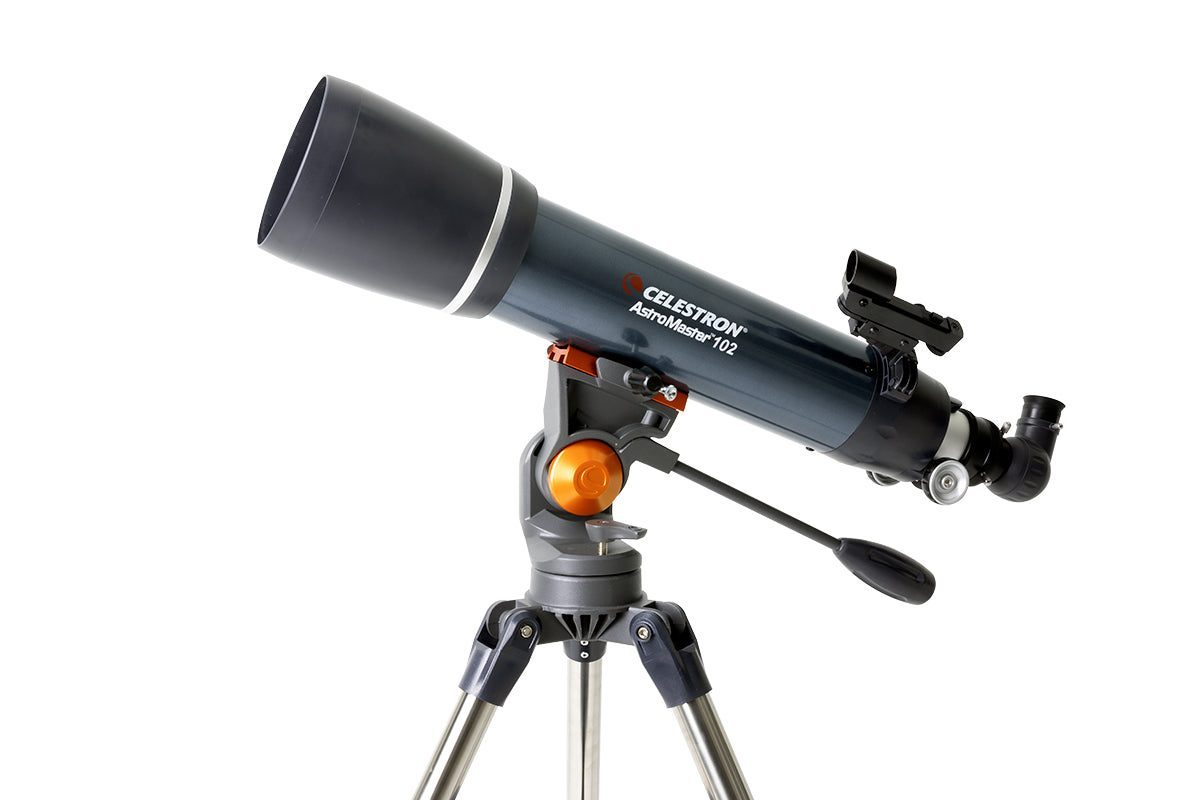
Celestron AstroMaster 102AZ
The Inspire’s optics on the plainer AstroMaster mount, without the phone cradle and the built-in light. If you do not need the extras, this is the same 100-class view for a little less, on a pan-handle mount that tracks by hand smoothly enough for 150×.
- You want a 4-inch lens and do not care about the Inspire’s extras
- A simple manual mount suits you
- Same achromat fringing on bright targets as the Inspire
- No slow-motion controls: tracking at high power is a nudge, not a knob
- Sold through a specialist dealer, not Amazon, at the time of writing

Celestron StarSense Explorer DX 102AZ
The same 102 mm lens class with Celestron’s StarSense dock: clip your phone in and the app walks you to any target with on-screen arrows. For a refractor buyer who wants to skip the star-hopping, it is the one.
- You want a lens scope that finds things for you
- The phone-in-the-dock idea appeals more than a motorized mount
- An achromatic lens shows some color fringing on the Moon and bright planets
- The finding depends on your phone: no phone, no arrows
- A manual mount, so you nudge targets back as they drift at high power
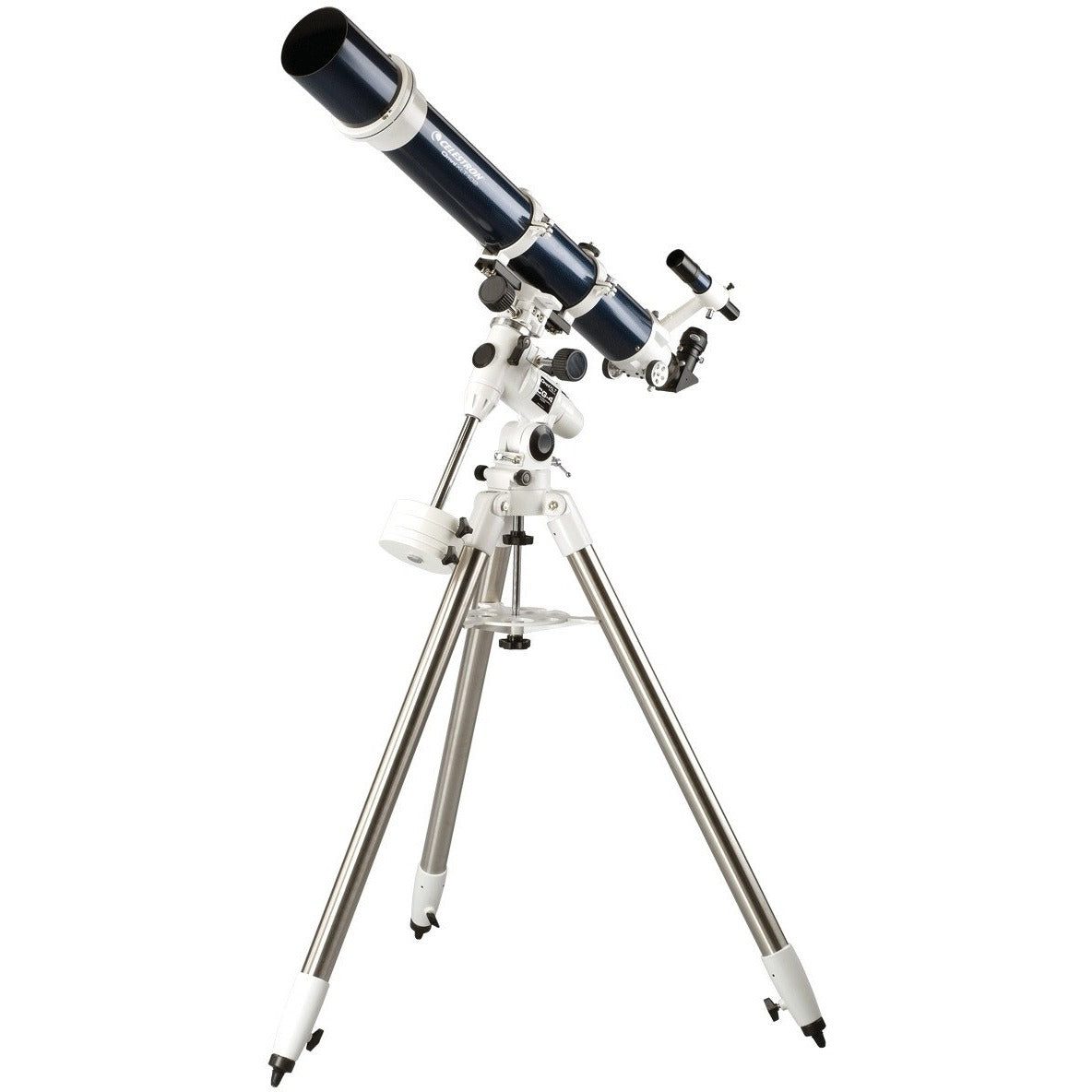
Celestron Omni XLT 102
A 102 mm lens at a long f/9.8 on a real German equatorial mount with slow-motion cables. The long focal length cuts the color fringe to a sliver and puts planets at 150× with a 7 mm eyepiece; the mount, once polar-aligned, follows them with one knob. The planetary refractor a generation learned on.
- Planets and the Moon are the point and you want an equatorial mount
- You like the idea of learning the sky with slow-motion controls
- An equatorial mount has a learning curve the alt-az scopes above do not
- A meter-long tube: this is not a grab-and-go
- Out of stock at Celestron when we checked; the specialist dealers had it
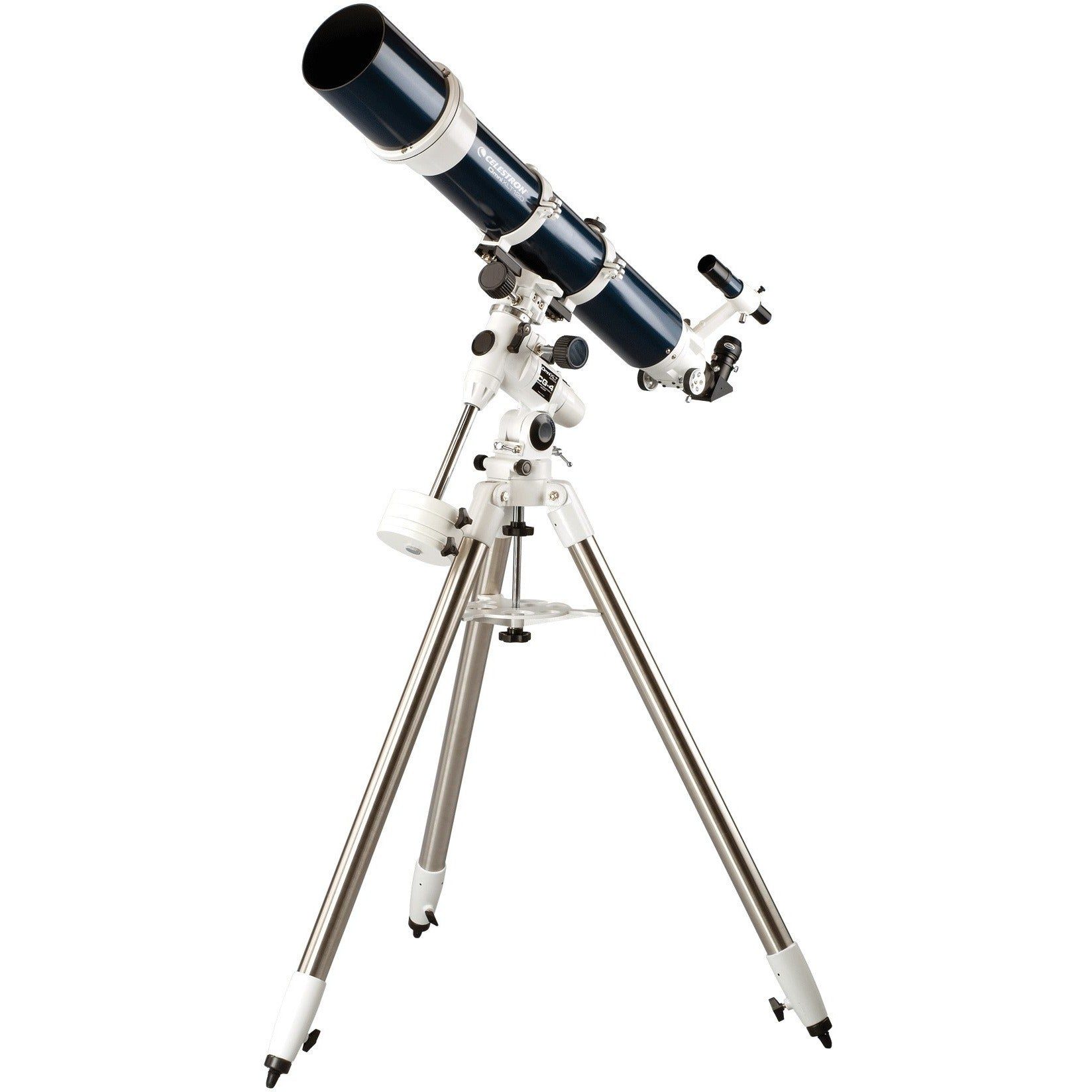
Celestron Omni XLT 120
The most lens you can buy before the price doubles for ED glass: 120 mm at f/8.3 on the same CG-4 mount. Brighter planets and real deep-sky reach, with the fringing a fast 120 mm achromat always has; a minus-violet filter tames most of it.
- You want the biggest lens under $1,000
- You accept some color fringe for the extra light
- Noticeable violet fringe on the Moon and Venus
- Heavy for its mount: let it settle, and skip windy nights
- A 6-inch Dobsonian shows more for less if you can live with a mirror
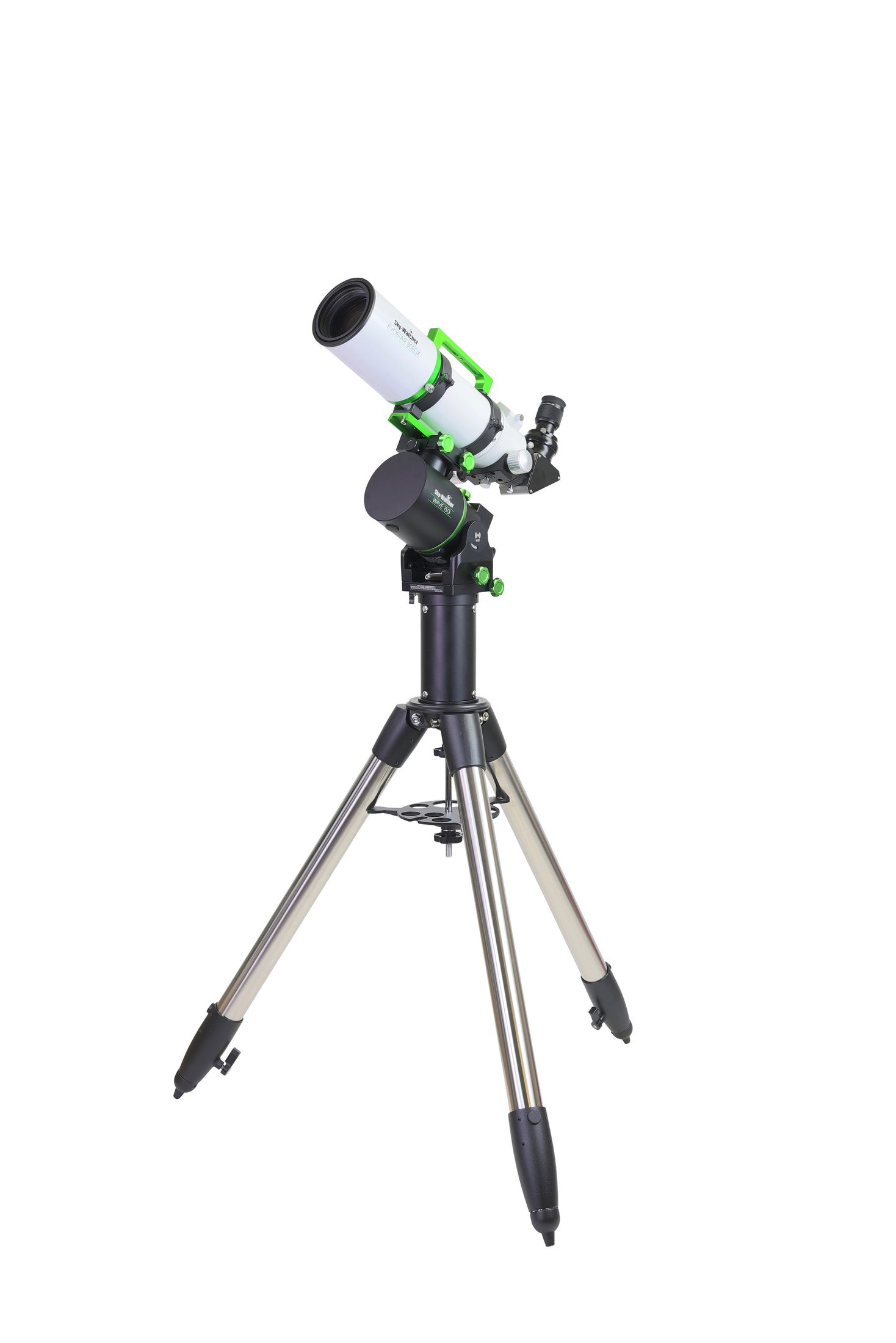
Sky-Watcher Evostar 80EDX
Where refractors get serious: an 80 mm doublet with an extra-low-dispersion element, so Jupiter is white and the Moon’s limb is clean. Tube only, so it needs a mount, but it is the scope that works for visual tonight and for a first camera next year.
- You are done with color fringe for good
- You already own a mount, or will buy one from our mounts guide
- No mount, no tripod, no finder in the box: budget for them
- 80 mm is small for faint galaxies; this is a quality buy, not an aperture buy
- The classic Evostar 72ED and 80ED are discontinued, so this is the current version
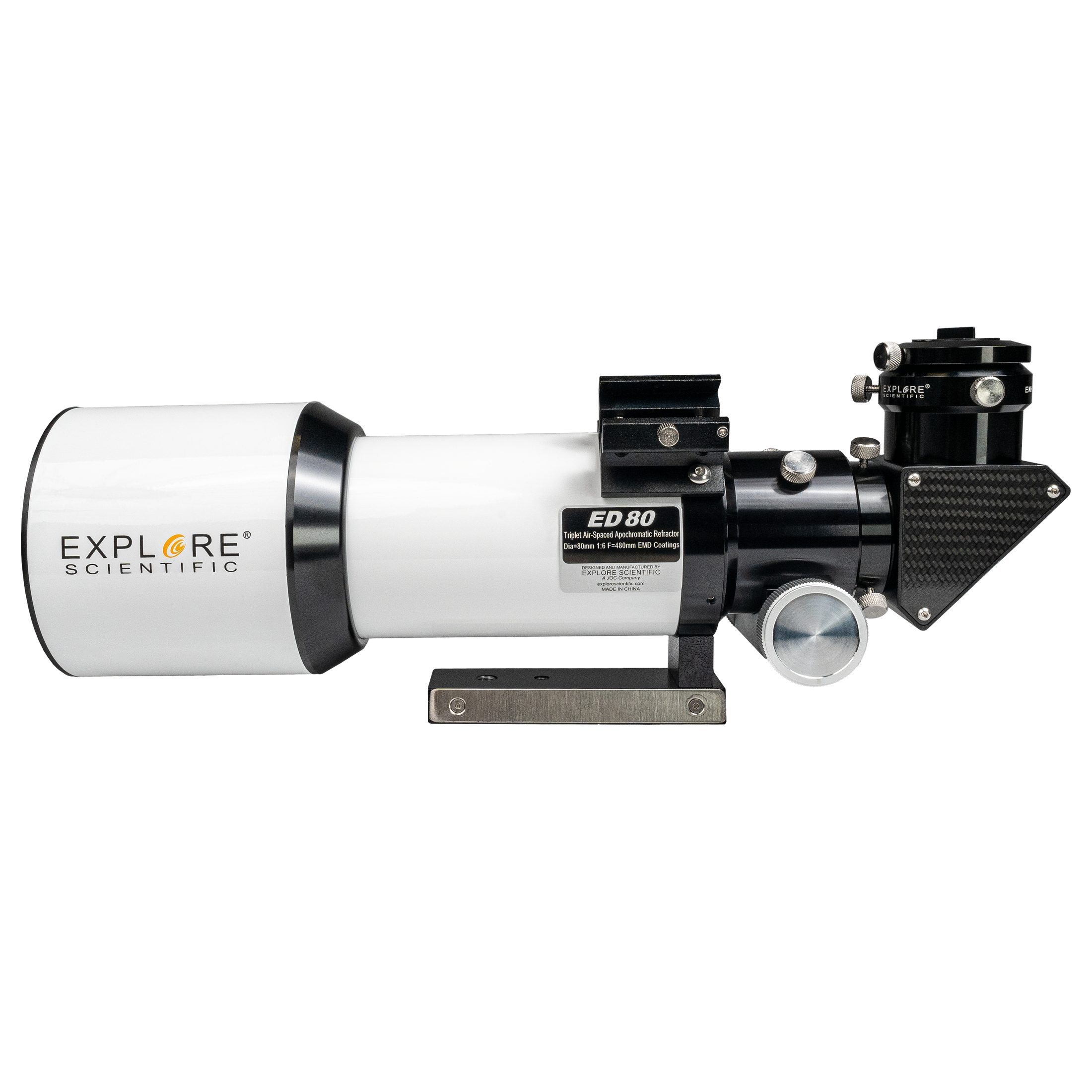
Explore Scientific ED80 Essential
Three lens elements instead of two, which is how a refractor goes from “very little” color to none, at f/6 for a wide, fast field. The Essential series trims the focuser and the case to hit the price, and keeps the glass. Sold by Explore Scientific directly.
- You want apochromatic glass for wide-field imaging
- You would rather spend on the lens than the focuser
- Tube only, like the Evostar
- The basic rack-and-pinion focuser is the first thing imagers upgrade
- Bought from the maker’s store, not Amazon
The picks at a glance
Glass type is the column that matters most. An achromat is fine for the Moon and planets at modest power; ED and triplet glass is what you pay for when you want white stars and a camera on the back.
| Telescope | Aperture | Glass | Mount included? | Price |
|---|---|---|---|---|
| Celestron Travel Scope 70 | 70 mm f/5.7 | Achromat | Photo tripod | $90–120 |
| Celestron AstroMaster 70AZ | 70 mm f/13 | Achromat | Alt-az | $180–200 |
| Celestron Inspire 100AZ | 100 mm f/6.6 | Achromat | Alt-az | $340–380 |
| Celestron AstroMaster 102AZ | 102 mm f/6.5 | Achromat | Alt-az | ~$360 |
| Celestron StarSense DX 102AZ | 102 mm f/6.5 | Achromat | Alt-az + app | ~$440 |
| Celestron Omni XLT 102 | 102 mm f/9.8 | Achromat | Equatorial | ~$700 |
| Celestron Omni XLT 120 | 120 mm f/8.3 | Achromat | Equatorial | ~$850 |
| Sky-Watcher Evostar 80EDX | 80 mm | ED doublet | No | ~$750 |
| Explore Scientific ED80 Essential | 80 mm f/6 | Apo triplet | No | ~$700 |
Achromat, ED, apo: what the words mean at the eyepiece
A lens bends blue light more than red, so a simple lens cannot bring every color to the same focus. An achromat uses two elements to fix most of it, and the leftover shows as a violet fringe around the Moon’s edge, Venus and Jupiter. At long focal ratios like the AstroMaster 70AZ’s f/13 or the Omni XLT 102’s f/9.8 the fringe is slight; at f/5 or f/6 it is obvious at high power. ED glass (extra-low dispersion) in one element shrinks the fringe to almost nothing, and an apochromatic triplet uses three elements to remove it. For visual use on the Moon and planets an achromat at a long focal ratio is a fine telescope. The moment a camera goes on the back, the fringe becomes bloated blue stars, and ED is the floor.
Where a refractor beats a mirror, and where it loses
It wins on sharpness per inch (no central obstruction, so a 4-inch lens can out-resolve a 4.5-inch reflector on planets), on maintenance (no collimation, ever), on cool-down (minutes, not the better part of an hour an 8-inch SCT needs), and on the sealed tube that shrugs off dust and dew on the mirror. Double stars, the Moon, the planets and wide starfields are refractor territory.
It loses on aperture per dollar, and it is not close. The $700 Omni XLT 102 is a 4-inch lens; the same money buys an 8-inch Dobsonian with four times the light, which is why our refractor vs. Dobsonian page sends most first-time buyers to the mirror. Buy a refractor because you want the lens telescope’s virtues, not because you think it is the better all-rounder. If galaxies and nebulae are the dream, read best beginner telescopes first.
The apo step-ups, and the imaging tubes
Past the Evostar and the ED80 the refractor market turns into astrophotography, and the names change. The William Optics ZenithStar 61 II (~$520) is the small apo doublet that half the wide-field images on the internet were taken with, and the ZenithStar 81 (~$950) is its bigger sibling. The RedCat 51 (~$830) is a 51 mm f/4.9 lens built purely for cameras, flat to the corners with no extra glass. Askar’s 71F (~$600) and FRA300 Pro (~$600) are the newer value plays at the same job. All of them are tube-only and come from specialist dealers; our astrophotography setup guide covers the mount, camera and tracker that go with them, and the mounts guide picks the mount.
What to skip
The $60–100 “70 mm 400×” refractors that fill the gift listings: the lens can be acceptable, but the plastic focuser and the tripod are not, and the eyepieces that come with them are the reason so many first telescopes end up in a closet. The Travel Scope 70 above is that scope done properly. Also skip any 80–90 mm achromat on an undersized equatorial mount sold as a “deep-sky” telescope; it will show you the Moon and not much else, and the mount will fight you. And do not buy an achromat for astrophotography and hope a filter fixes it; buy ED glass or buy a mirror.
If you buy one thing
The Celestron Inspire 100AZ for a first lens telescope, the AstroMaster 70AZ if $200 is the ceiling, and the Sky-Watcher Evostar 80EDX the day a camera enters the plan. Not sure a refractor is the right type at all? Types of telescopes lays out the three designs side by side, and Schmidt-Cassegrain vs. refractor settles the other common fork.
Frequently Asked Questions
What is the best refractor telescope for a beginner?
The Celestron Inspire 100AZ (~$340-380): a 100 mm lens on a mount that is easy to use, with a phone holder built into the lens cap and a red flashlight in the tripod. It shows the Moon sharply and Saturn's rings cleanly, and like every refractor it never needs collimating. Under $200, the AstroMaster 70AZ keeps planets sharp thanks to its long focal length.
What is the difference between an achromat and an apochromat?
An achromat uses two lens elements and leaves a violet fringe around bright objects like the Moon's edge and Jupiter; at long focal ratios the fringe is slight, at f/5-f/6 it is obvious at high power. An ED doublet adds extra-low-dispersion glass and shrinks the fringe to almost nothing; an apochromatic triplet uses three elements and removes it. For visual use an achromat is fine; for astrophotography, ED glass is the floor.
Is a refractor or a reflector better?
Per inch, a refractor: sharper on planets, no collimation, cools in minutes, sealed tube. Per dollar, a reflector, by a wide margin: the ~$700 Omni XLT 102 is a 4-inch lens, and the same money buys an 8-inch Dobsonian with four times the light. Buy a refractor for its virtues (planets, double stars, wide fields, zero maintenance), not as the better all-rounder.
What is the best refractor telescope under $500?
The Celestron Inspire 100AZ (~$340-380) for most people, the AstroMaster 102AZ (~$360) for the same lens class without the extras, and the StarSense Explorer DX 102AZ (~$440) if you want the phone app to find targets for you. All three are 100-class achromats on alt-azimuth mounts.
What is the best refractor for astrophotography?
Start with ED glass: the Sky-Watcher Evostar 80EDX (~$750) or the Explore Scientific ED80 Essential triplet (~$700), both tube-only. For dedicated wide-field imaging the William Optics RedCat 51 (~$830) and ZenithStar 61 II (~$520), and Askar's 71F and FRA300 Pro (~$600 each), are the current favorites. Every one needs a tracking mount; our astrophotography setup guide covers the rest of the rig.
Do refractor telescopes need collimation?
No, and that is one of the main reasons to buy one. The lens is fixed in its cell at the factory and stays aligned through years of car trips; a Newtonian reflector's mirrors need checking every few sessions. A refractor also cools to night air in minutes, where a large mirror or Schmidt-Cassegrain needs 30-45 minutes before it shows its sharpest view.
Types of Telescopes Explained
Refractor, reflector, Dobsonian, or catadioptric — what each design shows you, what it costs, and which one fits how you’ll observe.
Read →Refractor vs. Dobsonian
The two scopes every beginner is pointed to — a lens against a mirror. What each shows you best, what each really costs, and which one I’d hand most first-time buyers.
Read →Schmidt-Cassegrain vs. Refractor
A sharp little refractor from ~$250 or a big go-to SCT near $1,700 — a lens against a mirror. What more aperture and a computer buy you, and when the lens is the smarter scope.
Read →The Best Beginner Telescopes
2026 picks, from a $200 starter to an 8-inch Schmidt-Cassegrain, to get you viewing on night one.
Read →The Best Telescope for Planets
Seven telescopes that show Saturn’s rings and Jupiter’s belts sharply, from a $340 tabletop to the 8-inch SCT I’d buy for planets — plus the magnification rule that stops you wasting money.
Read →The Best Telescopes Under $500
Seven scopes that earn the money — the one I’d hand most first-time buyers, the most mirror per dollar, a GoTo that finds targets itself, and the smart scope that hands you photos instead of an eyepiece.
Read →The Best Telescope Mounts & Tripods
The mount matters more than the telescope for astrophotography. Grab-and-go GoTo to serious imaging EQ picks, from grab-and-go trackers to the workhorse EQ6-R.
Read →The Best Astrophotography Setup at Every Budget
Three complete deep-sky rigs, itemized — a $500 starter, a $3,000 serious kit, and a $10,000 dream setup. What each part does and why.
Read →