Stargazing in the Northeast
Real dark skies survive within a drive of NYC and Boston: the Catskills' astronomer-led overnights, Cherry Springs' Bortle-2 field, and Maine's sanctuary.
In this guide
- Why the drive is non-negotiable
- The Catskills: the closest real fix for New York
- Cherry Springs State Park: the East’s gold standard
- The Adirondacks: wilder, darker, with a free observatory
- Northern Maine: the darkest sky east of the Mississippi
- Only have one night? The closer compromises
- When to go
- What to bring
- Where to start
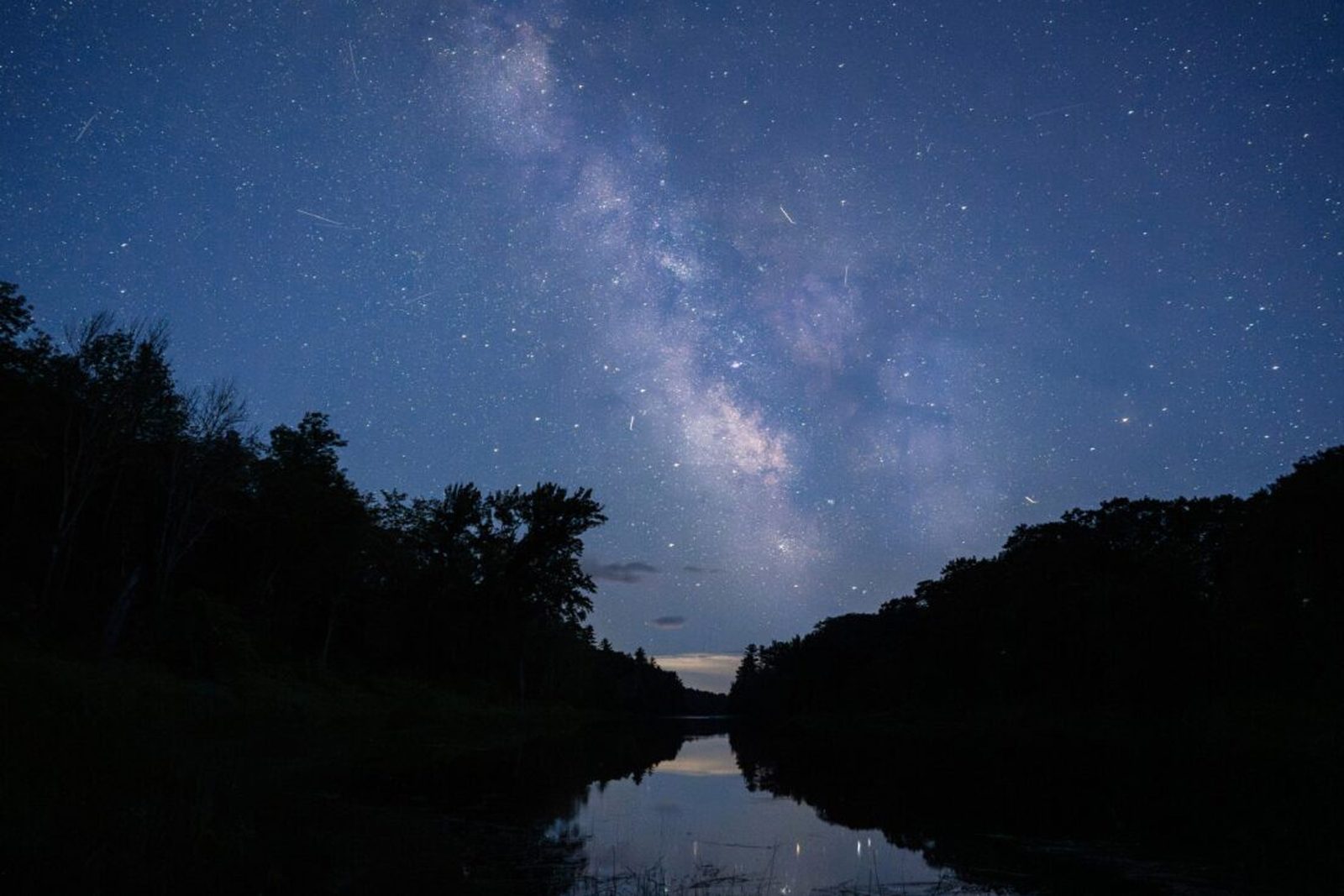
Two hours north of the George Washington Bridge, the sky starts to come back. First the bright constellations you half-remember, then stars between them you’ve never seen from the city, and finally (if you keep driving, and you picked a moonless night) the Milky Way itself, laid across the dark like something spilled. The great lie of East Coast living is that you have to fly to Utah or Chile for that view. You don’t. Some of the darkest sky east of the Mississippi survives within a road trip of New York and Boston, and most of it costs nothing to stand under.
This is the practical map: where the dark is, which nights to drive, and the small handful of astronomer-led events in the region I think are worth paying for.
Why the drive is non-negotiable
Astronomers grade night sky on the Bortle scale, 1 (pristine) to 9 (inner city). Manhattan is a 9; most of the suburban ring is 7–8. Under that sky you’ll count maybe a few dozen stars, and the Milky Way is flatly invisible; no amount of patience or gear fixes it. The light dome of the New York–Boston corridor is the largest in North America, and escaping it takes real distance. The good news: the darkness comes back faster than people expect, and the Northeast hides several pockets of Bortle 2, sky as dark as remote desert, inside a day’s drive.
The Catskills: the closest real fix for New York
The Catskills are where I’d send almost anyone making their first dark-sky trip from the city. The park is 700,000 acres, the drive is two and a half to three hours from Manhattan, and the northwestern reaches (out past Margaretville, into Delaware County) get properly dark, dark enough for the Milky Way to be obvious on a clear moonless night.
Two organized options are worth knowing about:
- Discovery Nights at the Catskills Visitor Center (Mount Tremper): free, roughly monthly evenings where local amateur astronomers set up telescopes and walk visitors through the sky, with special sessions around big events like the Perseids in August. Zero commitment, good for families, bring a chair.
- Overnight astronomy campouts with Stellar Events: a small Connecticut outfit that has run astronomy events around the region for over a decade, now in its seventh summer of Catskills overnights on a hilltop field in Delaware County. Select weekends June through September: you arrive before sunset, pitch a tent or park an RV (sleeping in your car is fine too), and an astronomer spends the night guiding the field through planets, star clusters, nebulae, and the Milky Way with a laser pointer, with a sunset concert thrown in. Tickets run $130 per person at full price, and the operator discounts them to around $65 often enough that I’d never pay full fare. Treat the “half price, almost gone” countdown on their site as marketing, not a deadline. Details and dates are on the Stellar Events Catskills page. It’s not a luxury product; it’s a field, porta-potties, and a very good sky. But a guided all-nighter under a dark Catskills sky for the price of a Broadway ticket is a fair trade.
Going it alone instead? Aim northwest of the high peaks, use any legal pull-off or trailhead with an open horizon, and give your eyes twenty minutes away from headlights. The sky at minute twenty is a different sky from the one at minute two.
Cherry Springs State Park: the East’s gold standard
Five hours from New York, in the emptiest corner of north-central Pennsylvania, sits the most famous dark sky east of the Rockies. Cherry Springs was named an International Dark Sky Park in 2007 (the second in the world), and it holds the top Gold-tier rating: Bortle 2, surrounded by the 262,000-acre Susquehannock State Forest, with an astronomy field on a 2,300-foot hilltop that gives you the full 360-degree horizon. On a moonless night the Milky Way here is bright enough to cast a faint shadow, and the Andromeda Galaxy, two and a half million light-years out, is a naked-eye smudge.
Two practical notes. The public stargazing area is free and open every night; the astronomy field proper (with overnight parking for serious observers) uses a small permit. And the park’s own data says only 60–85 nights a year are ideal (this is Appalachian weather, not Arizona) so treat Cherry Springs as a flexible-date trip: watch the forecast, go when a dry clear night lines up with a new Moon, and have a backup night. Done right, it’s the single best sky most Easterners will ever stand under without boarding a plane.
The Adirondacks: wilder, darker, with a free observatory
North of the Catskills the six-million-acre Adirondack Park swallows most of upstate New York’s light, and the interior (around Tupper Lake, Saranac Lake, and the wild center of the park) is some of the darkest ground in the state. The reason to pick the Adirondacks over the Catskills is Tupper Lake’s Adirondack Sky Center & Observatory: a volunteer-run roll-off-roof observatory with four permanently mounted telescopes that opens to the public for free stargazing nights year-round, weather permitting. Free, real telescopes, people who love explaining the sky: it’s the best value in Northeast astronomy, full stop. The drive is the price: five hours from the city, so it pairs best with a lake-country weekend rather than a single night out.
Northern Maine: the darkest sky east of the Mississippi
If you want the ceiling, the darkest legally-protected sky in the eastern United States, it’s in Maine’s North Woods, and it comes in two certified pieces. Katahdin Woods and Waters National Monument is an International Dark Sky Sanctuary, the first in New England and one of very few in the entire national park system; its sky measures Bortle 2, and on active nights the aurora shows up this far south. Next door, the Appalachian Mountain Club’s 114,000 acres in the 100-Mile Wilderness became New England’s first International Dark Sky Park in 2021, with three backcountry lodges inside the boundary, which means you can sleep in a bed, eat a hot dinner, and walk out the door into a Sanctuary-grade sky. This is an eight-hour drive from New York (half that from parts of New England), so it’s a destination trip, not an impulse. But for a Northeasterner it is the answer to “how dark can it possibly get without leaving the region,” and it out-darks plenty of famous Western parks.
Only have one night? The closer compromises
Honesty first: nothing within an hour of New York or Boston shows you the Milky Way. But a short drive still transforms the sky. Harriman State Park, about an hour from the city, drops you four or five Bortle classes, enough for meteor showers, bright comets, and constellations you’ll never untangle from Queens. Fire Island’s ocean-facing beaches give Long Islanders a dark southern horizon, which happens to be exactly where the Milky Way core sits in summer. And from June to October, Stellar Events runs astronomer-narrated stargazing cruises off Long Island, Connecticut, and Massachusetts: the astronomer works the top deck with a laser pointer while the boat gets you a few miles of blessed distance from shore lighting. For a first taste of a guided sky night without leaving the metro area, that’s the low-commitment pick; the deeper tour landscape is in our guided stargazing tours guide.
When to go
Timing beats geography. The rules for the Northeast:
- New Moon or bust. A bright Moon washes out a Bortle-2 sky as thoroughly as a city does. Plan inside the darkest week of the month; every trip above lives or dies on this.
- Milky Way core: June through September. The bright center of the galaxy rides the southern sky on summer nights, which is conveniently the season the Catskills overnights run. Our Milky Way guide covers what to expect by eye.
- Fall and winter are the clear-sky season. Summer in the Northeast is humid and hazy; the crisp transparent nights come with the cold. The Geminids in mid-December over Cherry Springs or the Adirondacks are a legitimately world-beating show, if you dress for it. Peak dates are in the meteor shower calendar.
- Book nothing you can’t move. Appalachian weather cancels more nights than it grants. Flexible dates are the single biggest upgrade you can give any Northeast sky trip.
What to bring
- Warm layers, even in July. Mountain fields drop 20–30°F after sunset, and stargazing is standing still. Winter trips need real cold-weather gear.
- A red flashlight, because white light wrecks night vision for you and everyone sharing the field. Our red flashlight picks start under $20.
- Binoculars before a telescope. A decent pair of astronomy binoculars turns the Milky Way from a glow into a field of individual stars, travels in a jacket pocket, and costs less than one guided overnight. If the trip lights the fire, our telescope finder matches you to a first scope in four questions.
- A free stargazing app to name what’s overhead; our picks all work offline, which matters in the Catskills’ dead zones.
- Bug spray, June through August. The same damp woods that make the Northeast green make it buggy. Nobody enjoys the Perseids while being eaten.
Photographing the trip? The Milky Way photography guide covers settings and planning, and everything in it applies to a Catskills hilltop as well as a Utah desert.
Where to start
Start with the Catskills: closest to the most people, dark in the northwest, and home to the region’s best-value guided night: a $65–130 astronomer-led campout under a real sky. Graduate to Cherry Springs when you want the East’s benchmark darkness and can keep your dates flexible. Save northern Maine for the pilgrimage: a certified Sanctuary sky with a lodge bed inside it. And if the drive isn’t happening this month, an hour to Harriman or a stargazing cruise off the coast still returns more stars than most city dwellers have seen in years. The sky never left. It’s just waiting past the light dome, and it’s cheaper to visit than almost anything else this region charges admission for. For how the Northeast’s dark corners stack up against the world’s best, see our dark-sky destinations guide.
Frequently Asked Questions
Where is the best stargazing near NYC?
The Catskills are the best combination of dark sky and driving distance from New York City: about 2.5 to 3 hours to the darkest northwestern sections past Margaretville, where the Milky Way is plainly visible on clear moonless nights. For a shorter trip, Harriman State Park (about an hour out) is dramatically darker than the city but won't show the Milky Way. The darkest sky in the broader region is Cherry Springs State Park in Pennsylvania, about five hours away.
Can you see the Milky Way in the Northeast?
Yes, clearly — but only from real dark-sky areas. The northwestern Catskills, the Adirondack interior, Cherry Springs State Park in Pennsylvania, and Maine's North Woods all show the Milky Way well on clear moonless nights, and Cherry Springs and northern Maine rate Bortle 2, as dark as remote desert. What doesn't work is anywhere inside the NYC–Boston light dome: within about an hour of either city the Milky Way stays invisible no matter how clear the night is.
What are the Catskills overnight astronomy events?
Stellar Events, a small Connecticut-based operator running astronomy events for over a decade, hosts overnight astronomy campouts on a hilltop field in Delaware County on select weekends from June through September. You camp on-site (tent, RV, or your car), and an astronomer guides the group through the night sky with a laser pointer, with a sunset concert included. Tickets are $130 per person at full price and are frequently discounted to about $65. Reservations are required, and any ticket is good for any event date that season.
Is Cherry Springs State Park worth the drive?
For a first true dark-sky night, yes — it's the benchmark sky of the eastern United States: a Gold-tier International Dark Sky Park (certified 2007, the second in the world) rated Bortle 2, with a 2,300-foot astronomy field and a full 360-degree horizon. The caveat is weather: the park gets roughly 60–85 ideal observing nights a year, so go with flexible dates aimed at a clear forecast and a new Moon rather than booking one fixed night months out.
When is the best time to stargaze in the Northeast?
Pick the week around the new Moon first; moonlight matters more than season. For the Milky Way's bright core, go June through September, which is also when the Catskills astronomy overnights run. For the sharpest, most transparent skies, fall and winter beat the humid summer haze, and the Geminid meteor shower in mid-December is arguably the region's best sky show if you can handle the cold.
Rob founded Outer Space Trip and writes its operator cost guides, the Space Tourism Price Index, and the See Space Now gear guides. He has observed since a high-school observatory in the 1990s and still runs the 10-inch Meade LX200 he bought after college. How we pick and source ▸
Free Observatory Nights in New Jersey
A 20-inch telescope ten miles from Manhattan, open free every Wednesday, plus five more public domes across the state — which night each opens and what you’ll see.
Read →Stargazing in Sedona
A certified Dark Sky Community with 275 clear nights a year — the best free red-rock viewpoints, when to go, the Milky Way season, and the astronomer-led tours worth booking.
Read →Guided Stargazing & Dark-Sky Tours
No telescope, no dark-sky research, no planning — a local guide sets up the gear and points out the sky. Real, bookable tours from $20.
Read →How to See the Milky Way
Peak season is June–August. What you need, where to find dark skies, and what to expect.
Read →