Free Observatory Nights in Colorado
Two 20-inch refractors in Denver and Boulder, an 18-inch in Berthoud, and free star parties from the Springs to the Western Slope. Which night each is open.
In this guide
- Sommers-Bausch Observatory, CU Boulder: free telescope viewing most Fridays
- Chamberlin Observatory, Denver: a 20-inch Alvan Clark refractor from 1894
- Little Thompson Observatory, Berthoud: no-charge public nights on the third Friday
- Colorado Springs Astronomical Society: free star parties in the Pikes Peak region
- Northern Colorado Astronomical Society, Fort Collins: free public skygazing
- Western Colorado Astronomy Club, Grand Junction: dark skies over the Western Slope
- The famous names that aren’t free
- What a public observatory night is actually like
- What you’ll see, by season
- If the eyepiece gets you
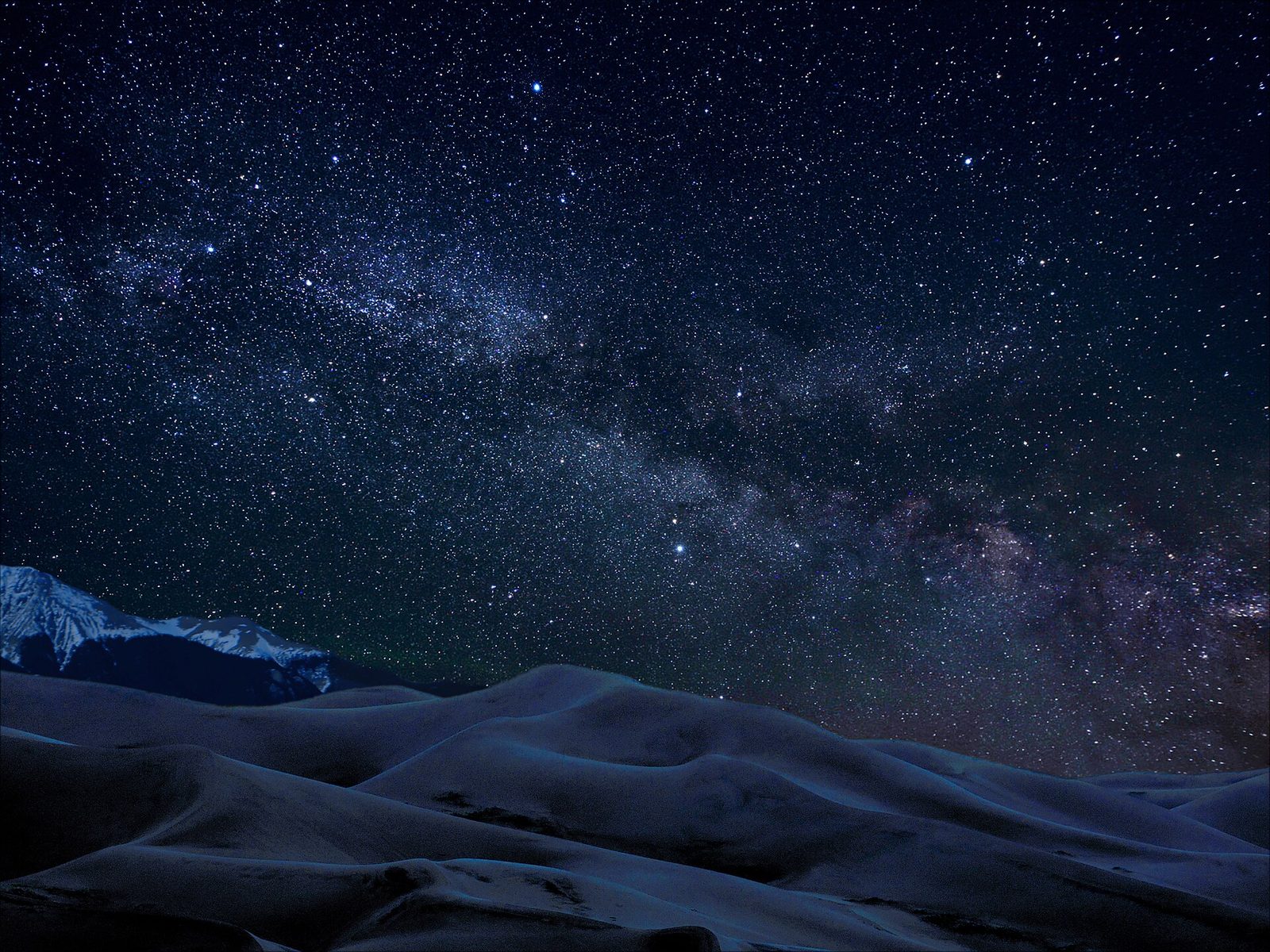
Drive out past the last streetlight on Colorado’s high plains on a moonless night and the Milky Way doesn’t so much appear as arrive — a bright, textured band throwing shadows, the kind of sky most of the country forgot it ever had. Colorado is built for this: thin, dry mountain air, some of the highest observing sites in the Lower 48, and a string of certified dark-sky parks from the Great Sand Dunes to the Western Slope. And you don’t need a scope of your own or a tank of gas to a remote canyon to get started, because real observatories and astronomy clubs across the state open their telescopes to the public on a schedule you can plan around, and it costs nothing.
These six are run by two universities, a volunteer-built community observatory, and three of Colorado’s astronomy clubs, and they stretch from Boulder and Denver down to Colorado Springs, north to Fort Collins, and clear over the divide to Grand Junction. Two of them point historic 20-inch refractors at the sky — one first used in 1894 — and you can look through either for free or close to it. My own telescope is a 10-inch; those 20-inch refractors gather roughly four times the light mine does, through glass older than the state’s tallest buildings. Here is where the free ones are, which night each opens, and how not to waste the drive. (Three names people expect — the Grand Mesa Observatory near Grand Junction, CU’s Fiske Planetarium, and the national-park dark-sky sites — aren’t among the six, for reasons worth stating that get their own note near the end.)
Sommers-Bausch Observatory, CU Boulder: free telescope viewing most Fridays
On the University of Colorado Boulder campus, the Sommers-Bausch Observatory runs free public open houses, and it puts the price in writing: “There is no charge for the Observatory’s Open House nights … the stars are free to everyone!” On a clear night you get free telescope viewing of the Moon, planets, galaxies and nebulae through the observatory’s 20-inch telescopes, with students and staff running the eyepieces and answering questions.
The open houses run on most Friday evenings while CU classes are in session — fall, spring and summer — and the start time slides with the season, from around 9 p.m. in late summer to 8 p.m. in fall and spring and as early as 6 p.m. in the short days of December. They’re held only when the sky is clear, so before you go, check the observatory’s status or call its recorded line (303-492-2020) about fifteen minutes ahead. For the Boulder-Denver corridor, this is the free night you can actually build a week around, because it comes back most Fridays instead of once a month.
Chamberlin Observatory, Denver: a 20-inch Alvan Clark refractor from 1894
In the Observatory Park neighborhood at the University of Denver, the historic Chamberlin Observatory houses one of the great old American telescopes: a 20-inch refractor whose objective was made by Alvan Clark & Sons, on a mount by George Saegmuller, first used in 1894 in a building that went up in 1890. The Denver Astronomical Society runs the public events here, and it holds a monthly Open House on a Saturday evening at dusk on the observatory’s south lawn, where members set up their own telescopes — and the university says it plainly, that these lawn open houses are “free and no registration is required.”
Weather permitting on those open-house nights, you can also climb up to the dome and look through the big Clark refractor itself for a $2 donation (DAS members and DU students free) — about as close to free as a 130-year-old landmark instrument gets. The Society also runs reserved public-night tours on weeknights, but those are ticketed and seats are limited, so the free way in is the monthly Saturday open house. It sits at 2930 E. Warren Avenue. For Denver, this is the one to see for the history alone: a look through the same lens that Denverites have been lining up for since Grover Cleveland was president.
Little Thompson Observatory, Berthoud: no-charge public nights on the third Friday
Between Loveland and Longmont in the small town of Berthoud, the volunteer-run Little Thompson Observatory offers, in its own words, “no-charge public access to the wonders of the night sky … on one of our regularly scheduled public nights.” The public star nights land on the third Friday of each month: doors open around 7 p.m., a guest speaker gives a short talk around 7:30, and then, weather permitting, the evening moves to the sky with a guided tour through the observatory’s 18-inch telescope. The observatory also houses a 24-inch Newtonian and a 6-inch Astro-Physics refractor.
It was built to bring science and math down to earth for kids, and that shows in how the nights run — welcoming, unhurried, and glad to have a first-timer at the eyepiece. It sits at 850 Spartan Avenue in Berthoud. For northern Colorado between Fort Collins and Boulder, this is the free monthly night with a real dome and a big scope, and the speaker beforehand means you come away knowing a little more than you did.
Colorado Springs Astronomical Society: free star parties in the Pikes Peak region
Down in the Pikes Peak region, the Colorado Springs Astronomical Society holds public star parties it labels in plain words — “Free and Open to The Public” — where member volunteers set up their telescopes in local parks and share views of the Moon, planets and deep-sky objects with whoever shows up. The locations rotate with the season and the sky: the Garden of the Gods Visitor & Nature Center, Palmer Park, Cheyenne Mountain State Park, and out at Florissant Fossil Beds among them.
The star parties fall on scheduled dates rather than a fixed weekly night, so check the society’s calendar for the next one before you head out. Club nights are the friendliest way in for a beginner — nobody minds questions, you don’t need a telescope of your own, and you’re welcome to bring one if you have it. For Colorado Springs and the southern Front Range, this is the free night to find, and a few of the sites pair the telescopes with dark surroundings.
Northern Colorado Astronomical Society, Fort Collins: free public skygazing
Around Fort Collins, the Northern Colorado Astronomical Society, going since 1995, holds free public skygazing events where club members bring their telescopes out and show the public planets, star clusters, nebulae, galaxies and double stars. The sessions happen at open spaces around the city — Horsetooth Mountain Open Space and the Fossil Creek Reservoir Natural Area among them — and the club also runs free daytime solar viewing at the Fort Collins Museum of Discovery and the public library.
The events run on scheduled dates through the observing season rather than a set weekly night, so check the club’s calendar first. One note: the star parties themselves are free, but a couple of the county open-space sites charge a small vehicle entrance fee to get in, so check the park’s page if you’re driving to one of those. For Fort Collins, Loveland and the northern Front Range, this is the free night to circle.
Western Colorado Astronomy Club, Grand Junction: dark skies over the Western Slope
Over the divide on the Western Slope, the Western Colorado Astronomy Club, founded in 1989, runs free public observing events around Grand Junction — the whole family is welcome, and you don’t need a telescope, because the club usually has several set up. It holds these nights under some of western Colorado’s darkest skies, at spots like Colorado National Monument, Highline Lake State Park and Rifle Gap State Park.
The club is straight about one thing: the observing is free, but “depending on where we have our public event there might be an entry fee required to enter a State or National Park.” The dates follow the observing season and the Moon rather than a fixed weekly slot, so check the club’s calendar before you drive out. For Grand Junction and the Western Slope — where the sky is darker than almost anywhere on the Front Range — this is the free night worth the trip, and the dark surroundings are half of what you come for.
The famous names that aren’t free
A few of Colorado’s best-known stargazing options don’t sit among the six above. The Grand Mesa Observatory near Grand Junction runs superb public “star parties under the stars,” but they’re ticketed events rather than a free night, so it’s a paid experience rather than one of the state’s standing free ones. CU Boulder’s Fiske Planetarium is one of the best planetariums in the country, but its shows carry admission and a planetarium dome is a different thing from a telescope pointed at the real sky. And Colorado’s national dark-sky sites — the Great Sand Dunes, and Black Canyon of the Gunnison, a certified International Dark Sky Park — give you the darkest skies in the state with your own eyes, but they charge a park entrance fee, so they’re dark-sky trips rather than free telescope nights. All are worth doing; none is a free eyepiece, so none belongs on this list.
What a public observatory night is actually like
None of these is a planetarium show. You’re visiting a working telescope run by staff, students or volunteers who show up because they like showing people the sky, and the evening has a rhythm worth knowing before you arrive.
- You’ll wait, then look, then wait again. A dome holds a dozen or so people and the telescope shows one object at a time, so expect a couple of minutes at the eyepiece per target. Ask the operator what’s next; it’s their favorite question.
- Red light only. Every site here runs on red light after dark to protect night vision. Bring a red flashlight (our red flashlight guide has picks from $10) and dim your phone before you walk up — a white screen in a dark dome is the one sure way to annoy everyone around you.
- Dress warmer than you think, and mind the altitude. Colorado nights cool off hard once the sun drops, and a mile or two of elevation makes it colder and the air thinner than flatlanders expect — a hat, a real layer past what the day called for, and some water are the difference between staying two hours and leaving after twenty minutes.
- It cancels for cloud, and that’s a feature. A telescope aimed through overcast shows nothing, so every site above decides that evening. Colorado’s afternoon thunderstorms can clear by dark or can sock the sky in, so check the status line, the page, or the club’s Facebook before you leave — and don’t take a cancellation personally, it just means the next clear night will be worth it.
- The Moon is a target, not an enemy. Dark-sky trips want a new Moon; observatory nights are the opposite. A first-quarter Moon through a big telescope is the best thing on the menu, its craters lit from the side. Our Moon-observing guide explains why the terminator, not the full Moon, is where the detail lives.
What you’ll see, by season
The planets set the calendar. Saturn is the reason most people say “oh” out loud at the eyepiece, and it’s an evening object from late summer through the end of the year; our Saturn guide has the dates. Jupiter follows it into autumn and winter, its four bright moons rearranged every night. Summer brings the Ring Nebula and the great globular cluster in Hercules; autumn the Andromeda Galaxy, a soft oval even from a lit suburb but the light of a trillion suns that left two and a half million years ago; winter the Orion Nebula, spectacular in any aperture. Colorado’s high, dry air gives it some of the steadiest, most transparent skies in the country, and the cold, clear nights of late fall and winter are when a big telescope earns its dome — bundle up for them. The Moon is up about half the nights of any month, and through these telescopes it never gets old.
If the eyepiece gets you
It does that. Half the people who own a telescope bought one after a night like this. The next step isn’t a 20-inch; it’s the beginner’s guide to learning the sky with your eyes, then a pair of astronomy binoculars or one of our beginner telescope picks, most of which cost less than a nice dinner out. When you want the sky itself and not just the objects, Colorado has some of the darkest refuges in the country inside its borders — Great Sand Dunes and Black Canyon of the Gunnison among them; our best national parks for stargazing guide has the darkest skies across the country. And if you’re reading this from another state, the Arizona, Texas, Illinois, Ohio and California lists do the same thing there. Do the free night first. Zero dollars and someone else’s telescope is the best deal in astronomy.
Frequently Asked Questions
Which Colorado observatories are open to the public for free?
Six on a regular schedule: CU Boulder’s Sommers-Bausch Observatory (free open houses most Fridays while classes are in session, with 20-inch telescopes); Denver’s historic Chamberlin Observatory, run by the Denver Astronomical Society (a free monthly Saturday lawn open house, with a $2 donation to look through the 1894 Alvan Clark 20-inch refractor); the Little Thompson Observatory in Berthoud (no-charge public star nights the third Friday of the month, ending at an 18-inch telescope); the Colorado Springs Astronomical Society’s free public star parties around the Pikes Peak region; the Northern Colorado Astronomical Society’s free public skygazing around Fort Collins; and the Western Colorado Astronomy Club’s free public observing on the Western Slope near Grand Junction. A couple welcome a small donation, but none charges real admission to look.
What is the biggest public telescope in Colorado you can look through for free?
Two historic 20-inch refractors, both essentially free. Denver’s Chamberlin Observatory opens its 20-inch Alvan Clark & Sons refractor — first used in 1894 — on its monthly Saturday open house for a $2 donation (free for Denver Astronomical Society members and DU students). And CU Boulder’s Sommers-Bausch Observatory opens its 20-inch telescopes free on most Fridays when classes are in session. The Little Thompson Observatory in Berthoud also runs a 24-inch Newtonian reflector, though its guided public tours use its 18-inch scope.
Do I need a reservation for a public observatory night in Colorado?
For most, no. The Sommers-Bausch open houses at CU Boulder, the Little Thompson public star nights in Berthoud, and the Colorado Springs, Northern Colorado and Western Colorado club star parties are all walk-up on their posted dates. The one with a reservation is Chamberlin Observatory’s reserved public-night tours in Denver, which are ticketed and limited — but its monthly Saturday lawn open house is free and needs no registration. Every site decides that evening based on the weather, so whether or not you reserve, confirm the go/no-go before you leave.
Can I look through the historic telescope at Chamberlin Observatory in Denver?
Yes, on the Denver Astronomical Society’s monthly Saturday open house, weather permitting — a $2 donation gets you a look through the 20-inch Alvan Clark & Sons refractor, first used in 1894, one of the great old American telescopes (members and DU students are free). The Society also sets up smaller telescopes on the observatory’s south lawn on those nights, and the university says those lawn open houses are free with no registration required. The reserved weeknight tours are a separate, ticketed program.
Where can I see the Milky Way near an observatory in Colorado?
Colorado has some of the darkest skies in the Lower 48. The Western Colorado Astronomy Club observes under dark Western Slope skies near Grand Junction, at spots like Colorado National Monument. For the darkest skies of all, Great Sand Dunes National Park and Black Canyon of the Gunnison — a certified International Dark Sky Park — show the Milky Way casting shadows on a moonless night, though both charge a park entrance fee, so they’re dark-sky trips rather than free telescope nights. On the Front Range, get an hour or two west into the mountains, away from the Denver-to-Fort Collins light dome, for a real dark sky.
Are public observatory nights good for kids?
Yes for school-age children, with a little planning. The club and campus star parties are relaxed, welcoming affairs where nobody minds a beginner’s questions, and the Little Thompson Observatory was literally built to bring science down to earth for kids. A first look at Saturn or the Moon lands hard at any age. Bring a red flashlight, keep phone screens dark, and dress warmer than the day called for — Colorado nights get cold fast and the altitude makes them colder, so a hat and an extra layer are the difference between a good night and a short one.
Rob founded Outer Space Trip and writes its operator cost guides, the Space Tourism Price Index, and the See Space Now gear guides. He has observed since a high-school observatory in the 1990s and still runs the 10-inch Meade LX200 he bought after college. How we pick and source ▸
Free Observatory Nights in North Carolina
A 32-inch reflector at a dark-sky site — one of the largest in the Southeast open to the public — a 24-inch open free every Friday in Greensboro, a historic 24-inch at UNC Chapel Hill, and free public nights from Raleigh to the coast — six public telescopes, which night each opens and what you’ll see.
Read →Free Observatory Nights in Georgia
A 36-inch reflector open free two nights a week in Atlanta — the largest telescope in the Southeast dedicated to the public — a 30-inch from 1930 in Decatur, a research 0.7-meter in Rutledge, and free public nights from Dahlonega to Mansfield — six public telescopes, which night each opens and what you’ll see.
Read →Free Observatory Nights in Ohio
A 28-inch telescope under a dark Hocking Hills sky open free Friday and Saturday, two 36-inch reflectors near Mansfield and in Geauga County, free campus nights in Athens, and free public star parties around Cleveland and Dayton — six public telescopes, which night each opens and what you’ll see.
Read →Free Observatory Nights in Illinois
The historic 18.5-inch Alvan Clark refractor that first split the companion of Sirius, open free every Friday at Northwestern; a 128-year-old refractor at the University of Illinois; free Wednesday nights at NIU; and free public star parties from the Chicago suburbs to Carbondale — six public telescopes, which night each opens and what you’ll see.
Read →Free Observatory Nights in Pennsylvania
A historic 13-inch refractor open free two nights a week in Pittsburgh, an 11-inch John Brashear built by hand in 1910, Penn State’s roof open free every Friday, and free public star parties from Harrisburg to the Poconos to the Philadelphia suburbs — six public telescopes, which night each opens and what you’ll see.
Read →Free Observatory Nights in Arizona
A historic 36-inch reflector open free after a Monday talk in Tucson, a 20-inch in Sierra Vista, a dome near Phoenix open every Friday and Saturday, and free public star parties from the West Valley to Prescott — six public telescopes, which night each opens and what you’ll see.
Read →Free Observatory Nights in Texas
A historic 9-inch refractor UT reportedly bought from a circus, open free every Friday and Saturday in Austin, a 32-inch near Stephenville, a 20-inch outside Houston, and free public domes in San Antonio, San Marcos and the Piney Woods — six public telescopes, which night each opens and what you’ll see.
Read →Free Observatory Nights in California
The Zeiss 12-inch at Griffith — the most-looked-through telescope on Earth — open free every clear night, plus a 36-inch in Oakland and four more public domes across the state.
Read →Free Observatory Nights in New York
A free rooftop telescope night in Manhattan, a 12-inch refractor from 1922 open every Friday at Cornell, a 20-inch Dobsonian near Buffalo, and public domes on Long Island and in the Hudson Valley — six public telescopes, which night each opens and what you’ll see.
Read →Free Observatory Nights in New Jersey
A 20-inch telescope ten miles from Manhattan, open free every Wednesday, plus five more public domes across the state — which night each opens and what you’ll see.
Read →Free Observatory Nights in Massachusetts
Harvard’s historic Great Refractor, a rooftop dome at the Museum of Science open free every clear Friday, and two 19th-century college refractors in the Pioneer Valley — six public telescopes, which night each opens and what you’ll see.
Read →Free Observatory Nights in Florida
A 16-inch open free the first Friday near Punta Gorda, an observatory roof that rolls back on clear Saturdays in Miami, a historic Alvan Clark refractor open Fridays at UF, and free public star parties from Tampa Bay to Fort Lauderdale — six public telescopes, which night each opens and what you’ll see.
Read →Stargazing for Beginners
Explore space tonight — what to see with your eyes, binoculars, or a first telescope.
Read →The Best Beginner Telescopes
2026 picks — from a $200 starter to an 8-inch Schmidt-Cassegrain — to get you viewing on night one.
Read →Best Binoculars for Stargazing in 2026
The most underrated astronomy tool — cheap, portable, zero setup. Our picks from a $45 starter to image-stabilized glass.
Read →