Where to Watch a Rocket Launch, Wherever You Are
Cape Canaveral isn't the only place to see a launch. Where to watch rockets from Vandenberg, Starbase, and Wallops Island, plus how to find any launch schedule.
In this guide
Ask most people where to watch a rocket launch and they’ll say Florida, and they’re not wrong — the Space Coast is the busiest launch range on the planet. But it isn’t the only place. Right now there are four active U.S. sites where the public can watch real rockets fly: Florida’s Space Coast, Vandenberg Space Force Base in California, SpaceX’s Starbase in South Texas, and NASA’s Wallops Flight Facility in Virginia. Each one launches something different, and each has its own best free spot to stand. Here’s the whole map.
Outer Space Trip may earn a commission from some booking and gear links on this page; your price is the same. Launch dates slip constantly — always confirm the current schedule before you travel.
First: find a launch, anywhere
Wherever you’re headed, the rule is the same: launches scrub and slip, for weather, technical holds, and range conflicts, so never build a trip around one fixed date you can’t move. Check the schedule close to your travel dates and hold a backup day. The most reliable sources are the launch site itself (Kennedy Space Center Visitor Complex publishes its own schedule) and the operators, who post their own launch windows directly — SpaceX, Rocket Lab, ULA, and Blue Origin all announce dates on their own channels well before liftoff. Arrive at your viewing spot early; traffic and parking fill up fast for any high-profile flight.
Cape Canaveral & Kennedy Space Center, Florida
Florida’s Space Coast is the default answer for a reason: it launches more often than anywhere else on Earth, from Falcon 9 Starlink missions to crewed flights, often several times a week. It’s also the most beginner-friendly site — free riverfront viewing in Titusville, a paid Visitor Complex option that gets you closer, and an actual tourist infrastructure built around it. We cover it in full depth, spot by spot, in our Cape Canaveral launch-viewing guide.
Vandenberg Space Force Base, California
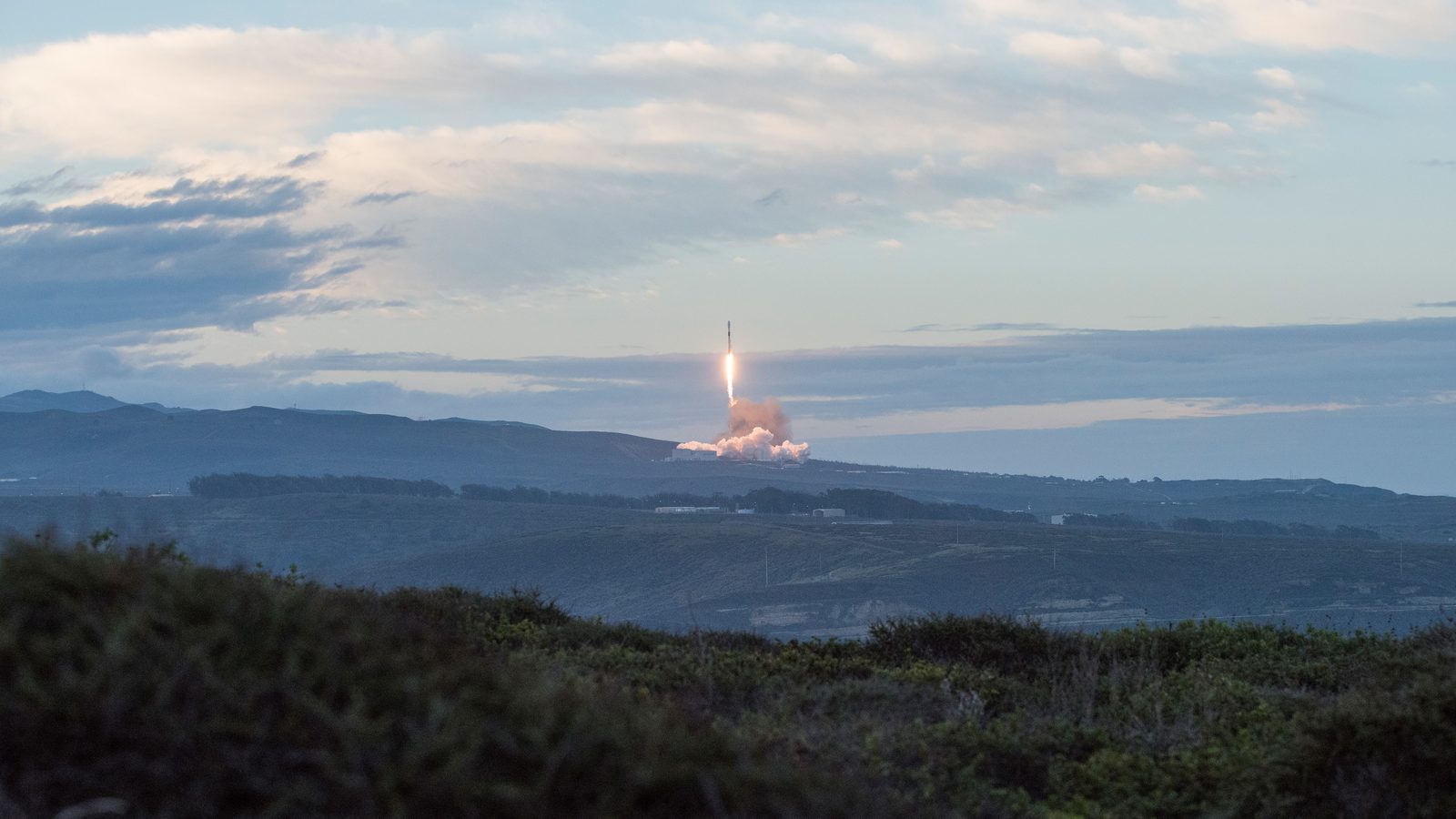
The West Coast’s launch site, near Lompoc on the Central Coast, mostly flies Falcon 9 missions headed for polar and sun-synchronous orbit — Starlink batches and reconnaissance satellites — so the rocket typically arcs south along the coastline rather than straight up. Unlike Kennedy, Vandenberg is an active military base with no public visitor center or paid viewing packages, so every good spot here is a free one:
- Ocean Avenue, Lompoc. One of the closest legal public spots outside the base perimeter, with an open view toward the pads.
- Surf Beach. A classic oceanfront vantage, right along the flight path.
- Ocean Park & Riverbend Park. Both sit along the coastline and river just outside the base, easy to reach without a long hike in.
- Harris Grade Road / the Highway 246 corridor. Inland and elevated, this is the fallback locals use when coastal fog (common here) rolls in and blocks the beach views.
Central Coast fog is the main wildcard, so pick a spot with a fallback and get there early — a few hours ahead for a popular launch, less for a routine one. Santa Barbara, about an hour south, is the easiest base with real hotel options if Lompoc itself is booked out.
Starbase (Boca Chica), Texas
This is the newest and, right now, the most talked-about site: SpaceX’s Starbase on the Gulf coast near Brownsville, where Starship — the largest rocket ever flown — does its test flights. The go-to public spot is Isla Blanca Park on South Padre Island, about five miles across the ship channel from the pad and the closest legal public vantage point to Starbase. It has restrooms, pavilions, and shade for the long wait, but it isn’t a secret: gates often open in the middle of the night for early launches, there’s a small park admission fee, and the lot fills to capacity well before a major test flight. Arrive early, sometimes the night before for the biggest flights.
Starship’s test-flight cadence (and its habit of scrubbing) is higher than any established program, so treat a Starbase trip as a South Padre Island beach vacation with a rocket bonus, not the other way around. You can compare South Padre Island hotels here.
Wallops Island, Virginia
The quietest of the four and, for a family, arguably the easiest: NASA’s Wallops Flight Facility, on Virginia’s Eastern Shore near Chincoteague, launches Rocket Lab Electron missions, Northrop Grumman’s Antares cargo runs to the space station, and a steady stream of smaller NASA sounding rockets. The NASA Wallops Visitor Center runs a dedicated, free Launch Viewing Area a few miles from the pads, with bleacher seating and a live audio feed of range control piped in over speakers — no ticket, no lottery, just show up. It rarely reaches capacity except for the larger Antares launches.
Pair it with a stay on nearby Chincoteague Island (the wild-pony beach town from Misty of Chincoteague) and you’ve got a genuinely relaxed launch-viewing weekend, no crowds fighting over a beach spot.
What to bring, at any site
The common thread across all four sites is distance: five miles across the ship channel at South Padre, several miles behind the causeways in Florida, a fog-prone coastline at Vandenberg. That makes binoculars the one piece of gear worth packing wherever you go. An 8× or 10× pair turns the white sliver on the horizon into a rocket you can actually watch through the countdown; the waterproof Celestron Nature DX 8x42 is my do-everything pick, and our astronomy binoculars guide has options at every price. The rest of the kit is a long outdoor sit: folding chairs, water, sun protection, bug spray, and a battery pack to survive the holds. The full packing list lives in our Cape Canaveral guide.
Which site should you actually plan a trip around?
If this is your first launch and you want the best odds of it actually happening on schedule, Florida wins — the sheer launch frequency means a multi-day trip there will almost certainly catch something. If you want to see the biggest rocket ever built and don’t mind a wilder schedule, Starbase is the one everyone’s talking about. If you’re on the West Coast and don’t want to fly cross-country, Vandenberg puts a real orbital launch within a day’s drive of most of California. And if you want a quiet, free, low-crowd weekend that still ends with a rocket in the sky, Wallops is the sleeper pick.
The bottom line
You don’t have to live near Florida to watch a rocket fly. Four real U.S. sites, coast to coast, put a launch within reach of nearly everyone — pick the one that matches your schedule and your appetite for risk, check the launch date close to your travel window, and always keep a backup day in your pocket. For the deepest, most beginner-friendly option, start with our full Cape Canaveral viewing guide.
Frequently Asked Questions
Where can I watch a rocket launch besides Florida?
Three other active U.S. sites offer public launch viewing: Vandenberg Space Force Base in California (mostly polar-orbit Falcon 9 missions), SpaceX's Starbase near Brownsville, Texas (Starship test flights, best seen from Isla Blanca Park on South Padre Island), and NASA's Wallops Flight Facility in Virginia (Rocket Lab and Antares missions, with a free dedicated viewing area).
Can you watch a SpaceX Starship launch in person?
Yes. Starship launches from Starbase near Boca Chica, Texas, and the best public vantage point is Isla Blanca Park on South Padre Island, about five miles across the ship channel from the pad. There's a small park admission fee, and gates can open in the middle of the night for early launch windows, so arrive early and expect crowds for major test flights.
Is launch viewing at Vandenberg free?
Yes. Vandenberg Space Force Base has no public visitor center or paid viewing packages like Kennedy Space Center does, so every recommended spot (Ocean Avenue, Surf Beach, Ocean Park, Riverbend Park, and the inland Highway 246 corridor) is free public viewing. Coastal fog is common, so it helps to have an inland backup spot.
How do I find out when the next rocket launch is?
Check the schedule close to your travel dates rather than planning around a date far in advance, since launches scrub and slip often. The most reliable sources are the launch site's own schedule (Kennedy Space Center Visitor Complex, for example) and the operators themselves, since SpaceX, Rocket Lab, ULA, and Blue Origin all post their own launch windows.
Which U.S. launch site is best for a first-time viewer?
Florida's Space Coast (Cape Canaveral and Kennedy Space Center) is the easiest first launch to catch, simply because it flies far more often than any other U.S. site, so a multi-day trip there has good odds of a launch actually happening. It also has the most built-out viewing infrastructure, from free riverfront parks to paid closer-access packages.
Rob founded Outer Space Trip and writes its operator cost guides, the Space Tourism Price Index, and the See Space Now gear reviews. He tracks pricing and flight-status announcements from every major operator and tests the stargazing gear we recommend. How we pick and source ▸
How to Watch a Rocket Launch
The best places to watch a launch on Florida’s Space Coast, how to find the schedule, closest hotels, and photo tips.
Read →How to Watch a Rocket Launch in China
Thousands watch Long March rockets from the free beaches at Wenchang, Hainan — about 3 km from the pads, visa-free for most Western passports. The spots, the schedule problem, and what launch night is like.
Read →Kennedy Space Center Visitor Guide
Tickets, the must-see exhibits, bus tours, launch viewing, how many days you need, and where to stay.
Read →Where to See a Real Space Shuttle
All four flown-and-retired orbiters, where each one lives now, and the best NASA visitor centers — with tickets, what you’ll see, and which is worth the trip.
Read →How to Watch a Spacewalk Live
The finale of NASA’s three August 2026 ISS spacewalks streams August 25, finishing a key antenna swap. Where to watch free on NASA+, and what you’ll actually see, hour by hour.
Read →