How to Take a Private Flight to Space in 2026
A private flight to space is bookable in 2026: suborbital from about $150K, a private astronaut mission to the ISS from around $55 million. How to book.
In this guide
- What counts as a “private” flight to space
- The three routes, side by side
- Route 1: A suborbital flight — the realistic first ticket
- Route 2: A private astronaut mission — days in orbit
- Route 3: Near-space by balloon — the gentle option
- What’s coming: the first private stations
- How to book a private flight to space
- The real gate
- While you wait: see space now, for free
A private flight to space is a real, bookable thing in 2026 — you buy the seat yourself, no space agency required. There are three routes, in rising order of price and commitment:
- Suborbital — a few minutes above the boundary of space and straight back down. About $150,000 to $450,000 (Blue Origin) up to $750,000 (Virgin Galactic). A few days of training; a medical screen most healthy adults pass.
- Orbital / a private astronaut mission to the ISS — days circling the Earth. From about $55 million per seat through Axiom Space, with months of training.
- Near-space by balloon — a gentle rise to about 30 km for hours of black-sky views. Roughly $50,000–$125,000, though the operators are between flights.
You book through the operator or a broker with a deposit and a waitlist. The rest of this page is who flies which route, what the money buys, and how to get in line.
The phrase does a lot of quiet work. A private flight to space used to mean one of two things: you were a national astronaut, or you were a head of state watching one launch. Now it means you, a private citizen, can put down a deposit and buy the seat. Hundreds of people already have. This guide is the map of what “private flight to space” points at in 2026, because the same three words cover a five-minute rocket hop and a two-week orbital expedition that costs a hundred times more.
A private flight to space is no longer a metaphor. It’s a line item with a deposit, a waitlist, and a launch date.
What counts as a “private” flight to space
Two things have to be true. First, you cross into space. The widely used mark is the Kármán Line at 100 km (62 miles), though the U.S. recognizes 80 km. Second, you fly as a paying customer rather than a government-assigned crew member. That second part is the shift. The rocket, the training, and the medical screening are run by a commercial operator, and the ticket is yours to buy. What you get for the money splits hard by how far you go.
The three routes, side by side
Prices below update live from our price index, where you can also check each operator’s current flight status — several are paused between program generations right now.
| Route | What you get | Time in space | Price / seat | Flying now? |
|---|---|---|---|---|
| Suborbital rocket | Up past the boundary of space, a few minutes weightless, straight back down | ~3–4 min weightless | ~$150K–$450K – $750K | Paused / returning Feb 2027 |
| Orbital (ISS) | A private astronaut mission — days living aboard the Station | 10–14 days | ~$55M | Flying (Axiom) |
| Orbital free-flight | A whole SpaceX Crew Dragon chartered for a private crew | Multi-day | Whole-capsule charter | Flying (SpaceX) |
| Stratospheric balloon | A slow rise to ~30 km for hours of black-sky views (not technically space) | ~6 hr aloft | $50K – ~$125K | Paused / pre-launch |
Route 1: A suborbital flight — the realistic first ticket
This is the one most people mean when they daydream about a private flight to space, and it’s the only tier priced within reach of a serious saver rather than a fortune. You launch, cross the boundary of space, float free for a few minutes with the Earth curving below you, and parachute or glide home. Total elapsed time is minutes, not days, and training is measured in days.
Two operators define the tier. Blue Origin’s New Shepard is a vertically launched capsule with the largest windows flown, crossing the 100 km line on an ~11-minute flight. Virgin Galactic’s spaceplane is dropped from a carrier aircraft and glides back to a runway over a ~90-minute experience, reaching roughly 80–90 km. Both are between program generations as of mid-2026, so no seat is open to book this minute, though Virgin Galactic has reopened sales ahead of Delta-class flights it targets for February 2027. Our suborbital flight guide compares the two rides in detail, and the Blue Origin and Virgin Galactic cost pages break down each ticket.
Route 2: A private astronaut mission — days in orbit
When the news talks about a “private astronaut mission to the ISS,” this is the route. It is a different trip in kind, not degree: you reach roughly 17,500 mph, circle the Earth every 90 minutes, and live aboard the International Space Station for one to two weeks as a temporary crew member. You train for months, not days, and the seat runs about $55 million.
Axiom Space is the operator that has flown this, repeatedly: four private crews (Ax-1 through Ax-4) since 2022, launched on a SpaceX Crew Dragon, with a fifth mission (Ax-5) contracted with NASA for early 2027. The fare is a turnkey program: transport up and back, several months of training at NASA and SpaceX facilities, life support, mission support, and the stay itself. Our Axiom Space cost guide walks through exactly what the money covers.
SpaceX flies the other orbital variant: a whole Crew Dragon chartered for a private crew on a free flight that never docks with the Station. Inspiration4 (2021) put the first all-civilian crew into orbit, the Polaris program ran the first commercial spacewalk (2024), and Fram2 (2025) flew the first crewed mission over Earth’s poles. These are whole-capsule charters organized around a mission, not per-seat tickets — the SpaceX cost guide explains how that works.
Route 3: Near-space by balloon — the gentle option
A stratospheric balloon doesn’t reach space by any definition; it tops out around 30 km, a third of the way to the Kármán Line. But it delivers the black sky, the visible curvature, and hours instead of minutes, with no rocket forces and a medical bar close to boarding an airliner. World View and Space Perspective are the U.S. names, priced at $50,000 and $125,000, both currently between flights as they work toward first crewed service. It’s the accessible-body, patient-timeline entry to the view, if not to space itself.
What’s coming: the first private stations
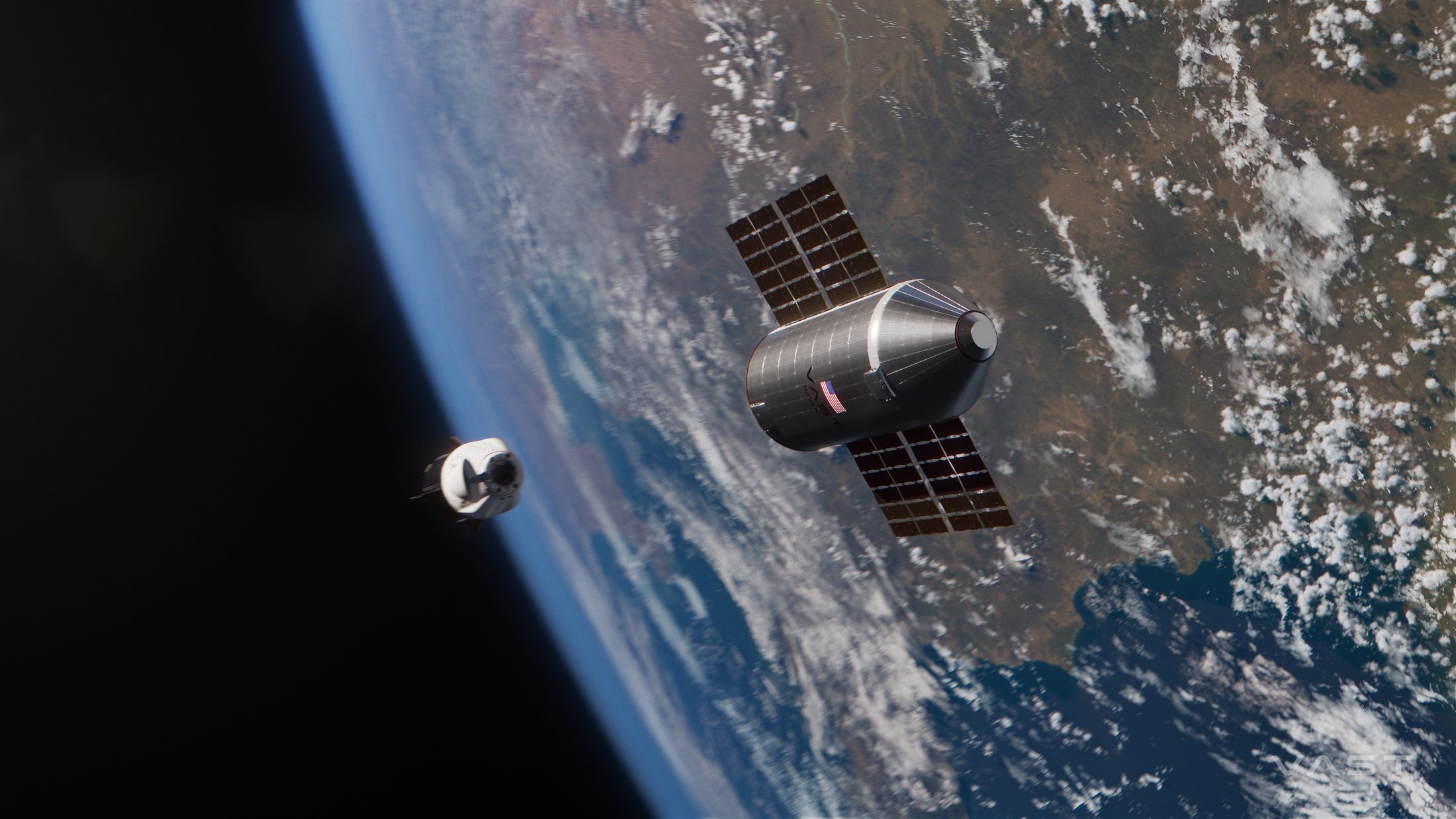
The ceiling on orbital private flights today is destinations, not rockets. The ISS can host only a handful of private visitors and is nearing the end of its life. That’s why the developments worth watching are commercial space stations: Vast is building Haven-1, aiming to be the first free-flying commercial station, and Axiom is assembling modules meant to attach to the ISS and later detach as an independent station. When dedicated destinations come online, the orbital tier gains room for more crews and more trips a year — the path by which an eight-figure fare eventually becomes a seven-figure one. Our space hotels guide tracks who’s building what.
How to book a private flight to space
The mechanics are more ordinary than the destination. For every route it’s the same shape: reach the operator or a broker, put down a deposit, clear a medical screening, and join a waitlist for a training-and-flight slot.
- Suborbital: contact Blue Origin or Virgin Galactic directly. Expect a reservation deposit and a waitlist while both operators bring new vehicles online.
- Orbital: Axiom Space is the front door for an ISS mission; Space Adventures is the long-running broker for orbital seats. Both quote privately.
- Balloon: World View and Space Perspective take reservations directly, with the smallest deposit of any route.
Our step-by-step booking guide covers deposits, refunds, and what the screening involves. And before you commit to any of it, our read on whether space tourism is safe is worth the ten minutes.
The real gate
Money is the obvious barrier, but it isn’t the only one. Suborbital asks for a healthy body that can handle ~5G and a few days of your time. Orbital asks for months of your life in training and an eight-figure bank balance. Neither asks you to be a career astronaut: people from their 20s to their 90s have flown suborbital, and Axiom crews are entrepreneurs, researchers, and government-sponsored fliers, not test pilots. Use our can I go to space? checker to see which tier you could realistically clear today.
While you wait: see space now, for free
For almost everyone, the deposit is years away — but the view isn’t. The International Space Station where those private crews live is one of the brightest things in the night sky, visible with your own eyes if you know when to look up. Our best astronomy apps guide covers the free trackers that ping you minutes before it crosses overhead, and if that first pass hooks you the way it hooks most people, our beginner telescope guide is the natural next step, Saturn’s rings on night one for a few hundred dollars, not a few million.
Frequently Asked Questions
Can a regular person take a private flight to space?
Yes. In 2026 a private citizen can buy a seat without being a government astronaut. A suborbital flight (a few minutes above the boundary of space) starts around $150,000, and a private astronaut mission to the International Space Station runs about $55 million per seat through Axiom Space. You book through the operator or a broker with a deposit and a waitlist.
How much does a private flight to space cost?
It depends on the route. A suborbital seat is roughly $150,000 to $750,000 depending on operator. An orbital private astronaut mission to the ISS is about $55 million per seat. A stratospheric balloon flight to near-space (not technically space) runs roughly $50,000 to $125,000. The gap between suborbital and orbital is about a hundredfold because reaching orbit takes vastly more energy and a multi-day stay in space.
What is a private astronaut mission?
A private astronaut mission is an orbital flight where paying private citizens travel to and live aboard the International Space Station as temporary crew, rather than government-assigned astronauts. Axiom Space has flown four such missions since 2022 (Ax-1 through Ax-4) using a SpaceX Crew Dragon, with a fifth contracted for early 2027. Crews train for several months before flying.
Can you book a private flight to space right now?
You can reserve a seat and join a waitlist, but as of mid-2026 the two suborbital operators are between vehicle generations, so no immediate launch date is open — Virgin Galactic has reopened sales ahead of flights it targets for February 2027. Orbital missions through Axiom Space are flying and bookable by quote, and balloon operators take reservations while working toward first crewed service.
Do you have to be an astronaut to fly to space privately?
No. Private flights are sold to citizens who pass a medical screening and complete the required training — a few days for suborbital, several months for an orbital mission. Suborbital passengers have ranged from their 20s to their 90s, and orbital private crews are typically entrepreneurs, researchers, and government-sponsored fliers rather than career astronauts.
Rob founded Outer Space Trip and writes its operator cost guides, the Space Tourism Price Index, and the See Space Now gear guides. He has observed since a high-school observatory in the 1990s and still runs the 10-inch Meade LX200 he bought after college. How we pick and source ▸
Suborbital Spaceflight: Cost, Altitude & Who’s Flying
New Shepard vs Virgin Galactic Delta — how high you go, what a seat costs, and whether you can book one right now.
Read →How Much Does an Axiom Space Mission Cost?
What a ~$55M private orbital mission to the ISS covers.
Read →The Space Tourism Price Index
Every operator’s current and historical pricing in one reference table.
Read →Vast Haven-1: The First Commercial Space Station
What Vast’s Haven-1 is, when it launches, who flies Vast-1, and why the first free-flying private station matters as the ISS retires.
Read →