Halo Space Cost 2026: ~$165,000 for a Balloon Ride to 35 km
Halo Space lists a seat on its Aurora balloon capsule at 150,000 euros, about $165,000, for a 4 to 6 hour flight to 35 km. No deposit, no bookings yet, first crewed test 2027, commercial flights 2029.
In this guide
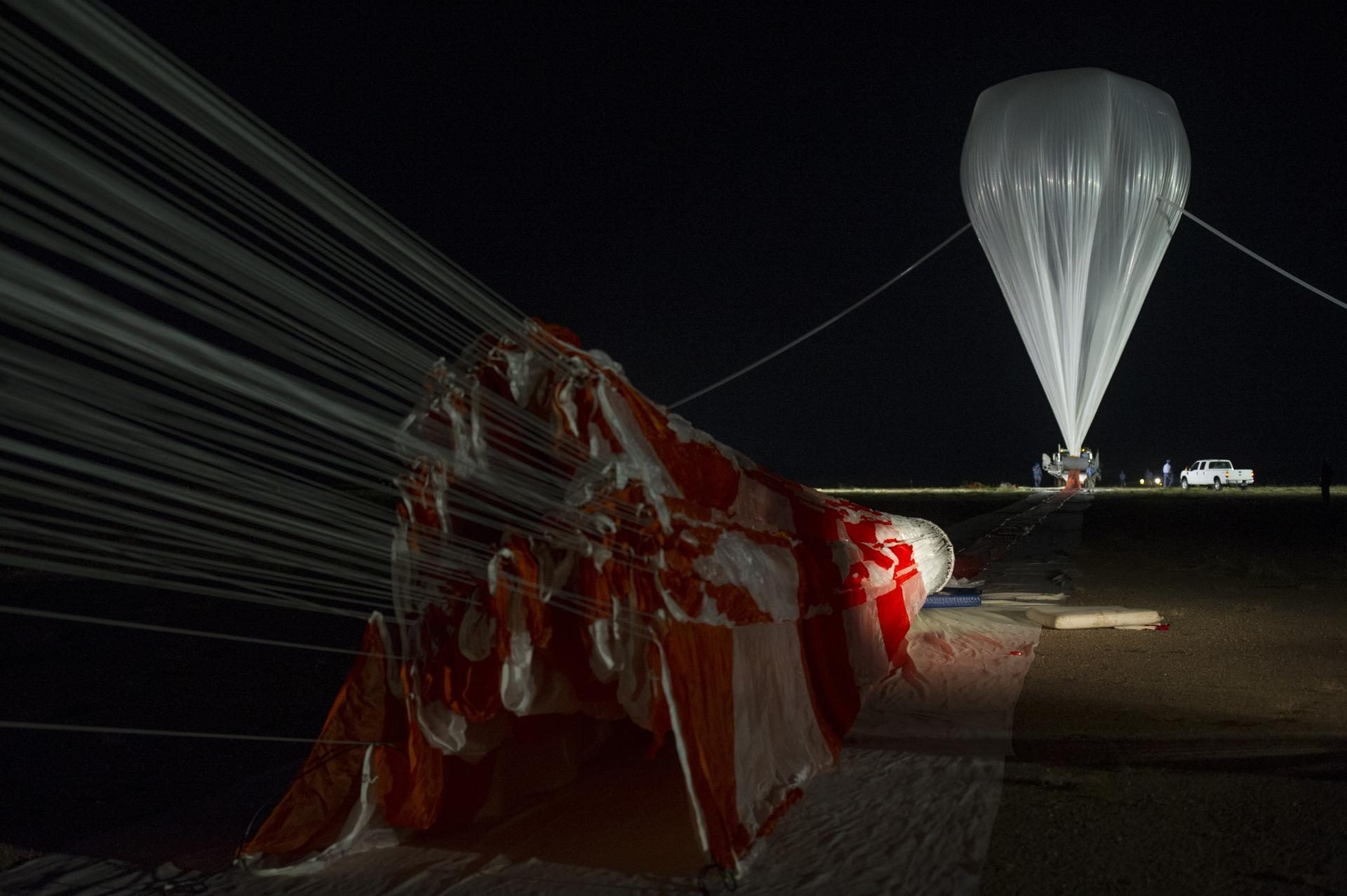
Picture a Saudi desert at five in the morning, still dark, and a helium balloon longer than a football field slowly standing up over a capsule the size of a small room. You climb in with seven strangers and a pilot. There is no countdown. The balloon simply lets go of the ground at about 20 km/h, roughly the pace of a bicycle, and two hours later the sky outside the window has gone black in the middle of the day. That is the ride Halo Space is selling, and it is asking about $165,000 a seat for it.
Halo Space is a Madrid-based startup, with a second office in Sarasota, Florida, and its Aurora capsule is the fourth stratospheric-balloon product on our price board. Like the others it never reaches space by the usual definition. The Kármán line is 100 km up; Aurora tops out around 35 km (about 115,000 feet). What it offers instead is hours at an altitude where the curve of the Earth is obvious and the atmosphere is a thin glowing rim beneath you, with no rocket, no g-forces, and nothing to brace for.
Nobody has flown in Aurora yet. The price is real; the flight, so far, is a plan.
How much does a Halo Space ticket cost?
Halo Space’s own FAQ puts the fare at 150,000 euros per seat, which the company itself converts to about $165,000. That is the number we track; it replaces the $164,000 figure quoted in the press when the Aurora design was unveiled in April 2024, and the difference is exchange rate, not a price change.
Two things make Halo unusual among the operators we follow. First, no deposit is required: the company runs a free waitlist and has said it will not take money until bookings formally open. Second, you cannot book at all right now. The waitlist is the whole funnel. Everyone else in this tier either took deposits before they had flown anyone (Space Perspective, World View) or is taking them now (Zephalto). Halo’s approach costs it nothing to promise and costs you nothing to join, which is the right way round for a company that has not yet carried a passenger.
| Operator | Vehicle | Altitude | Duration | Price / seat |
|---|---|---|---|---|
| World View | Explorer balloon capsule | ~30 km | 6–8 hours | $50K |
| Space Perspective | Neptune balloon capsule | ~30 km | ~6 hours | ~$125K |
| Halo Space | Aurora balloon capsule | ~35 km | 4–6 hours | ~$165K |
| Zephalto | Céleste balloon capsule | ~25 km | ~6 hours | ~$195K |
| Virgin Galactic | Delta-class spaceplane | ~90 km | ~90 min | $750K |
None of the four balloon companies has flown a paying passenger. World View and Space Perspective are paused; Halo and Zephalto are pre-launch. The space tourism price index carries the current status of every operator, checked weekly.
What the ticket includes
Halo publishes more about the hardware than most pre-launch operators do, so this list comes from the company’s own technology and FAQ pages rather than from press coverage:
- Eight passengers and one pilot in a pressurized capsule 4.75 m across and 3.5 m tall, about 30 square feet of floor to move around on once you are above 15 km.
- Nine windows totaling 1.9 square meters of glass, which Halo describes as fifteen times the area of an airliner window. Swivel seats so everyone gets the view.
- A bathroom, food and drinks, and Wi-Fi. The cabin is held between 18 and 24 °C. The interior is by Frank Stephenson, the designer behind the McLaren P1 and the Ferrari FXX, which tells you who Halo thinks its customer is.
- Four to six hours in the air, weather depending, with a seven-day flight window around your date in case the launch has to slip.
- A land touchdown under a steerable parachute. The balloon separates at about 8 km and the capsule flies the last half hour under a parafoil to a desert landing. No ocean, no recovery ship.
- Not included: the pre-flight ground experience, which Halo sells separately, and anything resembling training. The company’s stated requirements are that you are 18 or over, in good health, able to move around the cabin unassisted, and fit for a normal four-to-six-hour airline flight. There is no fixed weight limit; cases are reviewed individually. No children for now.
The flight, hour by hour
Halo lays out a sample timeline on its site, and it is worth walking through because it is the clearest picture of what a balloon flight actually feels like compared with the eleven minutes you get on a rocket.
- 5:00 am, lift-off. Still dark. The balloon is a 140-meter column of helium at launch; it will swell to 130 meters across by the time it reaches peak altitude and the gas has expanded.
- 6:00 am, 15 km. Already above every airliner. The seatbelt sign goes off and you can get up. The sky is deep blue and darkening.
- 7:20 am, 35 km. Peak altitude, with about 99 percent of the atmosphere below you. The sky is black, the horizon is curved, and the Sun is rising over the edge of the planet. Halo budgets roughly an hour and a half here.
- 9:00 am, descent begins. The pilot vents helium through a valve to control the rate of fall; this is the only “propulsion” the vehicle has.
- 10:30 am, 8 km. The capsule separates from the balloon and the steerable parachute opens.
- 11:00 am, touchdown. Back on the desert, six hours after you left it.
You feel 1 g the whole way. There is no weightlessness in a balloon flight, because the capsule is never in free fall; Halo says so plainly on its own FAQ. If floating is the point, a rocket is the only option. If the view is the point, this is six hours of it instead of four minutes.
Has Halo Space actually flown?
Uncrewed, yes. Crewed, not yet. The company’s own test log, as of our last read of it, runs:
- Test Flight 01, Hyderabad, India, December 2022. A capsule prototype rode a balloon to altitude with the Tata Institute of Fundamental Research; the in-line safety parachute deployed at 37 km and the capsule came home with 12 GB of flight data.
- Test Flights 02 to 05, Mojave Desert, California, 2023. Helicopter drops from about 2,600 m to test the parachute deployment, steering, g-load reduction, release and landing precision. None of these went anywhere near the stratosphere; they were landing tests.
- Test Flight 06, Layla Desert, Saudi Arabia, 2024. Scrubbed. The crane holding the capsule failed to lock before launch. Nobody was hurt and the capsule was undamaged; Halo says the fault is fixed.
So the honest count is one high-altitude flight, four landing drops, and one scrub, out of what Halo says will be more than twenty test flights across the program. The next series, Flights 07 to 10, is scheduled for 2026 into 2027 in Saudi Arabia and the United States, with the second prototype flying uncrewed later in 2026. The first crewed test flight is targeted for late 2027, “subject to technical readiness and regulatory approvals,” and commercial flights for 2029.
Those dates have moved before. When the Aurora design was unveiled in 2024, the company talked about commercial service in 2026. Treat 2029 as the current target, not a promise, and expect the Zephalto and Space Perspective pattern of a slip or two along the way.
Where it flies from, and who is regulating it
Halo’s first base is in Saudi Arabia, where the Communications, Space and Technology Commission authorized its sixth test flight. Australia, Spain and the United States are the stated later bases, and the company is already working with Australia’s CASA and with the FAA toward a Part 450 launch license, the same license class suborbital rocket operators hold, for passenger flights from the US. Mission planning and ground control are contracted to GMV, a Spanish aerospace and defense firm.
That regulatory footprint is more than most pre-launch balloon startups can show, and it matters: a company that is already in the FAA licensing queue is further along than one with a rendering and a waitlist. It is not the same as a license in hand.
Halo Space vs Space Perspective and Zephalto
If you are weighing a balloon seat, the three names are closer than the marketing suggests:
- Altitude: Halo targets 35 km, Space Perspective 30 km, Zephalto 25 km. Earth’s curvature is visible from about 25 km on, so all three deliver the view; Halo’s is a little blacker.
- Landing: Halo and Zephalto come down on land under a parachute. Space Perspective’s Neptune was designed for an ocean splashdown with ship recovery.
- Price: Halo at $165,000 sits between Space Perspective’s $125,000 and Zephalto’s $195,000. Only Halo asks for nothing up front.
- Timeline: Zephalto has talked about first flights in 2026, Space Perspective is rebooting under Eos X Space after a collapse, and Halo says 2029. The most conservative date on the board is also the most believable one.
For the full cross-operator picture, including the rocket operators, see our guide to space tourism companies and the full cost breakdown.
While you wait: the same black sky, this year
The thing Halo is selling for $165,000 is a sky with no air in the way. You can get most of that feeling on the ground for the price of a tank of fuel: a moonless night at a dark-sky site is the closest most of us will come to the view out of Aurora’s windows, and a pair of astronomy binoculars is the cheapest way to start looking up while the waitlist does its thing.
Frequently Asked Questions
How much does a Halo Space flight cost?
Halo Space's own FAQ lists the fare at 150,000 euros per seat, which the company converts to about $165,000. The 2024 press figure of $164,000 was the same euro price at an older exchange rate. No deposit is required and bookings are not yet open; the company runs a free waitlist.
Does Halo Space go to space?
No, not by the usual definition. The Aurora capsule is designed to reach about 35 km, roughly 115,000 feet, which is in the stratosphere. The Kármán line, the conventional boundary of space, is 100 km. Halo itself calls the experience 'near space' and 'the edge of space.' You see a black sky and the curve of the Earth, but you never leave the stratosphere and there is no weightlessness.
When will Halo Space start flying passengers?
The company's current targets are a first crewed test flight in late 2027 and commercial flights in 2029, both subject to technical readiness and regulatory approval. Halo has completed one high-altitude uncrewed flight (India, December 2022) and four parachute landing drops (Mojave, 2023); a 2024 test in Saudi Arabia was scrubbed by a crane fault. The next uncrewed series is scheduled for 2026 into 2027.
How long is a Halo Space flight and what is included?
Four to six hours depending on weather, with a seven-day flight window around your date. The pressurized Aurora capsule carries eight passengers and one pilot, with nine large windows, swivel seats, a bathroom, food and drinks, and Wi-Fi. The capsule lands on land under a steerable parachute. The pre-flight ground experience is sold separately.
Who can fly with Halo Space?
Passengers must be at least 18, in good health, able to move around the capsule unassisted, and fit enough for a normal four-to-six-hour airline flight. There is no fixed weight limit; cases are reviewed individually. Children are not accepted for now. No astronaut-style training is required.
Rob founded Outer Space Trip and writes its operator cost guides, the Space Tourism Price Index, and the See Space Now gear guides. He has observed since a high-school observatory in the 1990s and still runs the 10-inch Meade LX200 he bought after college. How we pick and source ▸
How Much Does a Space Perspective Flight Cost?
Neptune balloon flights to 30 km — what the ticket includes, the current status, and how it compares to rocket operators.
Read →Space Tourism Companies in 2026
Blue Origin, Virgin Galactic, SpaceX, Axiom and Space Adventures compared.
Read →The Space Tourism Price Index
Every operator’s current and historical pricing in one reference table.
Read →See Space Now: Stargazing & Telescopes
The hub for amateur astronomy — how to stargaze tonight, which telescope to buy, and the gear worth the money.
Read →