Space Center Houston: Tickets, Tram Tours & How to Get There
How to visit Space Center Houston, NASA Johnson's visitor center: ticket prices, the tram tours to Historic Mission Control and the Saturn V, how long to stay, and getting there from downtown.

In this guide
- What Space Center Houston actually is
- Independence Plaza: inside a shuttle and its 747
- The NASA tram tours: Rocket Park, astronaut training and Mission Control
- Tickets: what they cost and where to buy
- Getting there from downtown Houston
- How long to spend, and when to go
- Where to stay
- Houston or Kennedy?
“Houston, we’ve had a problem” was said to a real room, and you can sit in it. Space Center Houston is the official visitor center of NASA’s Johnson Space Center, home of Mission Control since the Gemini flights. A general ticket gets you inside a space shuttle mounted on the jumbo jet that carried the fleet, a tram ride onto the working NASA campus, and a real Saturn V. Add one upgrade and you are sitting behind the consoles that talked Apollo 11 down to the Moon. Here is what to book, what it costs, and how to get there without a car.
Outer Space Trip may earn a commission from some booking links on this page; your price is the same. Ticket prices and tram schedules change, so confirm on the official Space Center Houston site before you go.
What Space Center Houston actually is
Two places share the address, and the difference matters for planning. Johnson Space Center is NASA’s working center, where astronauts train and flight controllers run the International Space Station. Space Center Houston is the visitor center and museum at its front door, at 1601 E NASA Parkway, about 25 miles southeast of downtown Houston. The museum is where you buy a ticket, see the galleries and board the trams; the trams are how you get onto the NASA side of the fence.
Inside the museum building, the Starship Gallery holds flown spacecraft, including the Apollo 17 command module, along with Moon rocks and a Skylab trainer. There is a spacesuit collection with the ejection suit John Young wore on the first shuttle flight in 1981, an International Space Station gallery, and a theater running an immersive Moon-landing film narrated by Tom Hanks. Good, but not why you came. The two things that make this trip are outside.
Independence Plaza: inside a shuttle and its 747
Out front, the shuttle replica Independence sits on top of NASA 905, the original Shuttle Carrier Aircraft. The orbiter is a high-fidelity replica; the plane is the real thing. NASA 905 was the first of the two converted 747s, and it carried shuttles 223 times over 42 years. Space Center Houston calls the pairing the world’s only shuttle replica mounted on a carrier aircraft, and the only place the public can walk inside both.
A tower with stairs and elevators takes you to every level. In the shuttle you see the flight deck, the cramped mid-deck where crews ate and slept, and the payload bay; then you cross into the 747 itself. It is included in general admission, and it is the one exhibit I’d head for before the lines build. If shuttles are your thing, our guide to where to see a real space shuttle covers the four flown orbiters and where each one lives.
The NASA tram tours: Rocket Park, astronaut training and Mission Control
The open-air tram is the reason to give this place a full day. There are four routes, and only one costs extra:
- George W.S. Abbey Rocket Park (included). The Saturn V here is one of only three left on display, and NASA says it is the only one built entirely from flight-certified hardware. It lies on its side inside its own protective building, restored between 2005 and 2007, and at 363 feet it takes a long walk to get from the engine bells to the tip. First come, first served.
- Astronaut Training Facility (included). A 60–90 minute stop at the building where NASA astronauts train for current missions. Boarding passes are handed out on-site at Guest Services, first come, first served.
- NASA Campus Tour (included). A guided 60–90 minute loop past astronaut facilities, spacecraft and research labs, with the option of a Rocket Park stop.
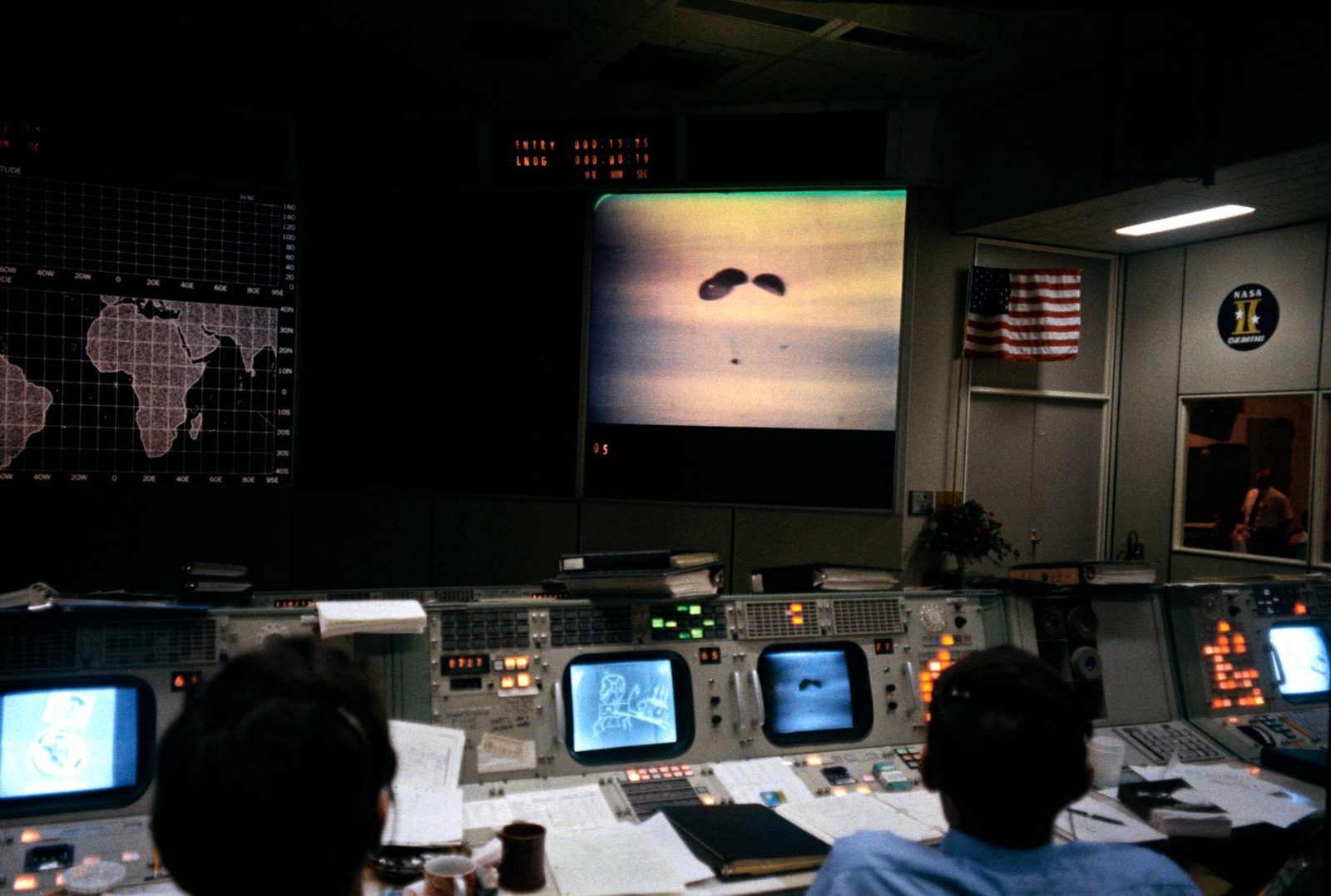
- Historic Mission Control (paid add-on). The Christopher C. Kraft Mission Control room, a National Historic Landmark since 1985, restored in 2019 to how it looked during Apollo, down to the recreated 1960s carpet. The consoles here monitored nine Gemini missions, every Apollo Moon mission and 21 shuttle missions. Sold only as an add-on to general admission, booked in advance for a timed slot, 60–90 minutes, and bags are not allowed inside.
My advice: book Mission Control when you book your ticket. Space Center Houston says tram tours typically sell out far in advance, and it is the one room on the property you can’t see anywhere else.
Tickets: what they cost and where to buy
On September 26, 2026, Space Center Houston listed adult general admission at $29.95–$39.95 online and $34.95–$44.95 at the box office, depending on the date. Kids 4–11 were $24.95–$34.95 online, seniors 65 and up $27.95–$37.95 online, and children 3 and under get in free. Parking is $10. General admission includes the galleries, Independence Plaza and the three included tram routes; Historic Mission Control is extra. Buying online saves $5 a head, so there is no reason to pay at the gate.
You can buy tickets on the official Space Center Houston site, or book through GetYourGuide. The Space Center Houston admission ticket (from ~$30, rated 4.5 across 3,880 reviews) is the straight general-admission pass, handy if you are already building a trip there. Pick your date:
If Mission Control is the point of the trip, the Historic Mission Control tram tour plus general admission (from ~$120, rated 4.8 across 174 reviews) bundles both in one booking. It does not include transport, and it costs more than buying the two pieces directly, so check the official site first; the bundle is the fallback when you want both locked in at once.
Prices and review counts as listed on GetYourGuide on September 26, 2026. They move with the date and group size.
Getting there from downtown Houston
With a car, it is an easy drive, and parking is $10. Without one, this is where a bundle earns its price. Houston is spread out, and the Space Center sits well outside the core. Three GetYourGuide options pair admission with a shuttle from downtown:
- NASA Space Center ticket and round-trip transport (from ~$80, 4.7 across 305 reviews, about 6.5 hours). General admission plus a shuttle from a downtown pickup point. The one I’d book for most visitors without a car.
- NASA ticket, transport and downtown tunnel tour (from ~$125, 4.7 across 71 reviews, about 8 hours). The same shuttle and ticket, plus a walking tour of downtown’s underground tunnel system before you leave. You check in at the Bank of America Tower and get about five hours at the Space Center.
- City tour and NASA Space Center ticket (from ~$99, 4.4 across 525 reviews, about 7 hours). A short sightseeing loop of Houston first, then the Space Center. Good if this is your only day in the city.
None of these three includes Historic Mission Control, so if you want it, add it on-site at Guest Services or ask the operator before you book. More options, including guided and multi-day passes, are on GetYourGuide’s Space Center Houston listings.
How long to spend, and when to go
Space Center Houston’s own planning guide sketches three visits: a two-hour quick pass, a four-hour half day that only takes the Rocket Park tram, and a full day of seven hours or more that covers every tram. I’d plan the full day. The trams are the best part, each one runs 60 to 90 minutes, and squeezing them into an afternoon means skipping the galleries or Independence Plaza.
Hours vary by date (on September 26, 2026, the posted hours were 10 a.m. to 6 p.m.), so check the calendar before you set an alarm. The center says its busiest times are weekends, holidays and summer, so a weekday outside school holidays is the easy win. Arrive at opening and pick up your Astronaut Training Facility boarding pass first, since those go first come, first served. The trams are open-air, so bring sun protection on a hot day. Large backpacks, luggage, coolers, drones and large camera rigs are not allowed in, and bags can’t go into Historic Mission Control.
Where to stay
If the Space Center is your main reason for the trip, stay in the Clear Lake area around NASA Parkway and Webster; you will be a short drive from the gate and can be there at opening. If you’re in town for other things and don’t have a car, stay downtown and use one of the shuttle bundles above, since they all pick up there. You can compare Houston hotels here.
Staying after dark? The George Observatory at Brazos Bend State Park, about an hour southwest of the city, opens a 36-inch telescope to the public on Saturday nights; it and the free observatory nights around the state are in our Texas observatory guide.
Houston or Kennedy?
If you can only do one, the answer depends on what you want. Kennedy Space Center in Florida has the flown orbiter Atlantis and the chance of watching a live launch, and it is the bigger day; our Kennedy Space Center guide covers it. Houston is where the missions were flown from. Kennedy is where rockets leave; Houston is the room that brought the crews home. For the price of a general ticket plus the Mission Control add-on, I think it is the best-value space day in the country.
Frequently Asked Questions
How much are Space Center Houston tickets?
On September 26, 2026, adult general admission was $29.95 to $39.95 online and $34.95 to $44.95 at the box office, depending on the date. Kids 4 to 11 were $24.95 to $34.95 online, seniors 65 and up $27.95 to $37.95 online, and children 3 and under are free. Parking is $10. The Historic Mission Control tram tour is a paid add-on. Confirm current prices on spacecenter.org before you go.
Is the Mission Control tour included in admission?
No. General admission includes three NASA tram tours: Rocket Park with the Saturn V, the Astronaut Training Facility and the NASA Campus Tour. The Historic Mission Control tram tour is sold only as an add-on to general admission, in timed slots booked in advance, and it can sell out. Bags are not allowed inside Historic Mission Control.
Can you go inside the space shuttle at Space Center Houston?
Yes. At Independence Plaza you can walk through the shuttle replica Independence, including the flight deck, mid-deck and payload bay, and then through NASA 905, the real Boeing 747 Shuttle Carrier Aircraft it sits on. It is included in general admission, with stairs and elevators to every level.
How long do you need at Space Center Houston?
Plan on a full day of seven hours or more if you want every tram tour. The center's own planning guide suggests about four hours for a half day that includes only the Rocket Park tram, and two hours for a quick pass through the main exhibits.
How do you get to Space Center Houston from downtown without a car?
Space Center Houston is about 25 miles southeast of downtown. The simplest option without a car is a ticket-and-transport bundle: several operators on GetYourGuide run a shuttle from a downtown pickup point with general admission included, from about $80 as of September 26, 2026. Some add a downtown tunnel tour or a city sightseeing loop.
Is the Saturn V at Space Center Houston real?
Yes. The Saturn V at George W.S. Abbey Rocket Park is one of only three on display in the world, and NASA says it is the only one made entirely of flight-certified hardware. It lies on its side inside a protective building and is reached by the included NASA tram tour.
Rob founded Outer Space Trip and writes its operator cost guides, the Space Tourism Price Index, and the See Space Now gear guides. He has observed since a high-school observatory in the 1990s and still runs the 10-inch Meade LX200 he bought after college. How we pick and source ▸
Where to See a Real Space Shuttle
All four flown-and-retired orbiters, where each one lives now, and the best NASA visitor centers — with tickets, what you’ll see, and which is worth the trip.
Read →Kennedy Space Center Visitor Guide
Tickets, the must-see exhibits, bus tours, launch viewing, how many days you need, and where to stay.
Read →Space Camp: Is It Worth It?
Adult, kids and family Space Camp at the U.S. Space & Rocket Center — programs, prices, what you do, and whether it delivers.
Read →