How Much Does It Cost to Go to Space?
Going to space costs anywhere from about $150,000 for a suborbital flight to the edge of space to $55 million or more for an orbital stay aboard the ISS. What you pay comes down to one thing: whether you want a few minutes at the boundary of space, or days actually circling the planet.
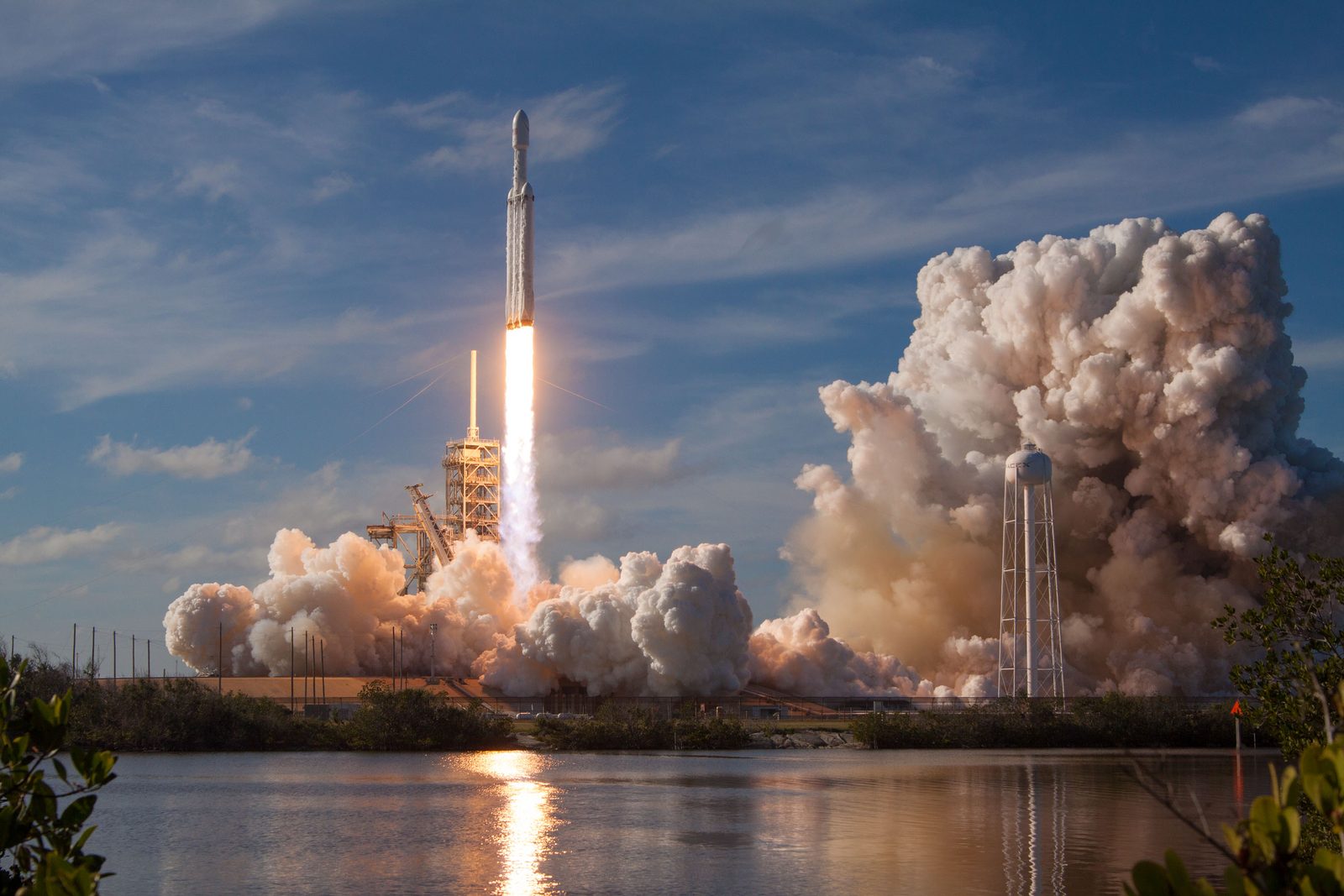
How much does it cost to go to space in 2026? The honest answer is that it depends entirely on where you want to go and how long you want to stay. A few minutes above the Kármán line can be bought for roughly the price of a luxury car; a week orbiting the Earth costs about as much as a private jet. This guide walks through every tier of space travel available today — suborbital, orbital, lunar and Mars — with real 2026 pricing, what each number actually includes, the hidden costs nobody advertises, and where prices are heading next.
Use the interactive calculator above to estimate a specific trip, or read on for the full breakdown. We update these figures as operators announce new pricing.
2026 space tourism pricing at a glance
The table below summarizes the operators that fly or have recently flown private citizens, plus the near-space balloon ventures. Prices are per seat unless noted, and reflect publicly reported figures and credible industry estimates in 2026 USD.
| Operator | Tier | Price / seat | Time in flight | Training | Launch site |
|---|---|---|---|---|---|
| Blue Origin (New Shepard) | Suborbital | ~$150K–$450K* | ~11 min | 1 day | West Texas, USA |
| Virgin Galactic | Suborbital | $750K | ~90 min (flight) | Multi-day | Spaceport America, NM |
| World View (balloon) | Stratospheric | $50K | 6–8 hours | Minimal | Grand Canyon, AZ |
| Space Perspective (balloon) | Stratospheric | ~$125K | ~6 hours | Minimal | Florida (ship-based) |
| Axiom Space | Orbital / ISS | ~$55M | 10–14 days | ~4–6 months | Kennedy Space Center, FL |
| SpaceX (charter) | Orbital free-flight | Whole-capsule charter | 3–5 days | ~5–6 months | Kennedy Space Center, FL |
| Vast Space | Orbital / commercial station | By quote | ~14 days | ~4–6 months | Kennedy Space Center, FL |
| Space Adventures | Orbital (broker) | Tens of $M | ~10 days | Months | Varies (Soyuz) |
*Blue Origin does not publish a fixed retail fare; its first seat sold at a charity auction for $28 million in 2021, and routine seats are widely reported in the low-to-mid six figures. Figures above are estimates for planning, not quotes.
Suborbital flights: the entry point
Suborbital space tourism is the most accessible tier of the industry today. A suborbital flight reaches altitudes above the Kármán line (62 miles / 100 km) — the internationally recognized edge of space — but doesn’t achieve the speed needed for orbit. You experience a few minutes of weightlessness, views of the curvature of the Earth, and then return to the ground.
Blue Origin’s New Shepard has been the standard-bearer here since its first crewed flight in 2021. Tickets have historically ranged from $200,000 to $450,000, though pricing has adjusted as competition intensified. Virgin Galactic operates on a similar model but now prices higher, around $750,000 per seat, offering a distinctive winged-aircraft experience.
The suborbital experience lasts about 10–12 minutes in total, with 3–4 minutes of zero-gravity. Training is typically completed in a single day, making it accessible to a wide range of health profiles. Most operators accept passengers from their mid-teens to their 90s — William Shatner flew at 90.
Orbital missions: the premium experience
Orbital flights represent a fundamentally different category: you’re traveling fast enough (~17,500 mph) to circle the Earth continuously, experiencing sustained weightlessness for days at a time. These missions cost 100× to 300× more than suborbital tickets — but deliver proportionally more experience.
Axiom Space has operated the most commercial ISS missions to date, with seats running approximately $55 million per person for a 10–14 day mission. That covers SpaceX Dragon transportation, time aboard the International Space Station, pre-mission training at NASA Johnson Space Center, and full mission support.
Inspiration4 (2021) — the first all-civilian orbital mission — set a benchmark. SpaceX’s Crew Dragon carried four civilians on a 3-day free-flight mission with no professional astronauts. Ticket costs were not disclosed publicly, but industry estimates placed the total mission cost north of $200 million.
What’s included in the price?
Space tourism pricing is all-inclusive in ways most luxury travel isn’t. A typical mission package covers:
- Pre-mission medical screening and health certification
- Training (1 day for suborbital; 3–6 months for orbital)
- All flight hardware, propellant, and launch operations
- Life support, spacesuits, and safety equipment
- Mission control, tracking, and crew coordination
- Recovery operations and post-flight debrief
What’s not included: transportation to the launch site, accommodation during training, and personal memorabilia or custom flight gear (though operators typically provide commemorative items). Extended mission durations or add-on experiences like spacewalks cost extra — often adding 35%+ to the base price.
Why prices are falling — and how fast
The economics driving space tourism prices down are structural, not temporary. Three forces are compounding:
Reusability. SpaceX’s Falcon 9 boosters and Dragon capsules fly dozens of times each. New Shepard’s booster is recovered and reflown. As hardware amortizes over more flights, per-seat costs drop. Starship promises an order-of-magnitude reduction: designed for same-day turnaround on a fully reusable system.
Competition. Every operator entering the market creates downward pricing pressure. Blue Origin is planning orbital ventures. Virgin Galactic is expanding. New entrants are developing next-generation vehicles. Supply will grow faster than demand for the next several years.
Manufacturing scale. Rocket production is moving from craft manufacturing to industrial production. More vehicles mean lower per-unit costs across the entire supply chain.
The trajectory is clear: suborbital prices are expected to fall below $50,000 per seat by the early 2030s. Orbital prices could reach the $1M–$5M range within a decade. Mars — Elon Musk’s stated target of $500,000 per person — is the long-term horizon.
A short history of space tourism prices
Today’s six-figure suborbital tickets look expensive until you compare them with where the industry started. The first space tourist, American businessman Dennis Tito, paid a reported $20 million in 2001 for a seat to the International Space Station aboard a Russian Soyuz, brokered by Space Adventures. Over the following eight years, a handful of others paid similar sums — between roughly $20 million and $35 million — for the same journey.
For a decade, that was space tourism: a tiny number of ultra-wealthy individuals buying surplus Soyuz seats. The arrival of suborbital flight changed the entry price entirely. When Blue Origin and Virgin Galactic began flying commercial passengers in 2021, they brought the cost of reaching space down from tens of millions to a few hundred thousand dollars — roughly a hundredfold reduction in the price of admission, even if the experience is shorter.
The trend line matters more than any single number. Each new vehicle and each reflight chips away at per-seat cost, and the gap between “edge of space for minutes” and “orbit for days” is the main thing separating a six-figure ticket from an eight-figure one.
The price of a seat to space, 2001 to the 2030s
Lined up on a timeline, the numbers tell the real story: the entry price has collapsed by orders of magnitude in a single generation, and it is still falling.
| Year | Cheapest way to reach space | Entry price |
|---|---|---|
| 2001 | Soyuz seat to the ISS — Dennis Tito, brokered by Space Adventures | ~$20M |
| 2001–2009 | Brokered Soyuz orbital seats (seven flights) | $20M–$35M |
| 2021 | First commercial suborbital seats — Blue Origin, Virgin Galactic | ~$200K–$450K |
| 2026 | Suborbital seat, most recently reported | ~$150K–$450K |
| Early 2030s | Suborbital, projected | below $50K |
The pattern is the one every maturing technology follows: a handful of pioneers pay millions, then reusability and competition push the price of admission down a rung at a time. The 2021 jump — from tens of millions to a few hundred thousand — was the steepest drop so far, and it came from changing the experience (minutes, not days) rather than the underlying math suddenly getting cheaper. The next drop comes from flying the same vehicles far more often.
How operators compare on price
Within each tier, pricing clusters tightly. Here is how the current options stack up:
- Blue Origin (suborbital). Seats on New Shepard have generally sold in the low-to-mid six figures — an automated, vertically launched capsule with very large windows and about 11 minutes of flight.
- Virgin Galactic (suborbital). Pricing is around $750,000 per seat for its winged-spaceplane experience from Spaceport America, including a multi-day astronaut-training program.
- Axiom Space (orbital). A private ISS mission runs around $55 million per seat for roughly 10–14 days, inclusive of SpaceX transport, training, and the station stay.
- SpaceX (orbital charters). Free-flying missions such as Inspiration4 and the Polaris program are typically arranged as full-capsule charters; total mission costs have been estimated well into the hundreds of millions, split across the crew.
- Space Adventures (orbital broker). Continues to market orbital opportunities, historically priced in the tens of millions per seat.
The practical takeaway: within the suborbital tier you are choosing between experiences more than prices, because Blue Origin and Virgin Galactic land in a similar range. The orbital tier is roughly a hundred times more expensive and an entirely different commitment.
Operator price deep dives: for a full breakdown of any single operator, see our dedicated guides on how much a Blue Origin flight costs, how much a Virgin Galactic ticket costs, and how much an Axiom Space orbital mission costs. For every operator and tier in one place, plus historical pricing, see our space tourism price index.
Hidden costs: what to budget beyond the ticket
The headline price covers the flight, training, and mission support, but a few real-world costs sit outside it. Budget for travel and accommodation around the launch site — West Texas for Blue Origin, Spaceport America in New Mexico for Virgin Galactic, and Florida-area facilities for orbital launches — including the days of pre-flight training and the schedule slips that weather and technical holds can introduce. Orbital travelers should also account for the months of training time itself, which carries an opportunity cost few people factor in.
Optional upgrades add up too: extended orbital stays and add-ons such as a spacewalk can raise an orbital price by 35% or more. None of these change the order of magnitude, but they are worth knowing before you treat the sticker price as the final number.
Lunar and Mars travel: the next frontiers
Beyond Earth orbit, pricing becomes a matter of informed projection rather than published fares — no private citizen has yet flown to the Moon or Mars. But the contours are taking shape. The model for lunar tourism is a free-return flyby: a spacecraft loops around the far side of the Moon and uses lunar gravity to swing back to Earth, without entering lunar orbit or landing. SpaceX’s Starship is the vehicle designed to make this possible, and the original dearMoon concept — a privately funded circumlunar voyage — established the template even after its own timeline shifted.
Industry estimates put an early lunar flyby seat at $100 million or more, reflecting the energy, hardware, and mission duration involved in leaving Earth orbit for roughly a week-long journey. That figure should fall sharply if Starship achieves its designed reusability and flight cadence, but the first lunar tourists will pay a pioneer’s premium.
Mars is further still. Elon Musk has repeatedly stated a long-term goal of around $500,000 per person — deliberately pitched at the price of a house, because the vision is settlement rather than tourism. That number assumes a fully mature, mass-produced, fully reusable Starship system launching at high frequency, propellant produced at scale, and a flight roughly every 26 months when Earth and Mars align. It is best read as a destination on a long road, not a 2020s price tag. A round-trip Mars expedition would last the better part of two years, which makes it a fundamentally different proposition from any “trip” on sale today.
Cost per minute: is suborbital actually worth it?
One useful way to make sense of these numbers is to look at cost per minute of the core experience. A suborbital flight delivers about three to four minutes of true weightlessness for a six-figure ticket — on the order of $30,000–$100,000 per minute of zero-g, depending on operator and fare. That sounds absurd until you remember what you are actually buying: not the minutes alone, but membership in the few hundred humans who have crossed the Kármán line, the view of Earth against black space, and an experience that simply cannot be bought any other way.
Orbital flight changes the math entirely. A $55 million, twelve-day ISS mission works out to a far lower cost per hour of weightlessness — you are weightless the entire time, for days — which is part of why serious space enthusiasts who can afford it consider orbital the better value, paradoxically, despite the hundredfold higher sticker price. The suborbital ticket buys a moment; the orbital ticket buys a life aboard a spacecraft.
If your goal is weightlessness specifically rather than reaching space, parabolic “zero-gravity” aircraft flights deliver multiple 20–30 second floats for a few thousand dollars — not spaceflight, but the cheapest way to feel it. For the edge-of-space view without the rocket, stratospheric balloon flights at around $125,000 offer hours at roughly 100,000 feet, where the sky turns black and the curve of the Earth is unmistakable.
See space without the seven-figure ticket
Most people reading a space-tourism price guide are not about to wire $55 million to Axiom. The good news is that the gap between “can’t afford a seat” and “experience space” is far smaller than the sticker prices make it look. There is a whole ladder of options below the rocket, and every rung is real today.
Feel weightlessness for a few thousand dollars. A parabolic flight takes a padded jet through a series of arcs, giving you fifteen-plus floats of 20–30 seconds each — the same weightlessness astronauts train in, for around $8,500 instead of six figures. It is the closest thing to the orbital sensation you can buy without leaving the atmosphere. Our zero-gravity flight guide walks through how it works and what the day feels like.
Reach the edge of the view for the price of a car. Stratospheric balloon ventures lift a pressurized capsule to roughly 100,000 feet, where the sky goes black and Earth’s curve is unmistakable — hours of it, gently, with no g-forces. Fares run from about $50,000 (World View) to $125,000 (Space Perspective); our Space Perspective cost breakdown covers what those tickets actually include.
Or see space tonight, for the cost of a nice dinner. The cheapest seat to the universe is the one in your own backyard. A good beginner telescope shows you Saturn’s rings and Jupiter’s moons for a couple hundred dollars; a decent pair of binoculars does more than most people expect; a star projector brings the sky indoors. Start with our picks for beginner telescopes, astronomy binoculars, and star projectors, or our beginner’s guide to stargazing if you are starting from zero.
How booking, deposits, and waitlists work
You cannot buy a space ticket the way you book a flight online. Every operator works through an application and reservation process, and most fly a backlog of customers who reserved years in advance. The typical path is a refundable or partially refundable deposit — historically in the tens of thousands of dollars for suborbital seats — that holds your place in the queue, followed by milestone payments leading up to a confirmed flight date, with the balance due before training begins.
Expect medical screening before anything is finalized. Suborbital operators have relatively forgiving health requirements — passengers in their 80s and 90s have flown — but you still need to tolerate the g-forces of launch and re-entry. Orbital missions involve far more rigorous medical certification and months of training, which is why the orbital tier asks for a multi-month commitment of your time on top of the fare.
Because demand currently outstrips the number of seats, flight dates slip. Weather, technical holds, and vehicle scheduling all push timelines, so the date you reserve is rarely the date you fly. Budget flexibility into your plans — both in money and in calendar.
Financing, insurance, and what your money really buys
At these price points, payment is usually a private financial arrangement rather than a credit-card swipe, and serious buyers should factor in two things the brochure won’t mention. First, insurance: specialist underwriters now offer coverage for spaceflight participants, and the cost and availability depend on the vehicle’s flight record and the mission profile. Second, the experience is non-transferable in practice — unlike a parked asset, a space ticket is a personal reservation tied to medical clearance and training, so it is not something you can casually resell.
It is worth repeating what the fare does cover, because space tickets are unusually all-inclusive: hardware, propellant, launch operations, life support, spacesuits, mission control, recovery, and training are all bundled into the headline number. The costs that sit outside it — travel to the launch site, accommodation during training, time away from work, and optional upgrades — are real but small relative to the ticket. In other words, the sticker price is closer to the all-in cost here than in almost any other category of luxury travel.
The bottom line
Space tourism pricing in 2026 spans six orders of magnitude — from $100,000 for a few minutes above the atmosphere to hundreds of millions for extended orbital missions. The right entry point depends on what you want from the experience: the thrill and view of the Karman line, the sustained weightlessness and Earth-watching of orbital flight, or the once-in-human-history experience of leaving Earth’s orbit entirely.
Prices are falling. The question isn’t whether space travel will become more affordable, but how quickly. The passengers booking today are participating in the earliest chapter of what promises to become a genuine consumer industry within this decade.
Frequently asked questions
How much does a trip to space cost in 2026?
Suborbital flights with Blue Origin and Virgin Galactic cost roughly $100,000–$750,000. Orbital missions cost about $35M–$55M+ per seat. Lunar flyby trips are estimated at $100M+, and Mars travel is not yet priced, with SpaceX targeting a long-term goal near $500,000.
What is the cheapest way to go to space?
Suborbital flight is the most accessible, starting around $100,000–$150,000 with Blue Origin’s New Shepard and Virgin Galactic’s spaceplane. Both deliver a few minutes of weightlessness above the Kármán line. Stratospheric-balloon ventures aim to undercut even that in the coming years.
How much did the first space tourist pay?
Dennis Tito paid a reported $20 million in 2001 for a flight to the International Space Station aboard a Russian Soyuz, arranged by Space Adventures — the trip that launched the entire space tourism industry.
How much does SpaceX charge for a trip to space?
SpaceX orbital missions via Crew Dragon run approximately $35M–$55M+ per seat, usually through Axiom Space private-astronaut programs to the ISS. Free-flying charter missions are priced for the whole capsule, with total costs estimated in the hundreds of millions. See our SpaceX space tourism guide for the full breakdown.
Are space tourism prices expected to keep falling?
Yes. Reusable rockets, growing competition, and industrial-scale manufacturing are all pushing prices down. Suborbital seats are expected to drop below $50,000 by the early 2030s, with orbital prices following over the following decade.
How much does a Virgin Galactic ticket cost?
Virgin Galactic seats are priced around $750,000 as it moves to its Delta-class ships. The fare covers a winged-spaceplane flight from Spaceport America in New Mexico plus a multi-day astronaut-training and spaceport experience.
How much does a Blue Origin ticket cost?
Blue Origin does not publish a fixed retail price. The first seat on New Shepard sold at a charity auction for $28 million in 2021, while routine seats have been widely reported in the low-to-mid six figures — roughly $150,000 to $450,000 — for an automated 11-minute flight with one day of training.
What did Katy Perry pay to go to space?
Blue Origin never disclosed it. Katy Perry flew on the all-female New Shepard NS-31 mission in April 2025; Blue Origin said some of that crew paid for their seats while others flew as invited guests, but declined to name who — so her exact cost was never made public. What is on the record: New Shepard has no published fare, joining the queue takes a $150,000 refundable deposit, the first auctioned seat sold for $28 million in 2021, and routine seats are widely reported in the low-to-mid six figures — roughly $150,000 to $450,000 — for the same automated 11-minute flight.
How long does a space tourism trip last?
It depends on the tier. A suborbital flight lasts about 10–12 minutes door-to-door with 3–4 minutes of weightlessness. Orbital missions run 3–14 days. A lunar flyby would take roughly a week, and a round-trip Mars expedition would last close to two years because of orbital alignment between the planets.
How much does it cost to go to space for 10 minutes?
About $150,000 to $750,000. The roughly 10-to-12-minute flight people mean by “going to space for 10 minutes” is a suborbital hop: Blue Origin’s New Shepard runs in the low-to-mid six figures (roughly $150,000 to $450,000) and Virgin Galactic sells seats around $750,000. That buys about 3–4 minutes of true weightlessness and a view of Earth against black space — tens of thousands of dollars per minute of zero-g, which is part of why orbital trips, despite a far higher sticker price, are arguably better value per hour in space.
Do I need to be an astronaut or extremely fit to go?
No. Suborbital operators have flown passengers from their teens to their 90s with a single day of training and relatively forgiving medical requirements. Orbital missions are more demanding: they involve detailed medical certification and several months of training, but still do not require a professional-astronaut background.
How much does a trip around the Moon cost?
A lunar flyby has not yet flown a private citizen, but industry estimates place an early seat at $100 million or more, using SpaceX’s Starship. Prices should fall significantly as the vehicle matures and flies more often.
Pricing data sourced from Blue Origin, Virgin Galactic, Axiom Space, and NASA commercial crew program disclosures. Orbital mission cost estimates based on publicly reported Axiom Space mission contracts. Historical data from Space Adventures seat sales (2001–2009). All prices in 2026 USD.
Rob founded OuterSpaceTrip and writes its operator cost guides, the Space Tourism Price Index, and the See Space Now gear reviews. He tracks pricing and flight-status announcements from every major operator and tests the stargazing gear we recommend. How we pick and source ▸
Beginner’s Guide to Space Tourism
What it takes, who can go, and what to expect on your first space journey.
Read guide →How to Fly on SpaceX as a Space Tourist
Crew Dragon missions, Starship’s future, and how private citizens actually access SpaceX hardware.
Read guide →Space Tourism News
Daily coverage of launches, pricing announcements, and industry developments.
Read news →